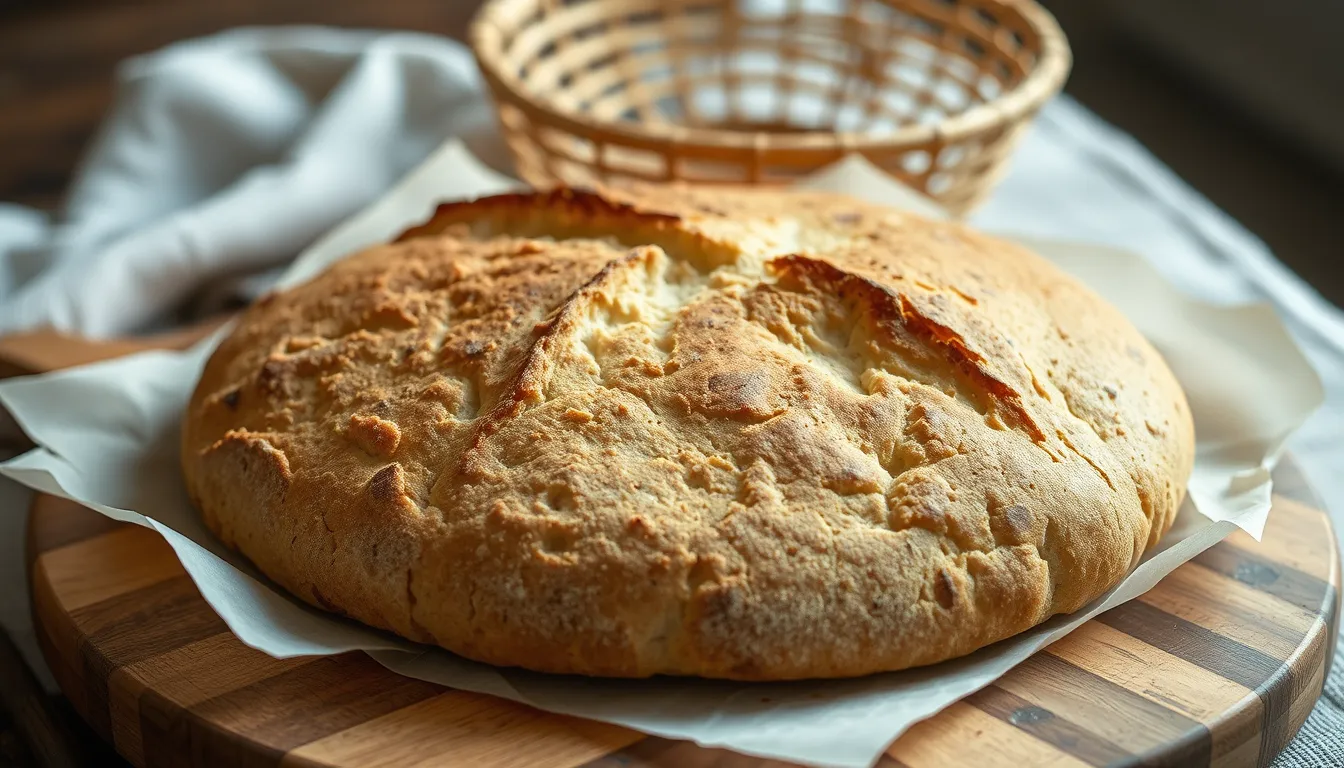
A sourdough loaf bakes flat when the dough can’t hold its own shape, or when it has used up its rising power before it reaches the oven. The three most common reasons are fermentation that went too far, more water than your flour can handle, and shaping that left the surface slack. Less often, the problem is how long the loaf waited before baking, how it was scored, or an oven that wasn’t hot enough.
A flat loaf is not the same as a dense one. Flat bread can have a perfectly open crumb and still come out low and wide like a frisbee. The fixes below are about shape and height.
First, work out when it went flat
The moment a loaf loses its height narrows the cause down quickly. Think back to your last bake:
- It spread as soon as it left the banneton. The dough had no structure left: too wet, too weak, overproofed, or loosely shaped.
- It held its shape on the counter but barely rose in the oven. Fermentation went too far, or the oven and steam weren’t doing their job.
- It rose in the oven, then slumped sideways. Weak gluten or a very high hydration for the flour, sometimes with a score that let it open outward instead of upward.
Keep that answer in mind as you read the causes below.
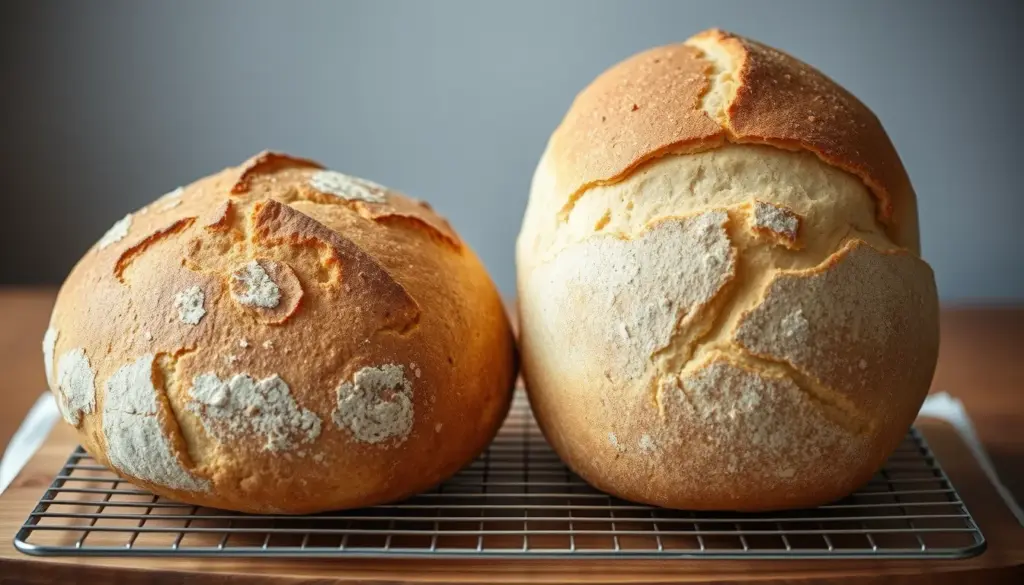
Cause 1: fermentation ran too long
Overfermented dough has spent its sugars and its gluten has started to break down. It turns slack and sticky, it won’t hold a shape, and it has little gas production left for oven spring. This is the most common cause of flat sourdough, especially in warm weather.
The trap is usually a rise target copied from a recipe. Many recipes say to let the dough double. In a warm kitchen that is far too much, because the dough keeps fermenting quickly through shaping and proofing. Enter a dough at 27 °C (81 °F) with 20% starter into the bulk fermentation estimator and it gives about 3 h 30 min to 4 h 45 min, with a target rise of only 30% to 50%. Waiting for a doubling at that temperature puts the loaf well past its limit before it is even shaped.
Fix it: in warm conditions, end bulk earlier and judge by rise, not the clock. Mixing with cooler water, using a little less starter, or moving the final proof into the fridge all buy you a wider window. The signs worth watching are laid out in bulk fermentation: how to tell when it’s done.
Cause 2: too much water for your flour
Every flour has a limit to how much water it can hold while keeping its shape. Stronger flours with more protein hold more. When a recipe was written for strong bread flour and you use all-purpose, or when you forget the water hiding in the starter, the dough can tip over that limit.
Take a recipe that lists 450 g of flour, 360 g of water, 90 g of starter at 100% hydration and 9 g of salt. On paper, 360 ÷ 450 looks like 80%. The sourdough hydration calculator adds in the 45 g of flour and 45 g of water inside the starter and gives a true hydration of 81.8%. That is very wet for all-purpose flour.
Set a target of 74% and the calculator asks for 321 g of water, 39 g less than the recipe. The dough will feel firmer in the bowl, hold a boule shape in the basket and stand noticeably taller after baking.
Check your own recipe, including the starter, and try a lower target if it keeps spreading:
Drop hydration a few points at a time rather than all at once. Once the loaf holds its shape, you can creep back up as your handling improves. For a sense of each level on the bench, see dough hydration: what 65% vs 80% really means.
Cause 3: not enough strength built in bulk
Gluten has to be organised before it can hold a shape. Stretch and folds during the first half of bulk line up the gluten strands and give the dough the springy, cohesive feel it needs. Skip them, or stop after one set with a wet dough, and the structure is too loose to stand up later.
Fix it: add another set or two of folds until the dough holds a rounded shape in the bowl between sets and pulls away from the sides in one piece. Stretch and folds vs kneading explains how many sets different doughs need.
Cause 4: shaping left the surface slack
Shaping does two jobs. It gathers the dough into a ball, and it stretches the outer layer tight so it acts like a skin holding everything in. Without that taut surface, a perfectly fermented dough still relaxes outward the moment it leaves the basket.
Signs of a loose shape include a dough that looks smooth but droops when you touch it, a seam that gapes, and a loaf that spreads more on one side than the other. Pre-shaping, a short bench rest, and a final shape that drags the dough against the counter to tighten the skin all help. The step-by-step guide on how to shape a sourdough boule covers the technique.
Cause 5: the loaf waited too long before baking
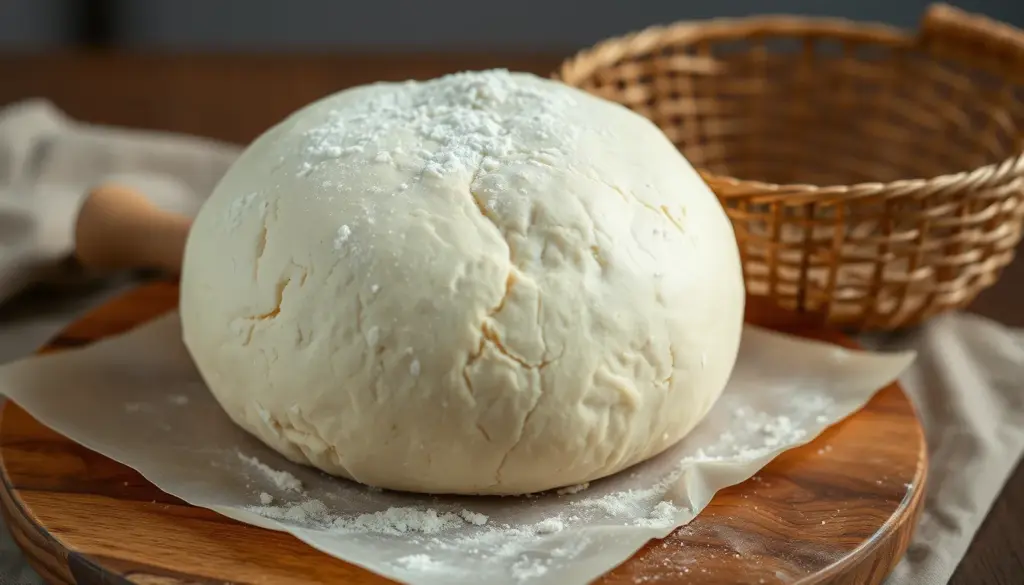
Soft dough starts to relax as soon as it leaves the basket. A few minutes for scoring is fine, but turning it out and then waiting for the oven to finish heating gives it time to slump.
Fix it: preheat fully first, then turn out, score and load straight away. A shaped loaf proofed in the fridge is firmer and holds its shape far better during this step, which is one reason cold proofing is so popular.
Cause 6: the score let it open sideways
A score gives the loaf a planned place to expand. A very deep or long cut on a soft dough can let it open outward rather than up. A cut that is too shallow causes the opposite problem, a loaf that bursts out along one side. Both change the final shape, and the guide to scoring and side bursts explains angle and depth in detail.
Cause 7: not enough heat or steam
Oven spring happens in the first ten to fifteen minutes. The loaf needs strong heat from below to push it upward and a humid atmosphere to keep the crust soft while it expands. A cold baking tray, a short preheat or a dry oven lets the crust set before the loaf has risen.
A covered pot solves both at once, because it traps the loaf’s own steam and holds the heat close. Baking sourdough in a Dutch oven walks through timings and pot sizes. If you bake on a stone or steel, preheat it for at least 45 minutes and add steam for the first part of the bake.
Fixes that make it worse
- Using a bigger banneton. A basket that is too wide lets the dough spread during the proof. Choose one the dough fills to about two thirds.
- Proofing longer to get more height. If the loaf is already overproofed, extra time only makes it flatter.
- Working lots of bench flour in. A little dusting is fine, but kneading extra flour into a sticky dough makes streaks and doesn’t fix the underlying cause.
- Jumping to a wetter recipe for a more open crumb. A higher hydration only helps once the dough holds its shape at the current one.
- Changing the flour and the method in the same bake. Swap one variable at a time so the result tells you something.
Flat loaf questions
Does a flat loaf taste any different?
Usually not, as long as it wasn’t badly overfermented. A flat loaf has more crust and less crumb, which many people enjoy. It makes excellent toast and sandwiches in wide slices, so it is rarely a wasted bake.
Can I rescue dough that spreads the moment it leaves the basket?
Sometimes. Gently round it up again on an unfloured counter, let it rest for ten minutes and bake it as soon as possible. If it keeps spreading, tip it into a greased loaf pan or a well-oiled tray and bake it as a tin loaf or a thick flatbread.
Why is my loaf flat on one side only?
Uneven shaping is the usual reason: the seam sat off-centre, or one side of the skin was tighter than the other. An oven with a hot spot can also make one side spring more. Turn the loaf around halfway through the bake next time and see whether the lopsided shape follows the oven or the dough.
Will a smaller banneton make a taller loaf?
It can help. The basket supports the dough while it proofs, so a snug one encourages it to rise upward rather than outward. It won’t rescue an overfermented or very wet dough, but it makes a real difference to a well-made one that was sitting in a basket that was too wide.