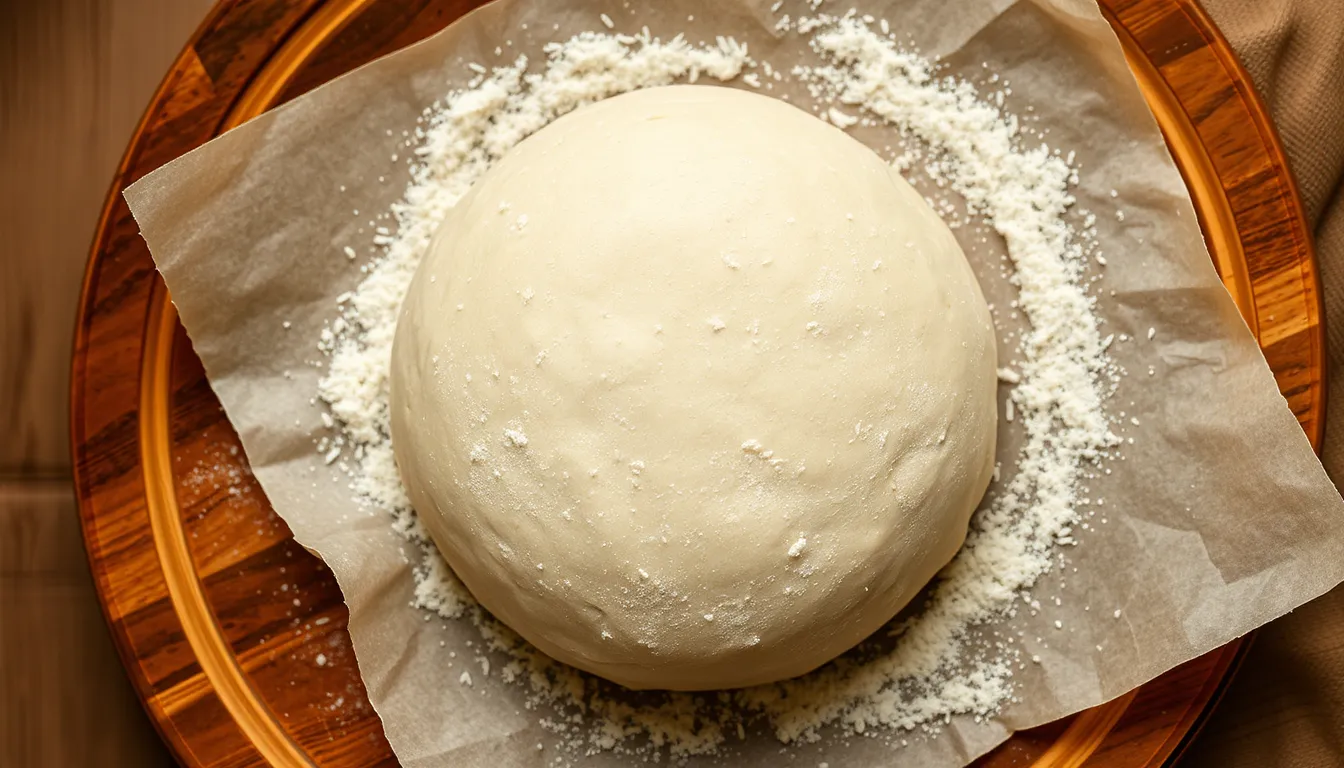
Bread bursts on the side when the pressure inside the loaf finds its own way out. In the first minutes of baking, the dough expands fast as gas warms and water turns to steam. A good score gives that expansion a planned opening. If the cut was too shallow, sealed over early, or missing, the crust splits at its weakest point instead, usually low on the side or along the seam. Underproofed dough makes it much more likely, because it still has a lot of expansion left when it hits the heat.
So a side burst has two parts to fix: the timing of the proof, and the way you score. Both are covered below.
What is happening in the oven
A proofed loaf going into a hot oven gets one last surge of growth, called oven spring. The yeast works furiously for a few minutes, the trapped gas expands with the heat, and the water in the dough starts turning to steam. At the same time, the outside of the loaf is drying and firming into a crust.
That sets up a race. The loaf is trying to grow while its skin is trying to set. The score is a deliberate weak line in the skin, so the loaf opens there and rises evenly. Without one, or with one that closes too soon, the dough tears wherever the skin is thinnest.
Reading the burst
Where the loaf split tells you a lot about why.
| Where it burst | What it usually means |
|---|---|
| Along the base, on one side | The seam wasn’t sealed, or the loaf went in seam side up |
| Right beside the score | The cut was too shallow or sealed over before it could open |
| Several jagged tears around the side | The dough was underproofed and had too much spring left |
| Top opened well, plus a side tear | Good scoring, but the proof was a little short |
A tight crumb with a few large holes near the top, combined with a side burst, points strongly to underproofing. How to read your crumb describes what to look for once the loaf is cut.
Getting the proof right
An underproofed loaf has lots of energy left and a crust that can’t keep up with it. No score is deep enough to contain that, so start with the timing.
The sourdough schedule planner estimates each stage from your kitchen temperature. With the dough at 22 °C (72 °F), 20% starter and a 1:2:2 feed, a loaf baked at 4:00 PM on a Saturday with a room-temperature final proof gets shaped at 1:50 PM. The planner puts that proof at about 1 h 30 min to 2 h 45 min. If you are used to giving it one hour because a recipe said so, the loaf is going in underproofed.
Switch the same plan to a 12-hour fridge proof with a 9:00 AM Saturday bake, and it moves shaping to 9:00 PM on Friday, with bulk running for about 5 h 45 min to 7 h 45 min beforehand. A cold proof has another advantage for scoring: dough straight from the fridge is firm, so the blade glides through instead of dragging.
Plan backwards from your own bake time:
Whatever the plan says, finish with a poke test. A proofed loaf springs back slowly and leaves a slight dent. If it bounces straight back, give it more time.
How to score a loaf
Choose the blade
A baker’s lame is a thin handle holding a double-edged razor blade, and it gives the cleanest cut. A new razor blade on its own works too, as does a very sharp small knife. Serrated knives and kitchen scissors can work in a pinch on firm, cold dough, though they tend to drag on soft dough. Whatever you use, it must be sharp; a dull blade drags and deflates the surface.
Get the angle right
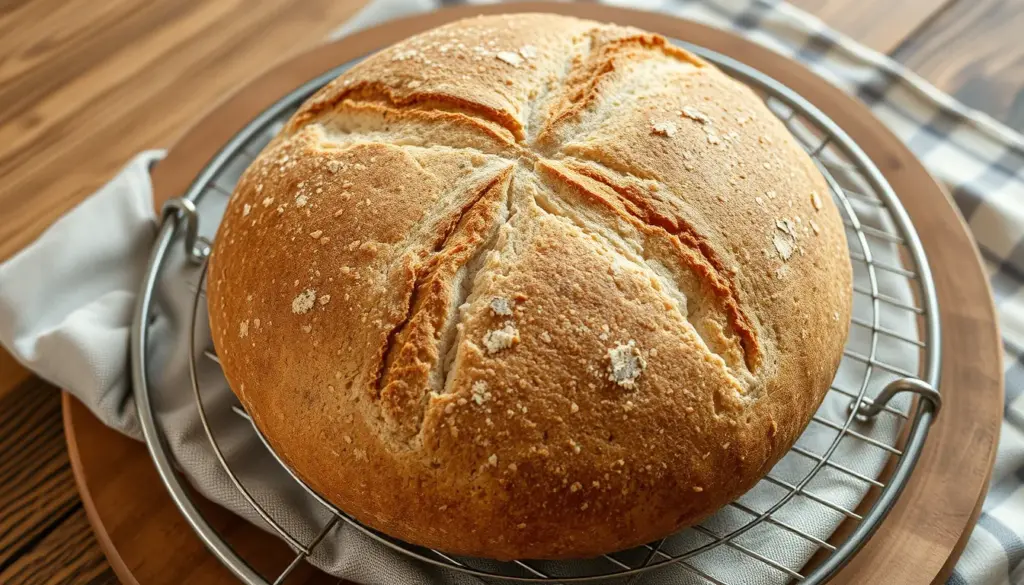
For a loaf with a raised “ear” along the cut, hold the blade at about 30 to 45 degrees to the surface and cut just under the skin, so a flap lifts as the loaf expands. For decorative patterns or a loaf that should open evenly, hold the blade upright.
Cut deep enough, in one stroke
Aim for about 5 mm to 1 cm (¼ to ⅜ in) deep. Make the cut in one confident motion, from one end almost to the other. Hesitant, sawing strokes tear the skin and seal back together.
Place it well
On an oval loaf, one long cut running slightly off-centre along its length is the classic choice. On a round boule, a cross, a square or a single curved cut all work. If you add decorative leaf or wheat patterns, keep them shallow and include at least one deeper cut as the main expansion line.
Shaping and steam matter too
A score can only do its job on a well-shaped loaf. If the seam is loose, the loaf will often burst there regardless of the cut, so pinch it closed and bake seam side down. How to shape a sourdough boule covers building surface tension and sealing the base.
Steam keeps the score open. In a dry oven the edges of the cut set within minutes and the loaf is forced to find another way out. Baking in a covered pot keeps the loaf in its own steam for the first 20 minutes; baking sourdough in a Dutch oven explains the timings.
Scoring mistakes to avoid
- Scoring too shallow out of caution. A tentative cut seals over in the heat. Commit to the depth.
- Scoring too deep on soft dough. A very deep cut on a slack loaf can make it spread sideways. If the loaf is already struggling to hold its shape, flat sourdough loaf: common causes and fixes is the place to start.
- Pausing before loading. Score, then get it straight into the oven. The cut starts to relax within a minute or two.
- Using a blade that has done dozens of loaves. Razor blades dull quickly on dough. Swap them often; they are cheap.
- Dusting after scoring. Flour thrown over the cut can stop it opening cleanly. Dust first, then score.
If your loaves are also turning out heavy inside, bulk fermentation: how to tell when it’s done is worth a read, since an underproofed loaf is often under-fermented in bulk too.
Scoring questions
Do I need a lame, or will a knife do?
A lame makes clean cuts easier, especially for angled scores, but it isn’t essential. A new razor blade held carefully, or a small, very sharp knife, does the job. The important thing is a thin, sharp edge.
Why doesn’t my score open at all?
Usually the loaf is overproofed and has no oven spring left to open it, or the oven lacked steam and the cut set before it could spread. Check the proof first. If the dough passes the poke test and the cut still doesn’t open, add steam or bake covered.
Should I score a loaf baked in a tin?
It is optional. A tin supports the sides, so bursts are less common, but a single shallow cut along the top gives a neater rise and a nicer look. Sandwich loaves are often left unscored.
Can I score a loaf that proofed at room temperature?
Yes, but it is softer and stickier than cold dough. Chill it in the fridge for 20 to 30 minutes before baking if you can. Otherwise, use a very sharp blade, cut a little shallower and move quickly.