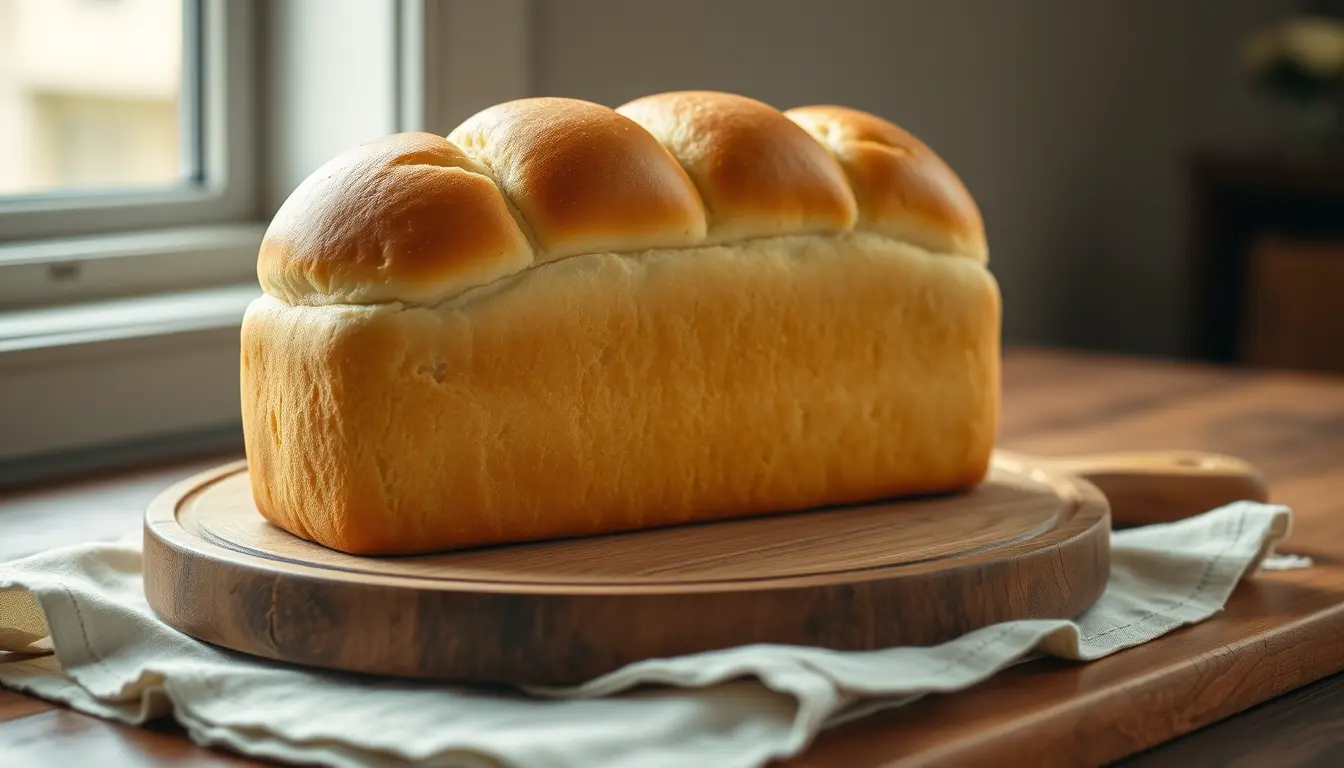
Tangzhong is a cooked paste made from a small part of a recipe’s flour, usually about 5 to 10%, with roughly five times its weight in milk or water. You whisk the two together and heat them gently until the mixture thickens like pudding, at around 65 °C (149 °F). Heating makes the starch swell and hold on to far more water than raw flour can. When the cooled paste goes into the dough, that extra water stays locked inside through baking, so the bread comes out softer and moister and stays that way for several days.
The method is best known from Japanese milk bread, but it works in almost any soft, enriched bread: sandwich loaves, dinner rolls, burger buns and sweet rolls.
Why a cooked paste changes the bread
Raw flour can absorb only so much water before a dough turns sticky. Starch granules, though, change when they are heated in water. Above about 60 °C they swell, take up water and turn into a gel, a process called gelatinisation.
A tangzhong gives you a portion of the flour already gelled. That has three effects:
- More moisture in the crumb. The gelled starch holds water that would otherwise evaporate in the oven or migrate out of the bread as it cools.
- A softer, finer texture. The crumb is tender and slightly springy, with a fine, even structure.
- Slower staling. Bread goes stale mostly because starch slowly firms up again after baking. The extra bound water slows that down, so the loaf feels fresher for longer. How to keep sourdough bread fresh explains staling in more detail.
Making the paste
A common ratio is 1 part flour to 5 parts liquid, by weight. For a loaf with 500 g of flour in total, that’s 25 g of flour and 125 g of milk or water.
- Whisk the flour into the cold liquid in a small pan until there are no lumps.
- Heat over a medium-low flame, stirring constantly.
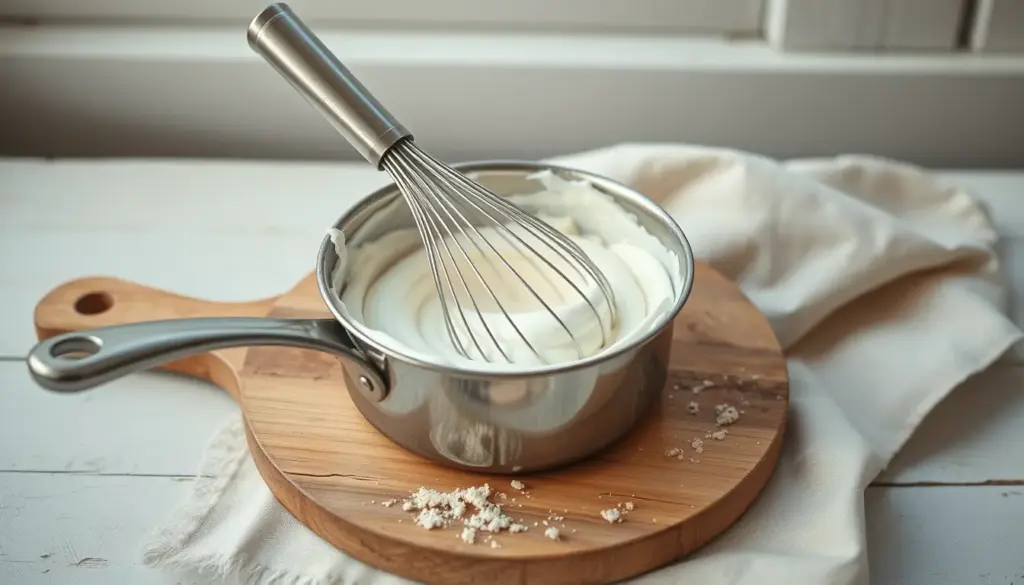
- After two to four minutes, the mixture thickens suddenly. Keep stirring until it’s like a thick pudding and the whisk leaves trails. A thermometer should read about 65 °C.
- Scrape it into a bowl, press a piece of cling film onto the surface to stop a skin forming, and let it cool to room temperature.
Overheating isn’t a disaster, but a paste cooked to a stiff lump is harder to mix in. Take it off the heat as soon as it’s thick and glossy.
Fitting the paste into a recipe
The flour and liquid in the tangzhong are part of the recipe, not an addition. Weigh them out of the totals and the bread keeps the proportions it was designed for.
Take a milk bread with 500 g of flour in total. Put 25 g of flour and 125 g of milk into the tangzhong, and the main dough gets the rest: 475 g of bread flour, 200 g of milk, one 50 g egg, 40 g of sugar, 40 g of soft butter, 8 g of salt and 6 g of instant yeast.
In the baker’s percentage calculator, list both flours as flour, both milks as liquid and everything else as other. The result:
| Ingredient | Weight | Baker’s % |
|---|---|---|
| Bread flour | 475 g | 95% |
| Flour in the tangzhong | 25 g | 5% |
| Milk in the tangzhong | 125 g | 25% |
| Milk | 200 g | 40% |
| Egg | 50 g | 10% |
| Sugar | 40 g | 8% |
| Butter | 40 g | 8% |
| Salt | 8 g | 1.6% |
| Instant yeast | 6 g | 1.2% |
| Total | 969 g | 193.8% |
The hydration counting only milk reads 65%, and the egg adds more water on top of that. With 175 g of milk in the main dough instead, the calculator reads 60%. Listing the paste’s flour and milk as separate lines makes it obvious how much of the recipe each part holds, and it lets you check that the flours add up to 100%.
A batch of about 970 g is a little more than the 885 g suggested in how much dough for a 9×5 loaf pan, so it suits a slightly larger tin, or makes 15 rolls of about 64 g. Pullman loaf pans covers dough weights for lidded pans, which suit milk bread well.
Adding tangzhong to a recipe you already make
To try the method in your own soft bread:
- Take 5% of the recipe’s flour.
- Take five times that weight from the recipe’s milk or water.
- Cook them into a paste and cool it.
- Mix the dough with the remaining ingredients and the paste.
Because the paste binds water, a tangzhong dough feels firmer and less sticky than its hydration suggests. Many bakers take advantage of that by adding a little extra liquid, around 5% of the flour, for an even softer crumb. Start with the original amount and adjust next time.
Mixing and baking
Tangzhong dough is usually enriched, so mix it the way you would any soft dough: knead the base until it starts to develop, add the butter in pieces, and continue until the dough is smooth and stretches thin without tearing. Enriched doughs explained walks through that staged approach.
Rising times are similar to the same dough without the paste. Bake milk bread at about 175 to 180 °C (350 °F), covering the top with foil if it browns too quickly.
Yudane: the no-cook cousin
Yudane is a related Japanese method. Instead of cooking the paste, you pour boiling water over an equal weight of flour, mix, and leave it covered in the fridge overnight. It has a similar softening effect and slightly more chew. Use the same accounting: the flour and water in the yudane come out of the recipe’s totals.
Where tangzhong works best
The method shines in soft breads that you want to stay tender:
- Milk bread and sandwich loaves, especially in a lidded pan, where the soft crumb and fine texture are the whole point.
- Dinner rolls and burger buns, which stay soft for a day or two after baking instead of firming up by evening.
- Sweet rolls and cinnamon buns, where the extra moisture balances the sugar and butter.
- Whole wheat sandwich bread, where a tangzhong made with some of the whole wheat flour can soften a crumb that tends to be dry.
It is less useful in lean, crusty bread. Baguettes, ciabatta and rustic hearth loaves depend on a crisp crust and an open, chewy crumb, and the extra bound water works against both.
Tangzhong mistakes
- Adding it hot. Warm paste can overheat the yeast and melt the butter. Cool it first.
- Adding it on top of the recipe. The dough becomes wetter and heavier than intended.
- Adding flour because the dough feels sticky early on. Keep mixing; it smooths out as the gluten develops.
- Using it in crusty bread. It softens the crust, which isn’t what a baguette wants.
Tangzhong questions
Can I make the paste with water instead of milk?
Yes. Water gives a slightly lighter crumb and a paler crust. Milk adds richness and browning. Both work, and many recipes split the difference.
How far ahead can I make it?
A few hours at room temperature is fine if covered. For longer, refrigerate it and use it within a day, bringing it back to room temperature before mixing. Discard any paste that smells sour or shows grey patches.
Does tangzhong work in sourdough bread?
Yes. It is often used in sourdough sandwich loaves and soft rolls. Count the starter’s flour and water in the totals as usual, and expect a softer crumb with a milder tang.