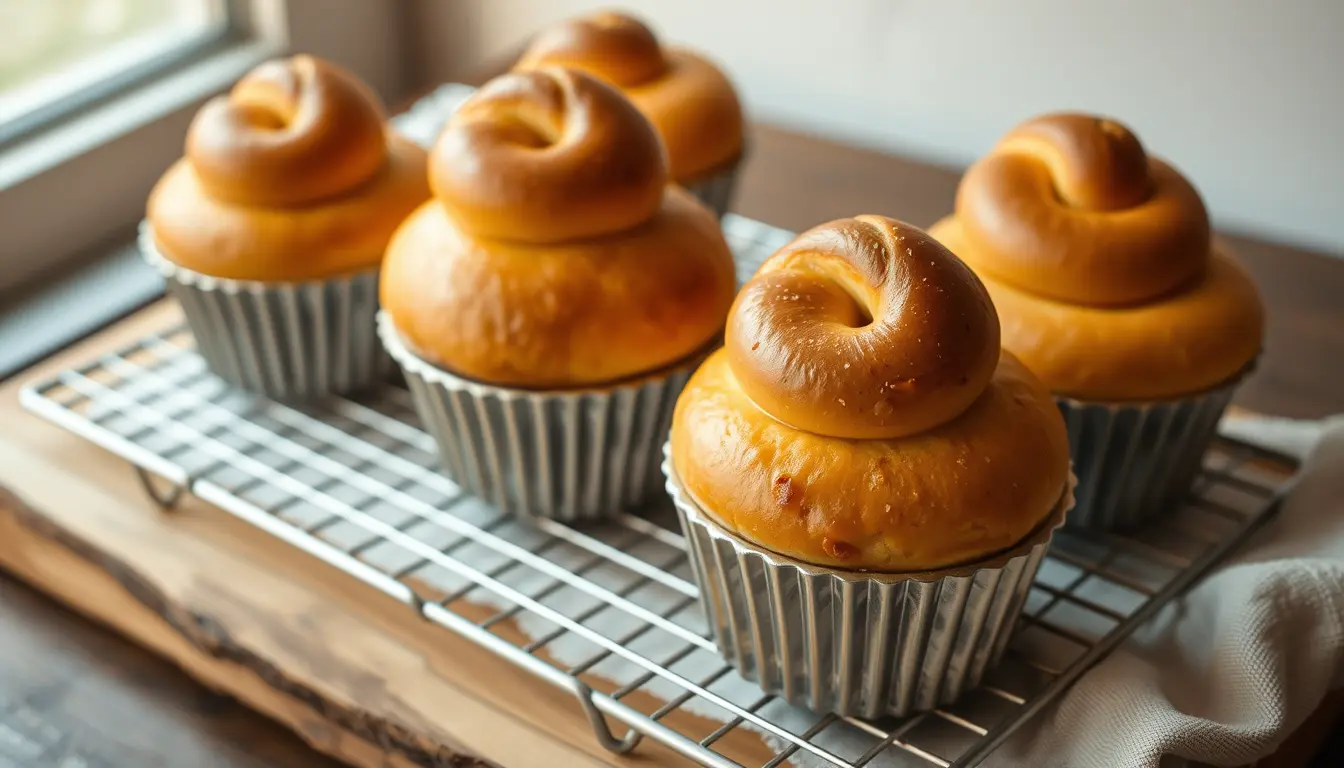
An enriched dough is any bread dough with fat, sugar, eggs or dairy added to the basic flour, water, salt and yeast. A splash of milk and a spoonful of butter make a soft sandwich loaf. Pile in eggs and butter until they weigh as much as half the flour, and you have brioche. Each addition softens the crumb, deepens the colour and changes how the dough mixes, rises and bakes.
Knowing what each one does makes enriched recipes far less mysterious, and it explains why they need a slightly different approach from a crusty lean loaf.
From lean to rich
Enrichment runs along a scale. These ranges, all as a percentage of the flour weight, show roughly where common breads sit.
| Bread | Sugar | Butter or oil | Eggs | Liquid |
|---|---|---|---|---|
| Lean loaf, baguette | 0 to 2% | 0 to 3% | none | Water |
| Soft sandwich or milk loaf | 4 to 8% | 5 to 10% | 0 to 10% | Mostly milk |
| Dinner rolls, challah | 5 to 12% | 8 to 15% | 15 to 30% | Milk or water |
| Brioche | 10 to 15% | 40 to 60%, sometimes more | 40 to 60% | A little milk |
Recipes vary a lot within those bands, and that’s fine. The point is that a brioche isn’t just “a bread with butter”. It’s a different kind of dough altogether.
What each ingredient does
Milk
Milk softens the crumb and the crust, partly through its fat and partly through its proteins. It also carries lactose, a sugar that baker’s yeast can’t ferment, so it stays in the dough and browns the crust. Milk breads come out of the oven darker and softer than water breads baked the same way.
Many older recipes ask you to scald the milk first, heating it to just below a simmer and cooling it again. That was done to deactivate a whey protein that can weaken gluten. Modern pasteurised milk is heated less than that, so some bakers still scald and find the loaf rises higher, while others notice no difference. Milk powder, at around 3 to 6% of the flour with water as the liquid, sidesteps the question.
Butter and other fats
Fat coats the gluten proteins and stops them from linking up as freely, which is where the word “shortening” comes from. The result is a soft, tender crumb that stays fresh for longer. Butter also brings flavour, and about 16% of its weight is water.
Because fat gets in the way of gluten, it goes in after the dough has started to develop strength. Add it too early and the dough never builds enough structure to hold a tall rise.
Eggs
Egg whites set as they bake, which adds structure and helps a rich dough hold its shape. Yolks bring fat, colour and lecithin, a natural emulsifier that gives a fine, even crumb. An egg is about three quarters water, so eggs count as part of the liquid in the dough, and a shelled large egg comes to around 50 g.
Sugar
A little sugar gives yeast an easy meal and helps the crust brown. Beyond about 5 to 10% of the flour, though, it starts to slow the yeast down, because sugar pulls water toward itself and leaves less available for the yeast cells. That’s why very sweet doughs rise slowly, and why some recipes use extra yeast or an osmotolerant yeast made for sugary doughs. Instant vs active dry vs fresh yeast covers that variety.
Reading an enriched formula
Baker’s percentages make it easy to see where a recipe sits on the scale. Here’s a classic brioche put through the baker’s percentage calculator:
- 500 g bread flour
- 250 g eggs
- 60 g milk
- 250 g butter
- 60 g sugar
- 10 g salt
- 7 g instant yeast
That reads as 50% eggs, 12% milk, 50% butter, 12% sugar, 2% salt and 1.4% yeast, adding up to 227.4% and a 1,137 g batch. Mark both the eggs and milk as liquids and the calculator shows 62% hydration, a little more than the dough really holds, since eggs aren’t pure water.
Compare a soft milk loaf: 500 g flour, 320 g milk, 40 g butter, 30 g sugar, 9 g salt and 6 g yeast. That’s 64% milk, 8% butter and 6% sugar, firmly in sandwich-loaf territory, and 905 g of dough.
If you’re new to the method, baker’s percentages explained simply covers the basics.
Converting American butter measures
Recipes from the US often give butter in sticks or tablespoons. The butter converter turns those into grams: one stick is 113 g, two sticks or a cup are 227 g, and 3 tablespoons are 43 g. Going the other way, a 250 g block is about 2.2 sticks. Butter measurements explained has the full picture.
Mixing an enriched dough
Lightly enriched doughs, like a milk loaf, can be mixed like any bread dough with the butter added after a few minutes. Richer doughs need a gentler, staged approach.
- Mix the flour, liquids, eggs, sugar, salt and yeast until the dough is smooth and starting to stretch. In a stand mixer, that’s around 5 to 8 minutes on medium-low.
- Add the butter, soft but still cool, in small pieces, letting each one disappear before adding the next.
- Keep mixing until the dough is glossy, pulls away from the bowl and stretches thin without tearing.
- Check the dough temperature. If it has climbed much above about 26 °C, the butter starts to melt and the dough turns greasy. Chill it for 15 minutes and carry on.
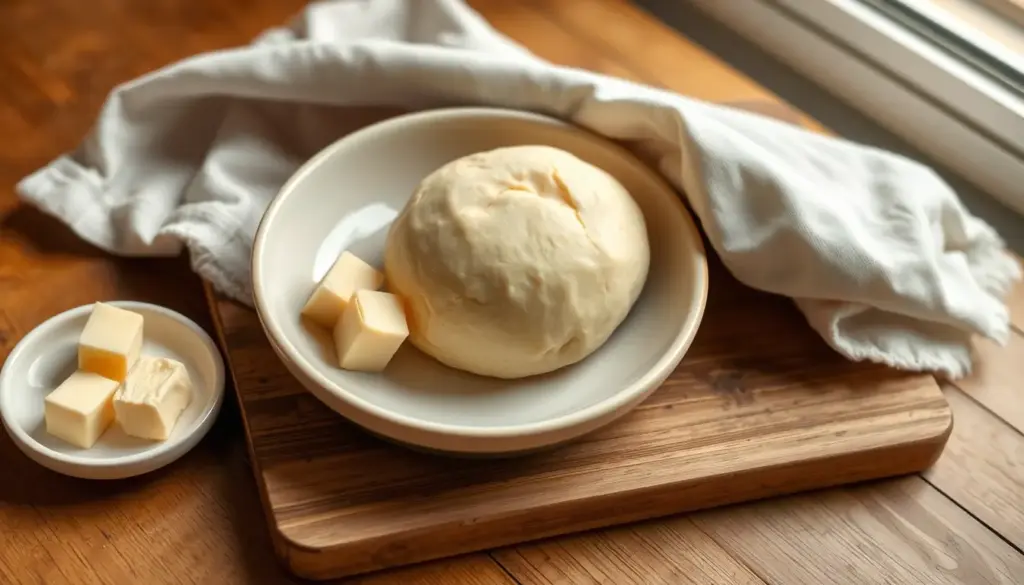
A rich brioche dough feels sticky and soft at room temperature. That’s normal. It firms up a great deal once chilled.
Rising and baking
Enriched doughs rise more slowly than lean ones, especially sweet ones. Give them a warm spot and judge by size rather than time. For rich doughs, an overnight rise in the fridge after the first proof is the easiest route. The cold dough is firm and simple to shape, and long rises for doughs with eggs and milk are better done in the fridge than on the counter.
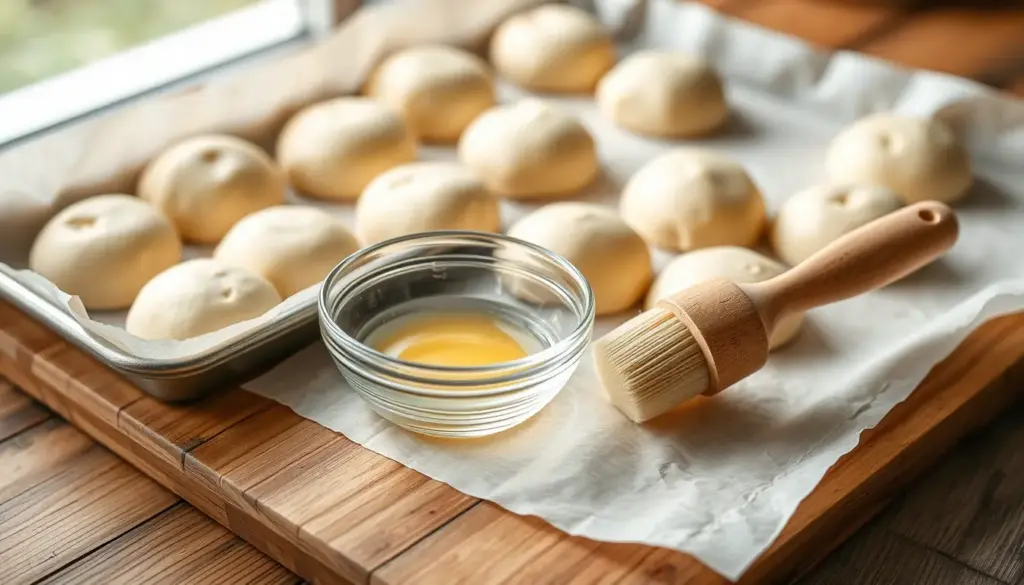
Sugar, milk and eggs all brown quickly, so enriched breads bake cooler than lean ones, usually between 175 and 190 °C (350 and 375 °F). Brush with beaten egg for a shine, and tent with foil if the top darkens before the inside is done. They’re ready when the centre reaches about 88 to 91 °C (190 to 195 °F), lower than a lean loaf.
Common enriched dough mistakes
- Adding all the butter at the start. The gluten never develops, and the loaf bakes low and cakey.
- Letting the dough get warm. Melting butter leaks out and leaves a greasy, heavy crumb.
- Adding flour to fix the stickiness. A rich dough is meant to be soft. Chill it instead.
- Baking at lean-bread temperatures. The crust burns before the centre sets.
- Expecting a lean dough’s rising time. Butter, sugar and eggs all slow fermentation down.
Enriched dough questions
Can I swap the water in a lean recipe for milk?
Yes. Use the same weight of milk, or a little more since it isn’t pure water, and lower the oven by 10 to 20 °C because the crust will brown faster. Expect a softer crust and a closer, more tender crumb.
Why is my brioche dough so sticky?
Brioche holds a lot of egg and butter, so it’s sticky by nature, especially when warm. Make sure the gluten is well developed before the butter goes in, keep the dough cool, and chill it before shaping. Extra flour makes a drier, heavier loaf.
Why did my rolls brown before they were cooked through?
The oven was too hot for a dough with this much sugar and milk. Lower the temperature, move the tray one shelf down, and cover the rolls loosely with foil once they reach the colour you want.