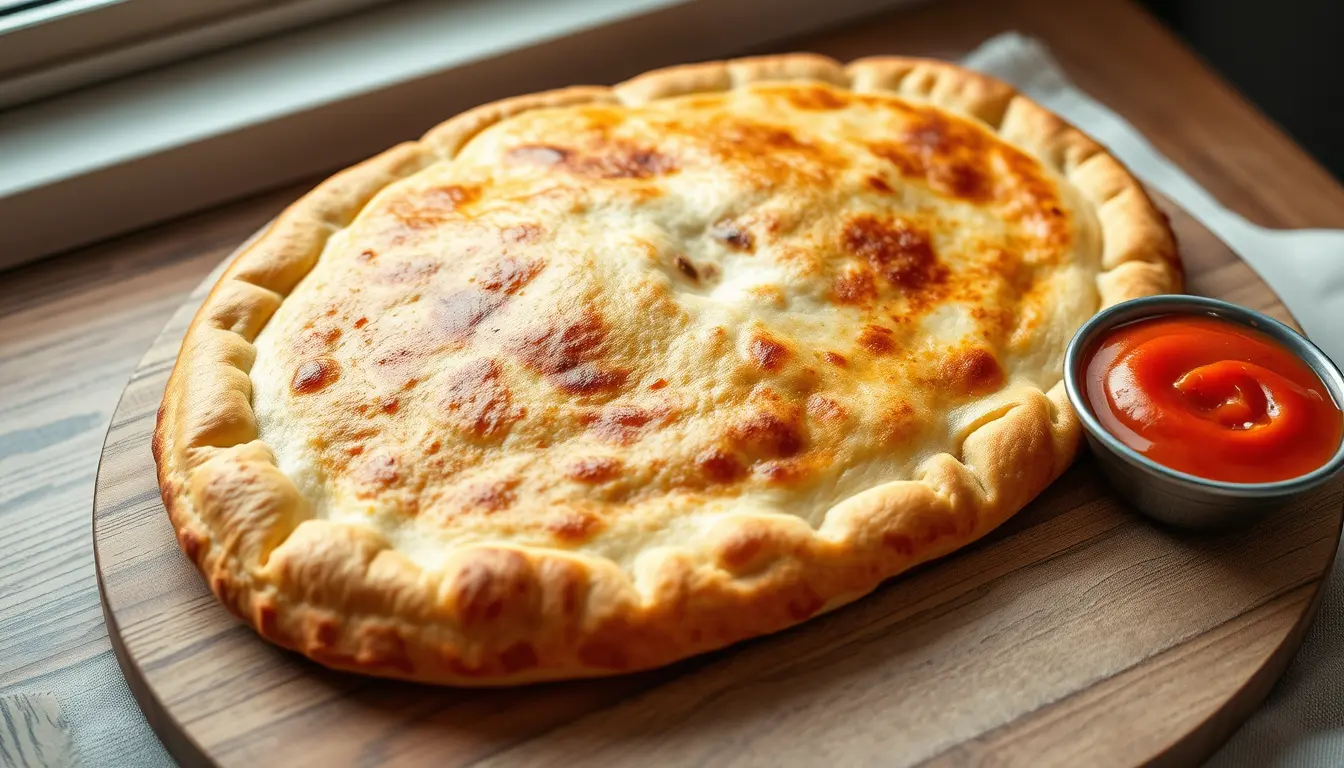
To keep a calzone or stromboli from turning soggy in the middle, start with a dry, cool filling: drain the ricotta, cook and drain any vegetables, and use low-moisture mozzarella. Leave a clean border, seal the edge firmly with a little water, and cut two or three small vents in the top so steam can escape. Bake hot, on a preheated surface or in the lower part of the oven, until deep golden, then rest it for 5 to 10 minutes before cutting. Moisture is the enemy at every step; manage it and the crust stays crisp all the way through.
Calzone or stromboli?
Both are pizza dough wrapped around a filling, but they’re built differently.
- Calzone is a round of dough folded in half over the filling, like a large turnover, and sealed along the curved edge. It often contains ricotta, and sauce is usually served on the side rather than inside.
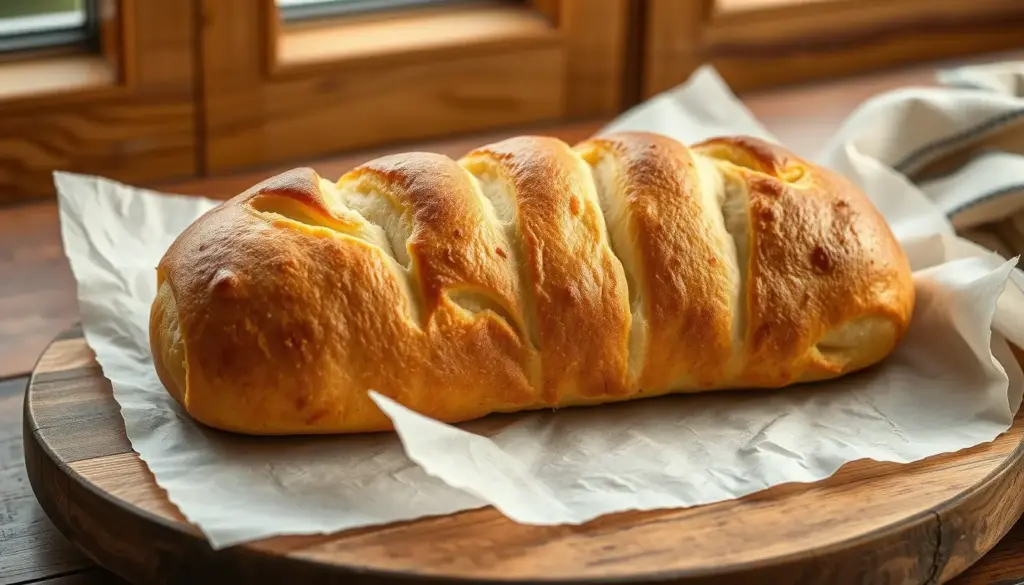
- Stromboli is a rectangle of dough covered with fillings, rolled up into a log, and baked seam side down. It’s sliced into rounds to serve, and the fillings are usually layered meats and cheese.
Both face the same problem: the filling releases steam as it heats, and the dough around it has nowhere to let that moisture go.
Why the middle goes soggy
Three things create the wet middle that ruins so many homemade calzones:
- Watery fillings. Fresh mozzarella, wet ricotta, raw mushrooms, spinach and tomato sauce all release water as they cook.
- Trapped steam. A sealed parcel with no vents keeps that steam inside, where it condenses into the inner layer of dough.
- Underbaking. The outside can look brown well before the thick layer of dough against the filling has set.
Fix those and you can fill the dough generously without a soggy result.
Preparing the filling
- Ricotta: drain it in a sieve for 30 minutes, or press it gently in a cloth. Whole-milk ricotta is creamier and less watery than low-fat.
- Mozzarella: use low-moisture mozzarella, grated or diced. If you love fresh mozzarella, slice it, pat it dry and leave it on paper towels for 20 minutes.
- Vegetables: sauté mushrooms, peppers, onions or spinach until their liquid has evaporated, then cool them. Squeeze cooked spinach hard.
- Meats: cured meats such as salami and ham can go in raw. Cook sausage first and drain the fat.
- Sauce: keep it out of a calzone and serve it warm on the side. For stromboli, a thin smear is enough.
Always cool cooked fillings before you assemble. A warm filling softens the dough and makes it tear before it ever reaches the oven.

How much dough you need
A single-serving calzone usually uses about 200 to 250 g of dough, rolled to roughly 25 cm (10 in), and a calzone to share takes around 300 to 350 g. A stromboli for three or four people uses 400 to 450 g rolled into a rectangle of about 30 × 35 cm (12 × 14 in). These are approximate, and they follow the same logic as pizza: heavier dough means a thicker crust. What size dough ball for a 10, 12 or 14 inch pizza explains how the weight relates to the area.
Any good pizza dough works. A New York-style dough with a little oil and sugar is a good fit, because it browns well in a home oven and stays tender. In the pizza dough calculator, the New York preset for four balls of 250 g (63% hydration, 2% salt, 2% oil, 1% sugar, 0.4% instant yeast, plus the default 2% extra) gives 606 g flour, 382 g water, 12 g salt, 2.42 g yeast, 12 g oil and 6.1 g sugar, for 1,020 g of dough or about 255 g per calzone.
For two stromboli at 450 g each, with 62% hydration, 2% salt, 3% oil and 0.5% yeast, the calculator gives 548 g flour, 340 g water, 11 g salt, 2.74 g yeast and 16 g oil, about 459 g per log.
Sealing a calzone
Roll the dough into a round about 5 mm thick. Spread the filling over one half, leaving a 2 to 3 cm (1 in) border clear. Brush the border lightly with water. Fold the other half over, line up the edges, and press them together firmly with your fingertips. Then roll or crimp the edge: fold the lower edge up over the upper one in small overlapping pleats, or press it down with a fork.
A good seal needs a clean border. Cheese or oil on the edge stops the dough from sticking to itself, and the filling leaks out in the oven.
Rolling a stromboli
Roll the dough into a rectangle about 30 × 35 cm. Layer the fillings over it, leaving a 2 to 3 cm border along the far long edge and about 2 cm along the sides. Starting from the near long edge, roll the dough up into a log, not too tightly. Brush the far border with water, finish the roll and pinch the seam closed. Pinch the ends shut too, and turn the log seam side down onto a parchment-lined tray.
Venting
Cut two or three small slits, about 2 cm long, in the top of each calzone, or several short diagonal cuts along the top of a stromboli. Vents let steam escape, so the inside dries as it bakes and the parcel doesn’t burst along the seam. Brush the top with egg wash or olive oil for colour.
Baking
- Calzone: about 230 to 250 °C (450 to 480 °F) for 15 to 20 minutes, on a preheated stone, steel or tray if you have one.
- Stromboli: about 200 to 220 °C (400 to 425 °F) for 25 to 30 minutes, since it’s thicker and needs time to cook through.
These are approximate. Look for a deep golden crust, filling bubbling at the vents and a firm underside. Lift a corner with a spatula to check the bottom. Let calzones rest 5 minutes and stromboli 10 before cutting, so the melted filling sets slightly instead of flooding out.
Mini calzones for a crowd
Small calzones of about 80 to 100 g of dough make good party food and are easier to seal than large ones. Roll each piece to about 12 cm (5 in), add a heaped tablespoon of filling, and fold and crimp as above. Cut a single small vent in each. They bake in about 12 to 15 minutes at the calzone temperature, depending on size. Because they’re small, the filling heats through quickly, so a soggy middle is rarely a problem; the main risk is overfilling, which makes the seam burst. Serve them with a bowl of warm sauce for dipping.
Common mistakes
- Wet fillings. The single biggest cause of a soggy middle.
- Overfilling. The dough stretches thin over the filling and tears or leaks.
- A greasy border. Oil or cheese on the edge stops it from sealing.
- No vents. Steam softens the inside and can split the seam.
- Cutting too soon. The filling runs out and the crust goes soft.
Calzone and stromboli questions
Can I assemble them ahead?
Assemble no more than about an hour ahead and keep them in the fridge, or the dough absorbs moisture from the filling. Fully baked calzones freeze well and reheat in a hot oven.
Why did my calzone burst open?
The seal was weak, the filling too full, or there were no vents. Leave a clean border, press firmly, and cut vents before baking.
Can I use sourdough pizza dough?
Yes. Sourdough pizza dough works well and adds flavour. Give it a full rise so the crust isn’t dense.
How do I reheat stromboli slices?
In a hot oven or air fryer for 5 to 8 minutes. A microwave works but softens the crust.