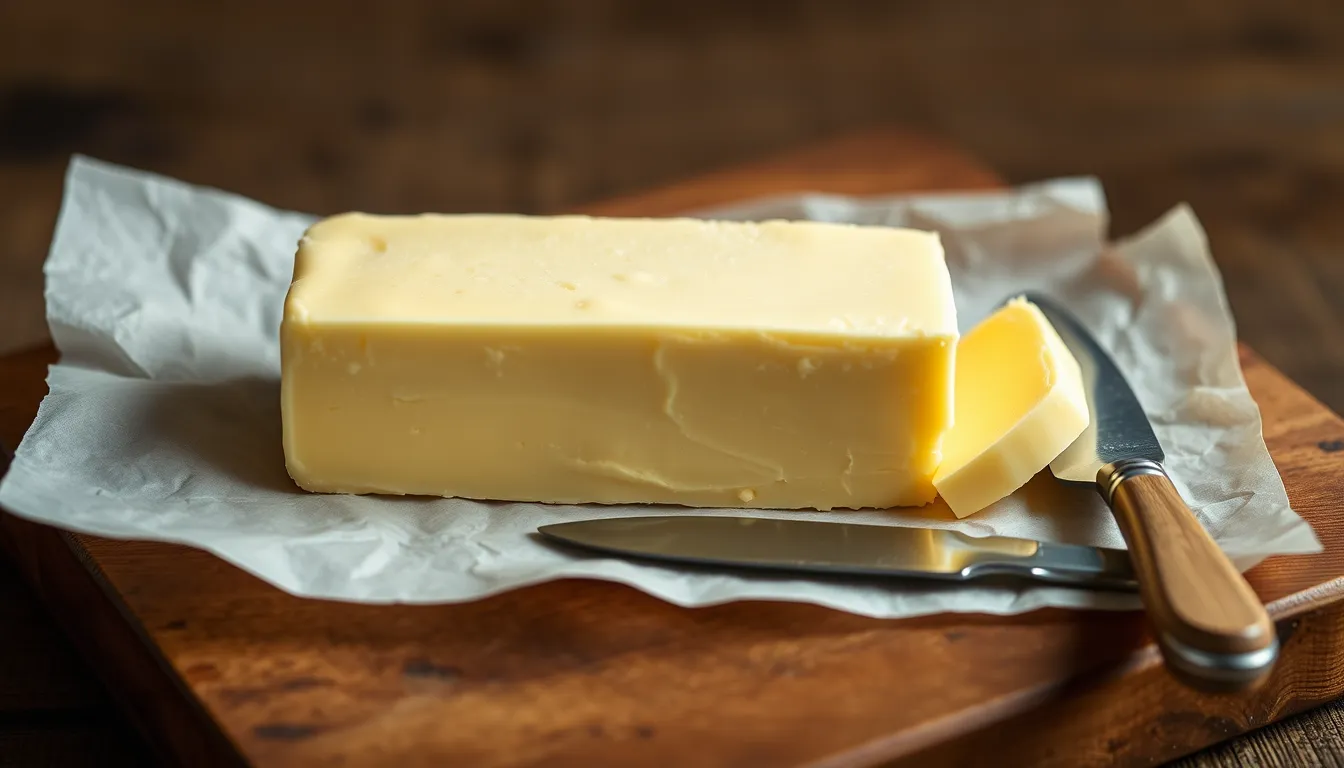
A standard US stick of butter is 113 g (4 oz), the same as ½ cup or 8 tablespoons. Two sticks make a cup (227 g), four make a pound (454 g), and a single tablespoon is about 14 g. Outside the US, butter is usually sold by weight instead: 250 g blocks in the UK, most of Europe, Australia and New Zealand, and 454 g (1 lb) blocks in Canada.
Once you think of butter in grams, every one of those packages works with every recipe. Here is how the measures fit together, and the few situations where they don’t.
Butter measures at a glance
| US measure | Sticks | Grams | Ounces |
|---|---|---|---|
| 1 tsp | 4.7 g | 0.17 oz | |
| 1 tbsp | ⅛ | 14 g | 0.5 oz |
| ¼ cup (4 tbsp) | ½ | 57 g | 2 oz |
| ⅓ cup | about ⅔ | 76 g | 2.67 oz |
| ½ cup (8 tbsp) | 1 | 113 g | 4 oz |
| 1 cup (16 tbsp) | 2 | 227 g | 8 oz |
| 2 cups (32 tbsp) | 4 | 454 g | 16 oz |
Cup and spoon figures assume butter pressed firmly into the measure with no air gaps, which is what the markings on a stick wrapper represent.
Sticks and their wrappers
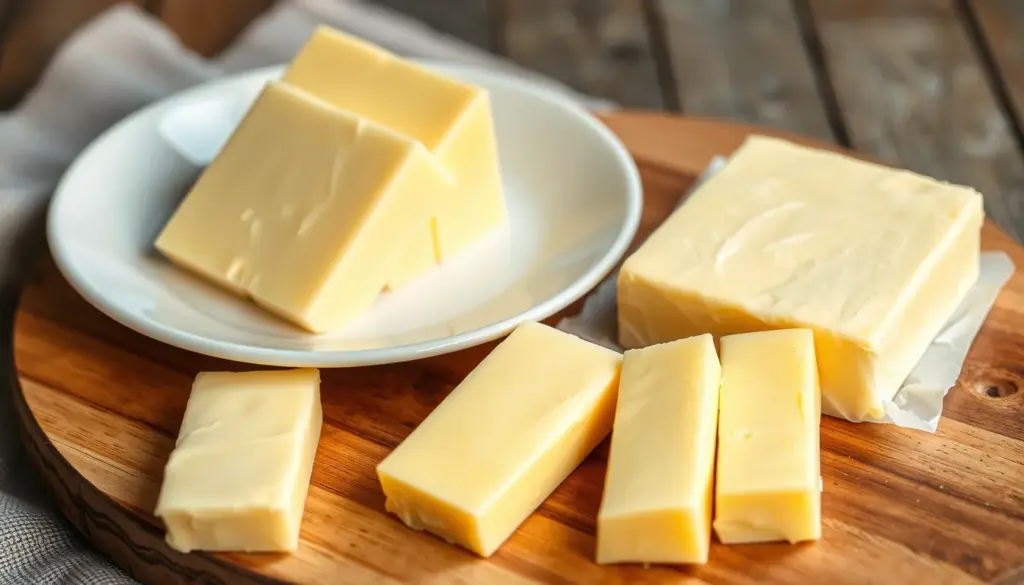
American butter comes in 1 lb boxes of four sticks. The wrapper on each stick is printed with tablespoon lines, so cutting along them is really a weight measurement: each line is about 14 g.
You may notice two stick shapes in American shops. Long, slim sticks are common in the east of the country; shorter, fatter ones in the west. They look different in the butter dish, but both weigh 4 oz and convert the same way.
Blocks sold by weight
A 250 g block is the standard in much of the world. It is a little more than two US sticks, so American recipes that use “1 cup” of butter leave you with a small piece over.
Going the other way is where people get stuck. A British recipe asking for 125 g, half a block, converts to about 1.1 sticks or about 8.8 tablespoons: one stick plus roughly 2½ teaspoons. A Canadian 454 g block is exactly four sticks, 2 cups or 32 tablespoons, which makes American recipes easy to follow there.
Converting a recipe
The butter converter handles any of these in one step. A few examples:
- 100 g in a European cake recipe comes out as ⅞ stick, so cut one stick at the seventh line and you are there.
- ⅓ cup in an American muffin recipe is 76 g, or about 5⅓ tablespoons: five tablespoons plus a teaspoon.
- 5 tablespoons is 71 g, or ⅝ of a stick.
- 1⅛ cups is 255 g, which is 2¼ sticks or 18 tablespoons.
- A 125 g half block is about 1.1 sticks, as above.
Enter any amount in sticks, cups, spoons, grams or ounces:
Grams are the easiest unit to work with once you have a scale. Put the bowl on it, zero it and slice butter straight from the block until the number is right. Why bakers weigh ingredients instead of using cups explains why that habit pays off across the whole recipe.
Cold, softened or melted
Temperature changes how butter behaves, not what it weighs. Recipes are specific about it for good reason.
- Cold butter, straight from the fridge, stays in solid pieces in pastry, scones and biscuits. Those pieces melt in the oven and leave flaky layers.
- Softened butter, around 18 to 20 °C (64 to 68 °F), should dent when pressed but not look greasy. It traps air when beaten with sugar, which is what makes creamed cakes and cookies light.
- Melted butter gives denser, chewier results, as in brownies and some cookies, because it can’t hold air.
Weigh butter before you change its temperature. It is far easier to cut a cold block accurately than to measure a puddle of melted butter.
Brown butter and clarified butter weigh less
Butter is roughly 80% to 82% fat. Most of the rest is water, plus a small amount of milk solids. When you brown or clarify it, much of that water cooks off, so the weight drops.
As a rough guide, a 227 g cup of butter gives around 180 to 190 g of brown butter. Clarified butter, with the milk solids strained out as well, comes out lower still. Read recipes carefully here. “1 cup butter, browned” means weigh 227 g first and then brown it. “1 cup browned butter” means measure it after browning, so you need to start with more.

Salted or unsalted
Both weigh the same, so the conversions don’t change. The difference is the salt. Salted butter usually contains somewhere around 1.5% to 2% salt, so a single stick carries about 2 g, roughly a third of a teaspoon of table salt. In a cookie recipe with two sticks, that is enough to notice if you also add the full amount of salt the recipe lists.
Most baking recipes are written for unsalted butter because it lets you control the seasoning exactly. If you only have salted, trim the recipe’s added salt accordingly.
Swapping butter for oil
In recipes that use melted butter, such as muffins, quick breads and many snack cakes, oil can stand in. Because butter is about a fifth water, use roughly 80% of the butter’s weight in oil and make up the rest with milk or water. For one stick, that is about 90 g of oil plus 20 to 25 g of milk.
Expect a slightly softer, moister crumb and less buttery flavour. The swap doesn’t work where butter is used solid: creamed cakes, cookies that rely on creaming, shortbread, pastry and buttercream all need a fat that is firm at room temperature. Oil in those recipes gives greasy, flat or crumbly results.
Butter mistakes
- Packing soft butter into a cup. Air pockets make the measure unreliable. Use the wrapper lines or a scale.
- Treating a 250 g block as two sticks. It is about 2.2 sticks, and the extra matters in pastry and shortbread.
- Measuring after melting when the recipe meant before. Read where the word “melted” sits in the line.
- Using spread in place of baking butter. Spreads contain more water and less fat, which changes texture.
- Swapping salted for unsalted without adjusting the salt.
If a cake recipe also needs to change tin size, how to convert a cake recipe to a different pan size scales the butter along with everything else.
More butter questions
How much butter is a “knob”?
It is an old British term with no exact definition. Most cooks take it to mean roughly 15 to 25 g, about a tablespoon or a little more. For anything where the amount matters, such as pastry, recipes give a weight instead.
Can I use margarine or a spread instead?
Hard baking margarine sold in blocks usually works in cakes and cookies. Soft spreads in tubs contain more water and less fat, so they make cookies spread and pastry soggy. Check the fat content on the label; for baking, look for about 80%.
Why do my cookies spread more with a different brand of butter?
Brands differ slightly in how much water and fat they contain, and cheaper butters sometimes carry a little more water. Extra water turns to steam and loosens the dough, so cookies can spread more. If a favourite recipe suddenly behaves differently, the butter is worth checking before anything else.
How can I soften butter quickly?
Cut it into small cubes and leave them on a plate for 15 to 20 minutes, or grate cold butter onto a plate, which softens in a few minutes. Short bursts in the microwave work, but it is easy to melt the centre, and melted butter won’t cream properly.