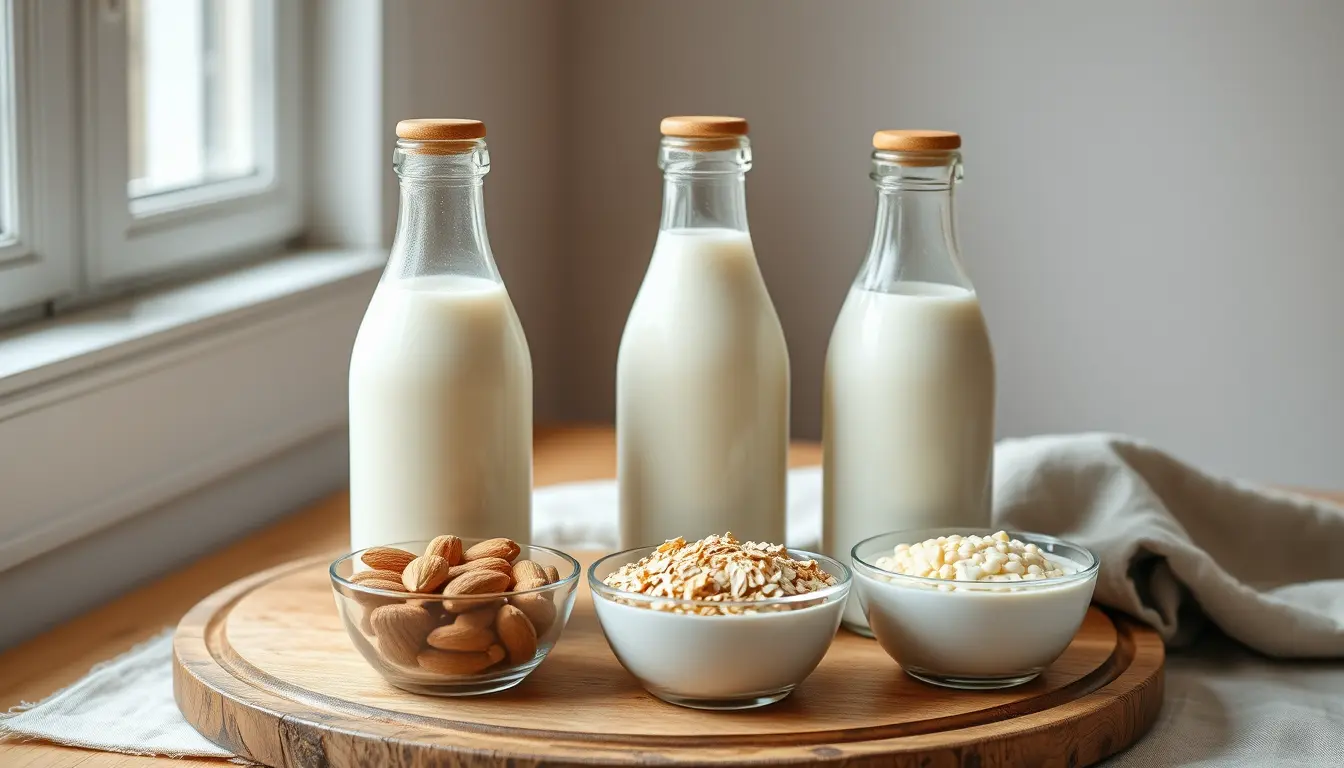
In most baking, you can swap milk for another liquid one for one by volume or weight, and the recipe will still work. The differences show up in the details. Unsweetened soy milk is the closest plant milk to dairy milk; oat milk browns a little faster; almond milk is thinner and lighter; and water works but gives a paler, less tender result. For buttermilk, stir 1 tablespoon of lemon juice or white vinegar into enough milk to make 1 cup and leave it for 5 to 10 minutes. The key is knowing what milk does in a recipe, so you can pick the substitute that does the same job.
What milk does in baking
Whole dairy milk is mostly water, with roughly 3 to 4% fat, 3% protein and 5% lactose, a milk sugar. These figures are approximate and vary with the milk. Each part has a job:
- Water hydrates the flour and dissolves sugar and salt.
- Fat coats the flour, keeps crumbs tender and makes cakes feel moist.
- Protein adds structure and, with the sugar, helps crusts brown.
- Lactose isn’t fermented by baker’s yeast, so it stays in the dough and adds to browning.
When you replace milk, you change the balance of these four. That’s why a loaf made with water instead of milk has a paler crust and a slightly chewier crumb, and why a rich plant milk can brown faster than dairy.
Plant milks compared
| Substitute | How it bakes | Best uses |
|---|---|---|
| Soy milk, unsweetened | Closest to dairy in protein; browns and sets similarly | Cakes, muffins, enriched breads |
| Oat milk | Slightly sweet; browns a little faster; creamy | Muffins, pancakes, quick breads |
| Almond milk | Thin and low in protein; lighter colour | Muffins, batters, glazes |
| Coconut milk drink (carton) | Light coconut flavour; moderate fat | Cakes, muffins with tropical flavours |
| Rice milk | Thin and sweet; little structure | Batters where milk is a small part |
| Canned coconut milk | Very rich; much higher fat than milk | Only where cream-like richness is wanted, or diluted |
Choose unsweetened, unflavoured versions for baking. Sweetened and vanilla plant milks add sugar that can make bakes too sweet and brown too fast. Barista versions often contain added oil and stabilisers and can behave a little differently.
Weighing the swap
If your recipe gives milk in cups, the cups to grams converter puts 1 US cup of whole milk at 244 g and 1¼ cups at 305 g. A metric cup of 250 ml weighs 258 g. Most plant milks weigh very close to dairy milk, so you can use the same weight. Going the other way, 300 g of milk is about 1¼ cups by volume.
For the full set of liquid weights, including cream and oils, see how much does a cup of milk, oil or honey weigh.
Buttermilk substitutes
Buttermilk is thick, tangy and acidic. In recipes, that acidity reacts with baking soda to make bubbles, and it also tenderises the crumb. A substitute needs to bring the acid.
- Soured milk: put 1 tablespoon (15 ml) of lemon juice or white vinegar in a measuring jug, top it up with milk to the 1 cup line, stir and leave it for 5 to 10 minutes. It thickens slightly and may look curdled, which is fine.
- Thinned yogurt: mix about ¾ cup of plain yogurt with ¼ cup of milk or water. It’s thicker and tangier, and works well in scones and soda bread.
- Kefir: use it one for one. It’s tangy and similar in thickness.
- Plant-based: unsweetened soy milk soured with lemon juice thickens best, because of its higher protein.
These ratios are approximate and widely used. If you swap buttermilk for plain milk the other way round, the recipe may lose some lift; baking powder vs baking soda explains why the acid matters.
Other dairy swaps
- Evaporated milk: mixed with an equal amount of water, it’s close to whole milk. Undiluted, it’s richer and browns faster.
- Milk powder: reconstitute it following the packet. In bread machines, adding the powder with the flour and using water in place of milk is handy for delayed bakes.
- Half-and-half or single cream: richer than milk. Use them for a more tender crumb, or dilute them with some water.
- Water: works in most bread and many cakes. Expect a paler crust and a slightly less tender result. Adding a spoonful of butter or oil per cup helps make up for the missing fat.
Swaps in yeast bread
In bread, milk gives a soft crumb and a golden crust, which is why sandwich loaves and dinner rolls often use it. Any plant milk works here. Some bakers scald dairy milk for bread, heating it nearly to boiling and then cooling it, because a whey protein in milk can weaken gluten slightly. With modern pasteurised milk, many skip this step and notice little difference, and plant milks don’t need it at all. Enriched doughs explained covers how milk changes a dough.
A worked swap: dairy-free muffins
Say you’re baking two batches for a dairy-free friend: blueberry muffins that call for 1¼ cups of whole milk, and bran muffins that call for 1 cup of buttermilk.
- For the blueberry batch, use 305 g (1¼ cups) of unsweetened soy or oat milk, weighed just like dairy milk.
- For the bran batch, put 1 tablespoon of lemon juice in a jug, top it up to the 1 cup line with unsweetened soy milk, stir, and wait 5 to 10 minutes.
- Swap any butter for a plant-based block or a neutral oil, following the recipe’s method.
- Bake as written, checking a couple of minutes early, since plant milks with added sugars can colour the tops faster.
The muffins rise and set just like the dairy version. Most people won’t notice the difference, especially once spices, fruit or chocolate are in the mix.
Choosing by flavour
Flavour is the other half of the decision. Soy milk is fairly neutral once baked. Oat milk adds a faint cereal sweetness that suits muffins, banana bread and spiced cakes. Almond and coconut drinks carry their own flavour, which works when it matches the bake, such as almond milk in a cherry cake or coconut drink in a lime loaf. For a plain vanilla sponge or a sandwich loaf, choose the most neutral option you have.
Common mistakes
- Using sweetened plant milk. The bake turns overly sweet and browns too fast.
- Using canned coconut milk as if it were milk. It’s much richer and can make bakes greasy.
- Swapping milk for buttermilk in a soda-leavened recipe. Without the acid, the bake may rise poorly and taste soapy.
- Forgetting about allergies. Some plant milks are made from nuts, and some contain gluten from oats.
Milk substitute questions
Does oat milk make baked goods gummy?
Not usually. It contains a little more starch and sugar than other plant milks, which can make a crumb slightly softer and denser, but it works well in most recipes.
Can I use lactose-free milk?
Yes. It bakes almost exactly like regular milk. It tastes slightly sweeter and may brown a touch faster.
What’s the best substitute for milk in pancakes?
Unsweetened soy or oat milk. Both give good colour and a tender texture.
Can I use skimmed milk in place of whole milk?
Yes. The crumb will be a little less rich and tender, but the recipe will work.