Baking soda is a single ingredient, sodium bicarbonate, and it only produces gas when it meets an acid. Baking powder is baking soda with a dry acid already mixed in, so it works with any liquid. That one difference decides how you swap them:
- No baking powder? For each teaspoon, use ¼ teaspoon of baking soda plus ½ teaspoon of cream of tartar, mixed in just before baking.
- No baking soda? For each teaspoon, use about 3 teaspoons of baking powder, and expect a slightly paler, tangier result.
Both swaps work well enough for pancakes, muffins and quick breads. For a cake you care about, it’s worth understanding what each ingredient is doing first.
Baking soda: strong, but needs a partner
Baking soda is an alkali. Stirred into a batter with something acidic, such as buttermilk, yogurt, lemon juice, natural cocoa, brown sugar, honey or molasses, it reacts straight away and releases carbon dioxide. That’s why soda-raised batters should go into the oven promptly: the lift starts the moment the wet and dry ingredients meet.
Soda is strong. Spoon for spoon, it gives several times the lift of baking powder, which is why recipes call for so little. It also raises the pH of the batter, which encourages browning and gives cookies more spread.
Any soda left over without acid to react with tastes soapy or metallic. Getting the balance right matters.
Baking powder: soda with its own acid
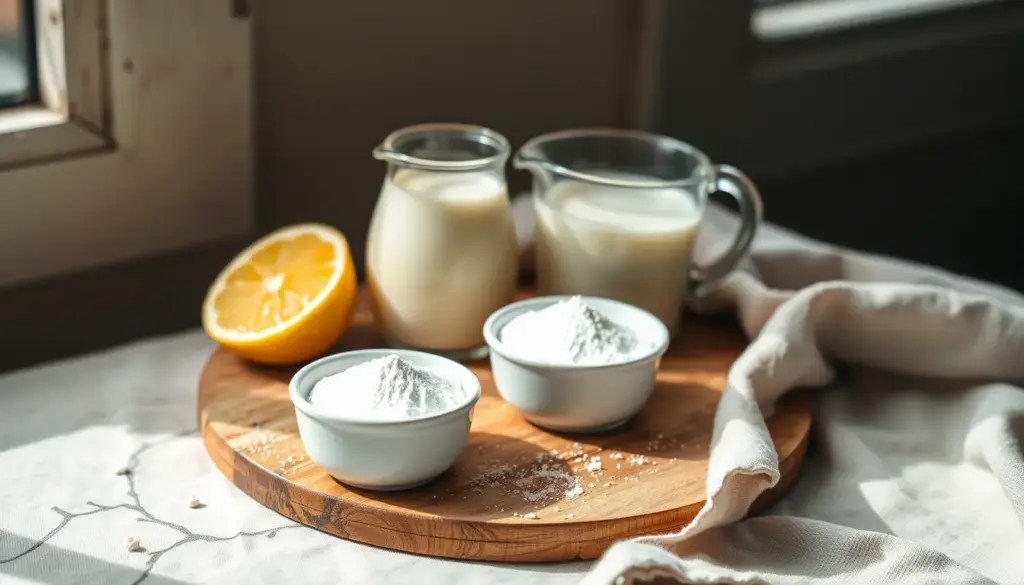
Baking powder contains baking soda, one or more dry acids, and a starch that keeps the two apart while they sit in the tub. Add liquid, and the acid and soda start reacting.
Most baking powder sold today is double-acting. One acid reacts as soon as the batter is mixed, and a second waits for the heat of the oven. That second burst of gas is why a batter made with baking powder can sit for a few minutes without losing much lift. Single-acting powders, including the homemade cream-of-tartar version, do all their work at mixing.
Why some recipes use both
A buttermilk pancake or a chocolate cake made with natural cocoa often lists both. The soda neutralises the acid in the batter, which mellows the flavour and helps browning. The baking powder then supplies the rest of the lift, independent of how much acid there is.
How much is normal
These are common rules of thumb, and recipes vary around them:
| Leavening | Typical amount | Notes |
|---|---|---|
| Baking powder | 1 to 1¼ tsp per cup (120 g) of flour | Less in rich, eggy cakes |
| Baking soda, with an acidic ingredient | About ¼ tsp per cup of flour | Enough to neutralise and lift |
| Baking soda, matched to buttermilk or yogurt | About ½ tsp per cup (240 ml) | Neutralises the acid in that cup |
If a recipe uses far more than this, check it before you bake. Typing errors with leavening are common, and the bake will tell you.
Swap 1: you have no baking powder
Mix your own single-acting version from baking soda and cream of tartar, an acid sold in the spice aisle. For each teaspoon of baking powder the recipe needs, use ¼ teaspoon of baking soda and ½ teaspoon of cream of tartar.
Because it starts working immediately, add it with the dry ingredients, mix the batter quickly and get it into a preheated oven without delay.
No cream of tartar? Use the batter’s own liquid as the acid. Replace about ½ cup of the milk with buttermilk or thinned plain yogurt, and add ¼ teaspoon of baking soda for each teaspoon of baking powder you’re leaving out.
Swap 2: you have no baking soda
Use about three times as much baking powder: 3 teaspoons for each teaspoon of soda. The powder brings its own acid, so the recipe’s acidic ingredients won’t be fully neutralised. The result usually tastes a little tangier, browns less and may be slightly denser. Cookies tend to spread less.
This works best in recipes with only a little soda, ½ teaspoon or less. In something that relies on a lot of soda for colour and spread, like gingerbread or soft, chewy cookies, the change is more noticeable.
Weighing the swap
Spoon swaps are easy to get wrong because soda and powder weigh different amounts per spoon. The cups to grams converter lists both:
- 1 teaspoon of baking soda weighs 6 g, and its replacement of 3 teaspoons of baking powder weighs 12 g.
- 1 teaspoon of baking powder weighs 4 g, and ¼ teaspoon of baking soda weighs 1.5 g.
If you’re doubling or halving the recipe at the same time, scale the original amounts first and then make the swap. The recipe scaler converts awkward results like 1½ teaspoons doubled into a tablespoon, and how to halve or double a baking recipe explains why leavening needs a little care at large multiples.
Is it still working?
Both lose strength over time, especially in a humid kitchen. Two quick tests:
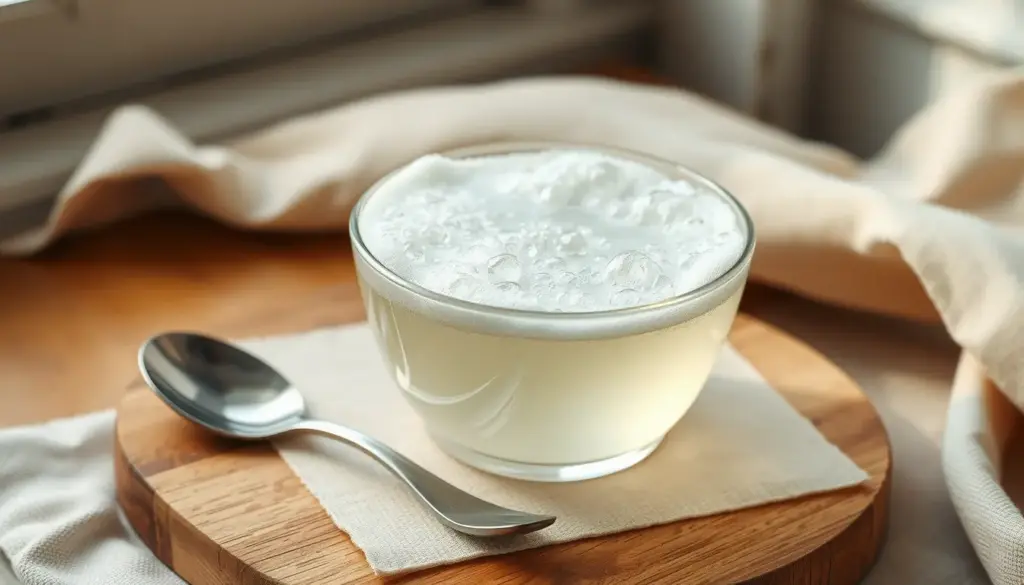
- Baking powder: stir ½ teaspoon into a few tablespoons of hot water. It should fizz hard straight away.
- Baking soda: add ¼ teaspoon to a couple of teaspoons of vinegar or lemon juice. It should bubble up immediately.
A weak fizz means it’s time for a new tub. Store both tightly closed in a cool, dry cupboard, and don’t dip a wet spoon into either.
Reading the results
| What you notice | Likely cause |
|---|---|
| Soapy or metallic taste, dark crumb | Too much soda, or too little acid to balance it |
| Bitter aftertaste, rose high then sank | Too much baking powder |
| Dense, flat and heavy | Too little leavening, or an old tub |
| Paler and tangier than usual | Soda replaced with baking powder |
| Small brown, bitter spots | Lumps of soda that weren’t mixed in |
Sourdough discard bakes are a good example of balance in action. Discard is acidic, so recipes that use it often include a little soda. What to do with sourdough discard shows how those recipes are adjusted. And if you’re scaling a cake to a new pan, how to convert a cake recipe to a different pan size covers the leavening as part of the batter.
Leavening mistakes
- Swapping one for the other spoon for spoon. Soda is far stronger, so a straight swap gives too much or too little.
- Leaving a soda batter to stand. The gas escapes before the oven can trap it.
- Heaping the spoon. A little extra soda is enough to taste.
- Using old baking powder. It looks the same as fresh but barely lifts.
- Adding soda with no acid in the recipe. It has nothing to react with and leaves a soapy flavour.
Baking powder and soda questions
Is bicarbonate of soda the same as baking soda?
Yes. Bicarbonate of soda, bicarb and baking soda are all names for sodium bicarbonate. Cooks in Britain and Australia use the longer names, Americans the shorter one.
Can I use baking soda in a recipe with no acid?
Only in very small amounts, if at all. Without an acid, soda gives little lift and leaves a soapy taste. Check the ingredients again, though: brown sugar, honey, natural cocoa, yogurt and buttermilk are all acidic enough to pair with it.
Can I mix a batter the night before?
Batters with double-acting baking powder hold up reasonably well in the fridge overnight, though they rise a little less. Batters raised mainly with soda lose much of their lift as they stand, so bake those soon after mixing.