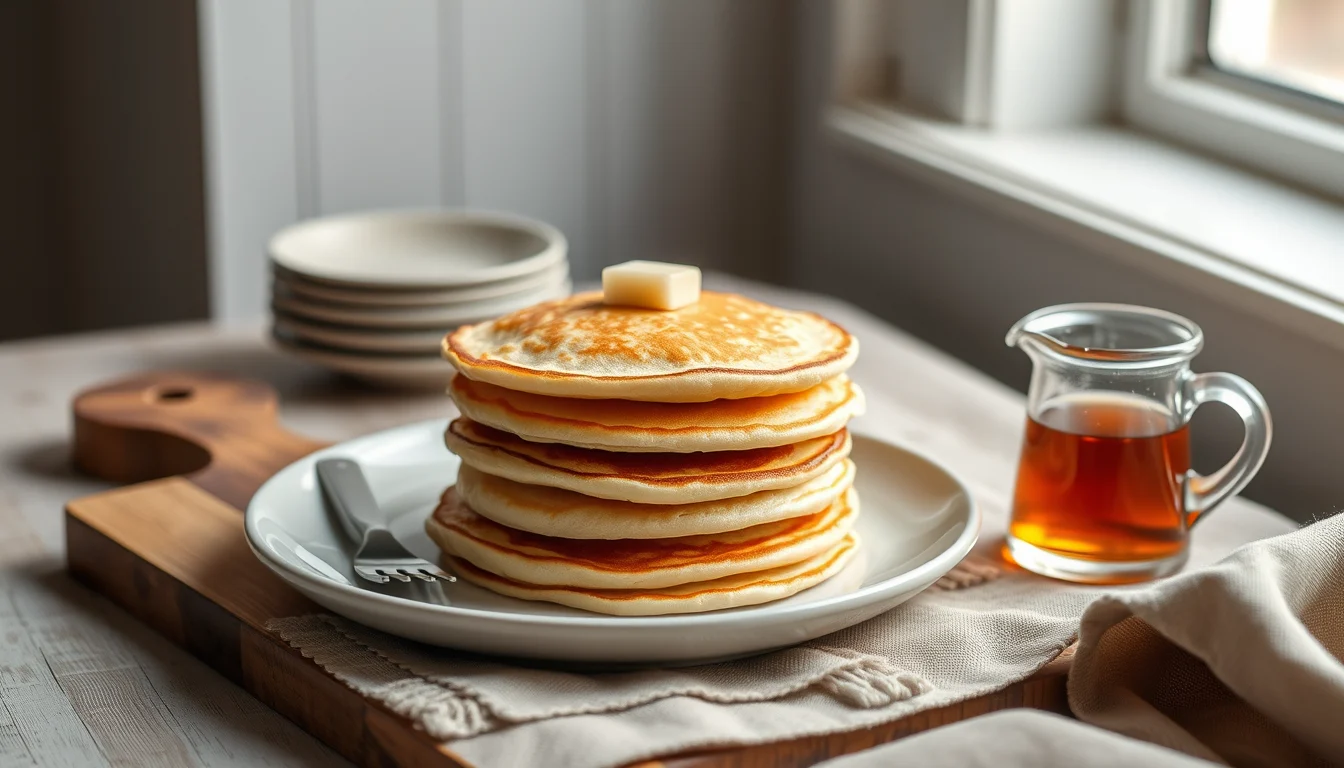
Use it in recipes that don’t depend on the starter to rise: pancakes, waffles, crackers, flatbreads, muffins and quick breads. Keep it in a covered jar in the fridge between uses, and when you add it to a recipe, subtract its flour and water from the recipe’s own flour and liquid so the batter comes out the same. If you are throwing away more than you can ever cook with, the real fix is a smaller starter.
Discard is simply the portion of starter you take out before a feed. It has the same flour, water and microbes as the jar, only hungrier and more acidic. That combination is why it brings flavour to a recipe but very little lift, and why it shines in some bakes and disappoints in others.
Where discard works best
Pancakes, waffles and crepes
Batters are the easiest home for discard. They are already loose, and they get their lift from baking powder, baking soda or beaten eggs, so nothing depends on the starter. Discard gives them a gentle tang, a little like buttermilk, and a slightly more tender bite. Waffles in particular can take a lot of it; half the flour can come from discard without any trouble.
Crackers and flatbreads
These are where the largest amounts go. Mix discard with a little flour, some olive oil or melted butter and salt, roll it thin and bake until crisp, and you have crackers that taste far better than the effort suggests. Skillet flatbreads work the same way: stir in enough flour to make a soft dough, rest it for half an hour, then roll and cook in a hot, dry pan. Neither needs to rise, so hungry discard does the job perfectly.
Muffins, banana bread and snack cakes
Moderate amounts add depth to quick breads. Keep the baking powder and soda as written, since those do the lifting, and aim for a quarter to a third of the flour coming from discard rather than more. Heavier, sticky muffins are usually a sign that too much went in.
Yeasted pizza and sandwich dough
Some bakers stir discard into a yeasted dough purely for flavour. Count it as part of the dough’s flour and water, keep the yeast, and expect a slightly softer, more aromatic result. The pizza dough calculator can handle the percentages if you want to plan it properly.
Where it struggles
Light sponges, chiffon cakes and anything that depends on a precise, delicate structure tend to turn heavy. And discard cannot stand in for active starter in a sourdough loaf. A hungry culture straight from the fridge has too little working yeast to raise bread on its own schedule.
Adjusting a recipe for discard
At 100% hydration, discard is half flour and half water by weight. If you add 120 g to a recipe without changing anything, you have quietly added 60 g of flour and 60 g of water, and the batter will be thicker, wetter and heavier than the recipe intends. The fix is to remove those amounts from the recipe’s own flour and liquid. The sourdough discard recipe converter does the subtraction and also tells you how much discard the recipe can take in total.
Muffins with 120 g of discard
A muffin recipe uses 280 g of flour and 240 g of milk. Adding 120 g of discard at 100%, the converter returns 220 g of flour and 180 g of milk, with 21.4% of the flour now coming from discard. It also reports that this recipe could take up to 480 g in theory, though a muffin with that much would be dense and gummy. Everything else, eggs, sugar, butter and leavening, stays as written.
Banana bread, where the liquid runs out first
Banana bread is a useful contrast. A typical loaf might use 240 g of flour but only 120 g of milk, because the mashed banana supplies much of the moisture. Add 150 g of discard and the converter asks for 165 g of flour and just 45 g of milk. Its maximum drops to 240 g, and the limit comes from the liquid, not the flour: at that point the discard’s water would replace every drop of milk.
Keep in mind that the converter only knows about the liquid you enter. The banana’s own moisture isn’t counted, so in very wet batters like this one, stay well below the maximum.
Waffles with half the flour from discard
A waffle batter with 200 g of flour and 300 g of buttermilk can take 200 g of discard easily. The converter brings the recipe to 100 g of flour and 200 g of buttermilk, with 50% of the flour now from discard. In a batter this loose, that share works well.
Storing discard between bakes
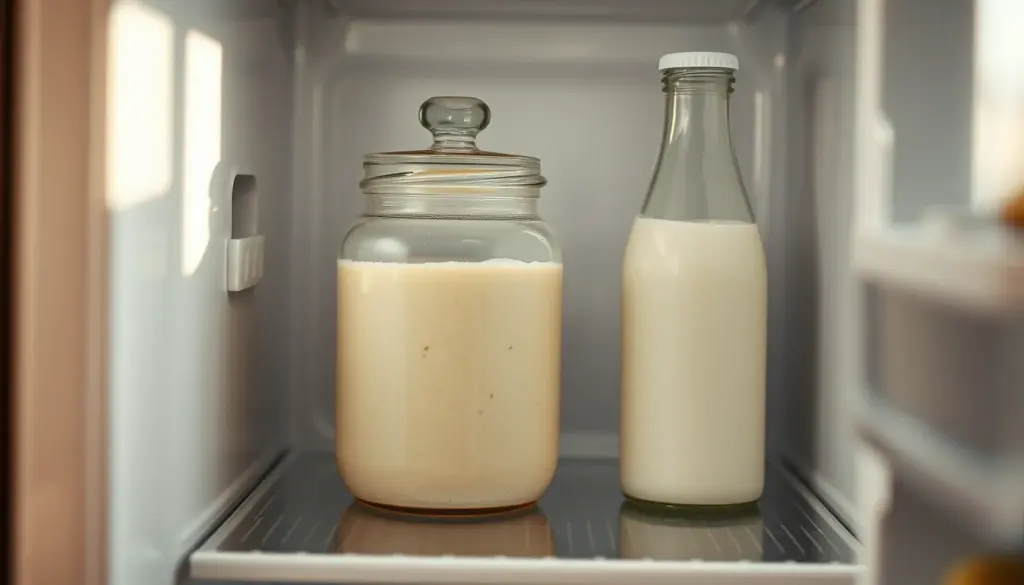
- Use one jar and keep adding to it. A covered glass jar in the fridge can collect discard through the week.
- Use it within a week or two. It keeps longer than that, but the flavour grows sharper and it tends to separate. Stir any liquid back in, or pour it off for a milder taste.
- Freeze it for longer. Portion it into small tubs or an ice cube tray and thaw in the fridge overnight before using.
- Note its hydration. If your starter is kept stiff, so is the discard. Enter its real hydration in the converter, because a stiff discard carries more flour per gram.
Making less discard in the first place
Discard comes from feeding more starter than you need. Two small changes shrink it dramatically.
First, feed at a higher ratio. For 100 g of starter plus 20 g to keep, the sourdough starter feeding calculator shows that a 1:1:1 feed uses 40 g from the jar, while a 1:5:5 feed uses only 11 g. The feed takes longer to peak, which what starter feeding ratios actually do explains, but you carry over, and throw out, far less.
Second, keep a smaller starter and store it in the fridge between bakes. A 60 g jar fed once a week produces only a few tablespoons of discard. How to store a sourdough starter walks through that routine.
Common discard mistakes
- Adding it on top of a recipe. Without taking out its flour and water, the bake turns out heavy and damp.
- Expecting it to leaven. Discard adds flavour and a little tenderness. Keep the recipe’s baking powder, soda or yeast.
- Leaving it on the counter for days. At room temperature it sours quickly and can spoil. The fridge keeps it usable.
- Using the first week’s discard. A brand-new starter is dominated by the wrong microbes for several days, and the flavour shows it. Compost it until the jar smells clean and pleasantly sour.
- Replacing too much flour in cakes. Batters for pancakes and waffles cope with a lot; cakes and muffins do better with a smaller share.
Discard questions
Can discard make bread rise if I just wait longer?
Not reliably. If you feed the discard and let it peak, it becomes active starter again and can raise a loaf, but at that point it isn’t discard any more. Straight from the jar, it simply has too little yeast activity.
Is unfed starter from the fridge the same thing as discard?
Yes, for cooking purposes. Anything you take from the jar before feeding it counts, whether it has been in the fridge for a day or a week.
How can I tell if old discard has gone bad?
A layer of liquid and a sharp, sour smell are normal. Pink or orange streaks, fuzzy spots or a genuinely rotten smell are not. If you see any of those, throw the whole jar out rather than scraping off the top.
Can I use discard in gluten-free baking?
Only if the starter itself is gluten-free. A starter fed with wheat or rye flour carries gluten into anything you make with its discard.