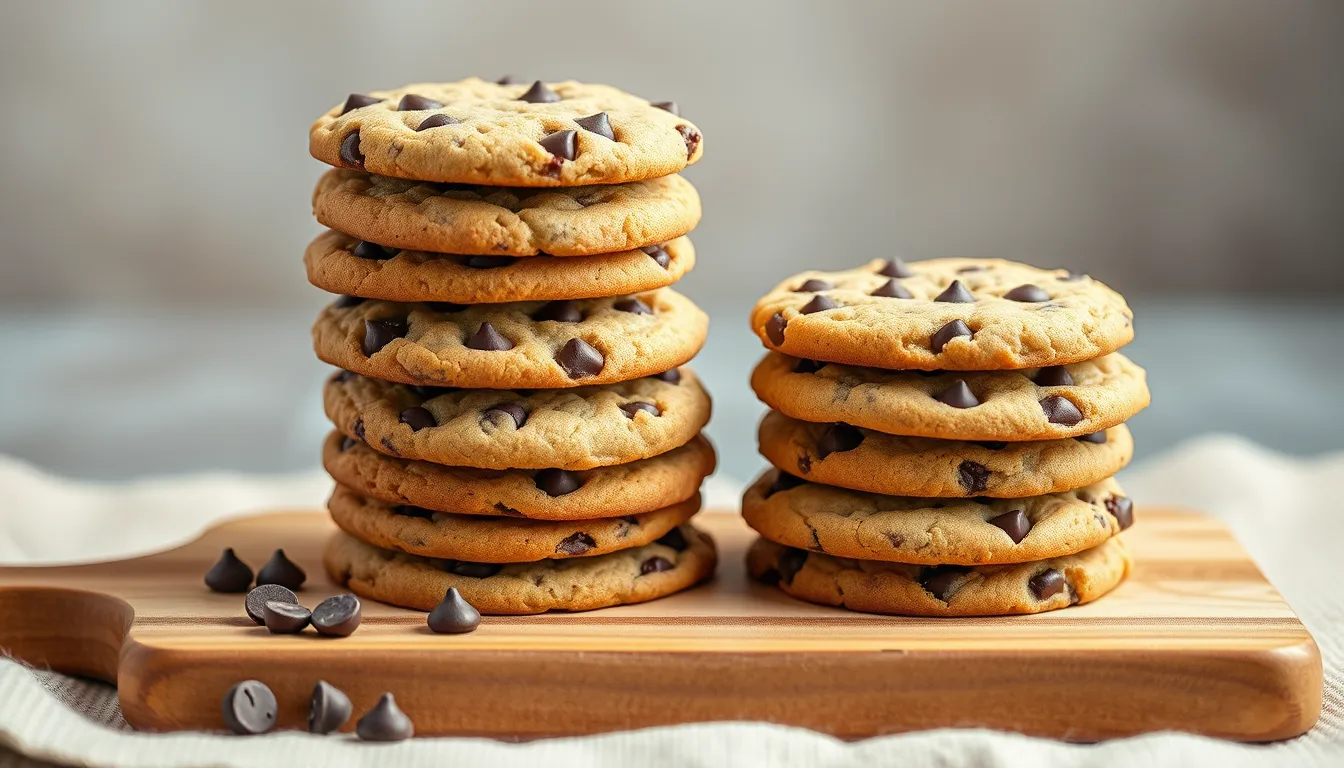
Halving or doubling a recipe starts with one rule: multiply every ingredient by the same number, 0.5 to halve and 2 to double. Oven temperature stays the same. The arithmetic is the easy part. The parts that need thought are ingredients that don’t divide neatly, like eggs and awkward cup fractions, and the things that aren’t in the ingredient list at all: the size of the pan, the baking time and how much your bowl and mixer can hold.
Get those right and almost any home recipe can be made in a half or double batch without surprises.
Weigh it if you can
Scaling is simple multiplication when a recipe is in grams. Half of 270 g of flour is 135 g; double 113 g of butter is 226 g. No fractions, no rounding, no spoons.
With cups and spoons it gets fiddly. Half of ¾ cup is ⅜ cup, which few measuring sets include. Double 1⅓ cups is 2⅔ cups. It is easy to make a mistake halfway down the list. If you bake a recipe often, convert it to weights once; why bakers weigh ingredients instead of using cups explains why it is worth the effort.
Halving a muffin recipe
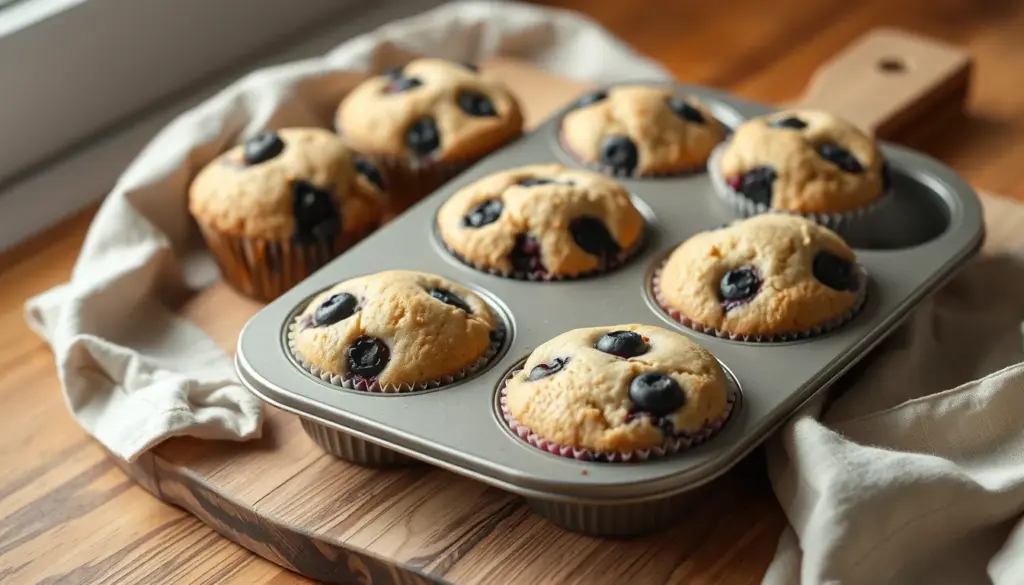
Here is a batch of blueberry muffins, halved with the recipe scaler using a factor of 0.5:
| Original | Halved |
|---|---|
| 2 cups all-purpose flour | 1 cup |
| 2 tsp baking powder | 1 tsp |
| ½ tsp salt | ¼ tsp |
| ¾ cup granulated sugar | ¼ cup + 2 tbsp |
| ½ cup butter, melted | ¼ cup |
| 3 large eggs | 1½ eggs: beat 2 and use 75 g |
| 1 cup milk | ½ cup |
| 1½ cups blueberries | ¾ cup |
Two lines are worth a closer look. Half of ¾ cup is ⅜ cup, so the scaler rewrites it as ¼ cup plus 2 tablespoons, which any set of measures can handle. And three eggs don’t halve neatly, so it tells you to beat two eggs together and use 75 g of the mix.
Doubling a cookie recipe
Doubling is usually easier, since most fractions double into friendlier ones. A small batch of chocolate chip cookies scaled by 2:
- 1¼ cups all-purpose flour becomes 2½ cups
- ½ tsp baking soda becomes 1 tsp
- ¼ tsp salt becomes ½ tsp
- ½ cup (113 g) butter becomes 1 cup (226 g)
- ⅓ cup packed brown sugar becomes ⅔ cup
- ¼ cup granulated sugar becomes ½ cup
- 1 large egg becomes 2
- ¾ tsp vanilla becomes 1½ tsp
- 1 cup chocolate chips becomes 2 cups
Notice the butter line: the scaler doubles the grams in brackets along with the cups. Paste your own recipe in, one ingredient per line with the amount first:
Dealing with eggs
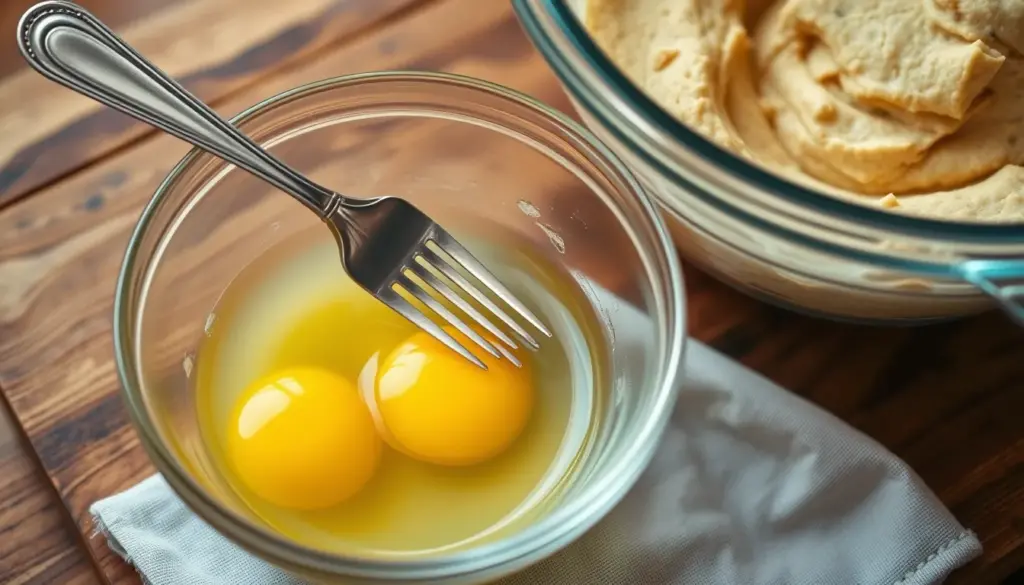
Eggs are the ingredient that most often trips up a halved recipe. A large egg is about 50 g out of its shell, roughly 33 g of white and 17 g of yolk. When a scaled recipe lands on a fraction of an egg, beat the whole eggs together in a small bowl, weigh the mixture and use what you need.
For a small difference, rounding is fine. A cake that should have 1¾ eggs will be perfectly happy with 2. In custards, curds and meringues, where eggs do most of the structural work, measure more carefully.
Save the leftover beaten egg for an egg wash or add it to scrambled eggs the next morning.
Pans: the part the scaler can’t do
A doubled batter needs roughly double the pan area at the same depth, and a halved one needs half. Keep the depth about the same and the baking time stays close to the original.
A few swaps work well in practice:
- Halving a 9 × 13 in pan recipe: an 8 × 8 in square pan is close to half the area.
- Doubling an 8 × 8 in recipe: a 9 × 13 in pan holds a little less than double, so the result will be slightly thicker.
- Muffins and cookies: keep the same size and simply make half or twice as many.
For round cake tins and anything less obvious, how to convert a cake recipe to a different pan size walks through the area calculation.
Baking time and temperature
Leave the oven temperature alone. The heat a cake needs depends on its thickness, not on how much batter there is in total.
Time depends on the size of each item, not the size of the batch. Cookies of the same size bake for the same time whether you make twelve or forty-eight. A halved cake in a pan of the same depth bakes in about the same time, perhaps a few minutes less. A doubled batter in a deeper pan takes longer, sometimes much longer, and may need the temperature dropped by 10 to 15 °C (25 °F) to stop the edges overbaking before the centre sets.
Whatever you change, start checking early. A skewer or a quick touch tells you more than the recipe’s time.
Mixing and equipment
Small batches can be too small for a big stand mixer. When you halve a recipe that starts by creaming butter and sugar, the beater may barely reach the butter. A hand mixer or a smaller bowl works better.
Double batches can overload a mixer, especially stiff cookie dough and bread dough. Mix in two rounds if your machine strains or the dough climbs the hook. Check your largest bowl too; a doubled cake batter needs room to be folded without spilling.
Bread dough scales well
Yeasted and sourdough breads double and halve easily, including the yeast or starter. Rising times stay broadly the same, though a very large mass of dough holds its warmth and can ferment a little faster. For bread, scaling by baker’s percentages is even simpler than multiplying each line, because every ingredient is already tied to the flour weight.
Going beyond double
Tripling or quadrupling a recipe brings extra considerations that a straight halve or double rarely does.
- Oven space. Several trays or tins in the oven at once block the airflow and bake unevenly. Rotate them halfway through, or bake in rounds.
- Strong flavours. Spices, extracts and salt usually scale directly, but some bakers hold a little back in very large batches and adjust to taste, especially with cloves, cayenne or almond extract.
- Batter waiting its turn. Cakes made with baking powder or soda start reacting as soon as they are mixed. If half the batter has to wait for oven space, mix two separate batches instead.
- Your equipment. Most home mixers and bowls simply can’t hold four times a cake batter. Mix in stages.
Between half and double, none of this usually matters. It is at the bigger multiples that splitting the job becomes the easier option.
Scaling mistakes
- Scaling some lines and forgetting others. Tick each ingredient off as you go.
- Keeping the original pan. Half the batter in the same pan bakes thin, dry and quickly.
- Doubling the baking time. Time depends on thickness, not batch size.
- Rounding eggs in delicate recipes. Beat and weigh instead.
- Mixing units. If you convert some lines to grams, convert them all.
Questions about scaling recipes
Is it better to make two batches than one double batch?
For cakes and delicate batters, two separate batches often give more reliable results, because each one mixes and bakes exactly as the recipe intended. For cookie dough, bread and most bars, a double batch is fine and saves time.
Can I scale by other amounts, like a third or one and a half?
Yes, the same rule applies: multiply every ingredient by the same factor. Odd factors produce more awkward fractions, which is where weighing, or a scaler that rewrites them as usable measures, makes the biggest difference.
Why did my halved cake come out dry?
It was most likely baked in a pan that was too big, so the batter spread thin and dried out, or it stayed in the oven for the full original time. Use a smaller pan so the batter is the same depth as before, and check it several minutes early.