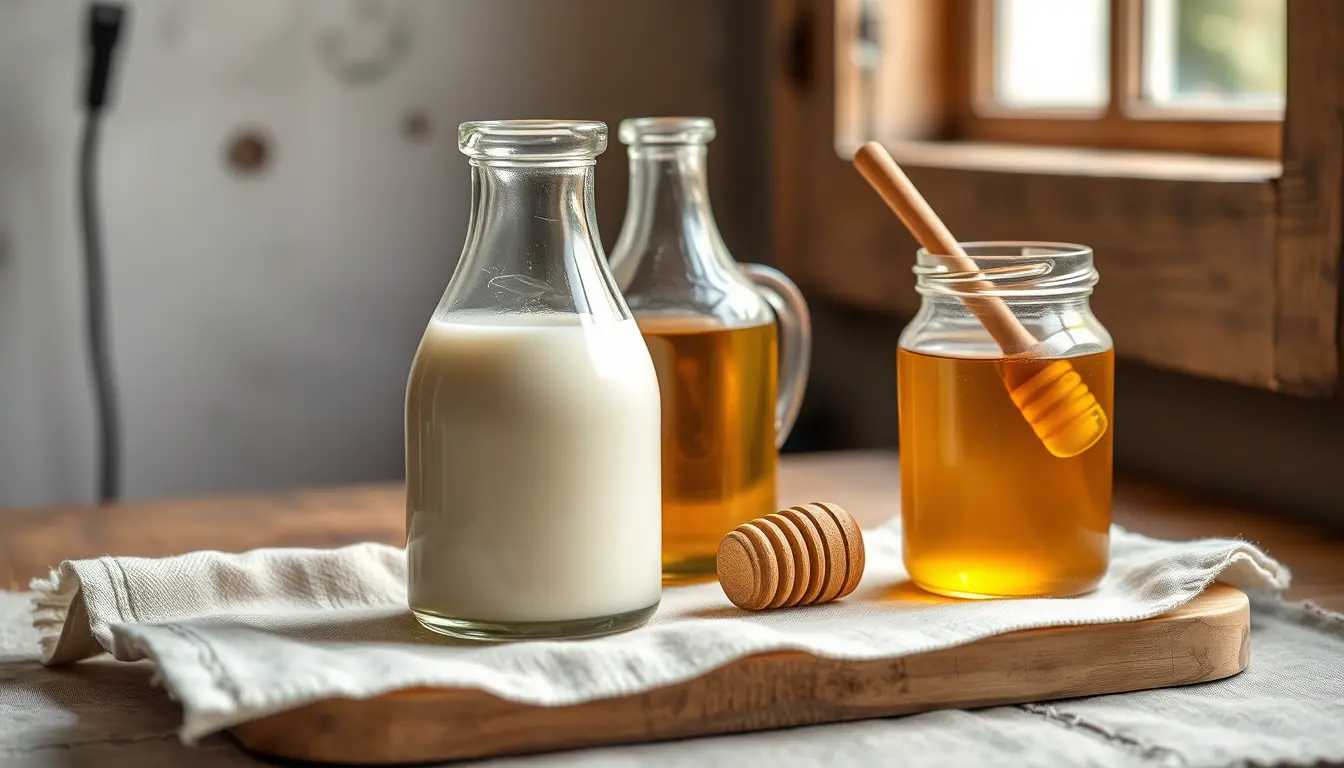
A US cup (236.6 ml) of whole milk weighs about 244 g, a cup of vegetable oil about 218 g, and a cup of honey about 336 g. Water, for comparison, comes to about 237 g. So milk is a touch heavier than water, oil is lighter, and honey is about 40% heavier. If you treat millilitres as grams for every liquid, milk and cream will be close enough, oil will be off by about 9%, and honey and other syrups will be well short.
Why liquids don’t all weigh the same
A cup measures volume, the space an ingredient takes up. Weight depends on how dense the ingredient is. Water weighs about 1 g per millilitre, and other liquids sit above or below it:
- Milk is mostly water, with dissolved sugar, protein and minerals that make it slightly denser. Whole milk comes out at about 1.03 g per millilitre.
- Oil is lighter than water, which is why it floats on top. Most cooking oils weigh around 0.91 to 0.92 g per millilitre.
- Honey is a thick sugar solution with little water, about 1.4 g per millilitre. Maple syrup and molasses are similar.
Those differences are small for milk, noticeable for oil, and large for syrups.
Weights at a glance
The cups to grams converter uses density for liquids and syrups. For US measures, it gives:
| Ingredient | 1 US cup | ¼ cup | 1 tbsp |
|---|---|---|---|
| Water | 237 g | 59 g | 15 g |
| Whole milk | 244 g | 61 g | 15 g |
| Heavy cream | 238 g | 60 g | 15 g |
| Vegetable oil | 218 g | 54 g | 14 g |
| Olive oil | 215 g | 54 g | 13 g |
| Honey | 336 g | 84 g | 21 g |
| Maple syrup | 312 g | 78 g | 20 g |
| Molasses | 341 g | 85 g | 21 g |
At the tablespoon level, most liquids land within a gram or two of each other, but honey and molasses are already noticeably heavier.
Metric cups weigh more
Australian, New Zealand and many Canadian and European recipes use a 250 ml metric cup, about 6% larger than a US cup. Switch the converter to metric cups and a cup of whole milk becomes 258 g, vegetable oil 230 g, and honey 355 g. If a recipe’s origin is unclear, check whether it uses 15 ml or 20 ml tablespoons and whether butter comes in sticks or grams. US, UK and Australian recipe measurements compared explains the differences.
Converting a real recipe
Here is the liquid part of a typical muffin recipe, converted with the tool in US cups:
- ¾ cup whole milk: 183 g
- ½ cup vegetable oil: 109 g
- 3 tbsp honey: 63 g
- ¼ cup maple syrup: 78 g
If you had measured all of those as if they were water, you would have used about 177 g, 118 g, 44 g and 59 g. The milk and oil would barely matter, but the honey would be 19 g short and the maple syrup another 19 g, which changes the sweetness and moisture.
The converter also works backwards. Enter 100 g of honey, and it tells you that’s about 0.3 cup, or 4.8 tablespoons, which helps when a gram recipe meets a cupboard full of spoons.
Weighing sticky liquids
The easiest way to handle honey, syrups and molasses is to skip the cup entirely. Put the mixing bowl on the scale, press tare, and pour until you reach the weight. Nothing sticks to a measuring cup, so nothing gets left behind.
If you are pouring into a separate container, lightly oiling it first helps the syrup slide out. Weigh the oiled container empty so the extra oil doesn’t count.
Thick, cold honey is slow to pour and easy to overshoot. Warm the jar in a bowl of hot water for a few minutes, and it flows more evenly. That doesn’t change its weight per millilitre in any meaningful way.
Liquid vs dry measuring cups covers how to read a cup accurately if you do use one, and why bakers weigh ingredients instead of using cups explains the bigger picture.
When the difference matters
For milk and water in most bread and cake recipes, a cup is close enough. A few grams either way won’t change the result.
It matters more when:
- A recipe uses a lot of honey or syrup. Granola, honey cakes, gingerbread and flapjacks rely on the sugar for texture and binding. Underfilling makes them crumbly.
- Oil is a large share of the fat. In oil-based cakes, a 10% swing in oil changes moistness and tenderness.
- You are scaling a recipe up. A small error per cup multiplies when you double or triple a batch.
For sugar, the same principle applies with a different twist, since crystal size and packing affect the weight. Granulated, brown and powdered sugar each have their own figures, listed in the weight of a cup of sugar.
Other liquids you’ll meet
The converter covers the most common liquids, but recipes call for others too. A few rules of thumb:
- Buttermilk and kefir weigh close to whole milk, around 240 to 245 g per US cup.
- Yogurt and sour cream are thicker and are usually spooned into a dry cup. Their weight depends on how firmly you pack them, so weighing is much more reliable. Greek yogurt in particular varies between brands.
- Fruit juice is a little heavier than water because of its sugar, often around 245 to 250 g per cup.
- Golden syrup and corn syrup are close to honey and maple syrup in density, far heavier than water.
- Melted chocolate is best weighed before melting, since the solid bar or chips are easy to measure.
When a recipe gives grams for an ingredient that you would normally measure by the cup, trust the grams. They were probably what the recipe writer actually used.
Liquid measuring mistakes
- Treating millilitres as grams for syrups. A cup of honey is about 336 g, not 237 g.
- Measuring honey in a cup and scraping out only part of it. Several grams stay on the sides.
- Confusing a US cup with a metric one. The difference is 6% on every cup.
- Using cold, crystallised honey by volume. It packs unevenly. Weigh it instead.
Liquid weight questions
Do skimmed milk and plant milks weigh the same as whole milk?
Very close. Skimmed and semi-skimmed milk are within a gram or two per cup of whole milk, and most unsweetened plant milks are similar. Thick or sweetened plant milks can be a little heavier, but rarely enough to matter in baking.
Does a cup of melted butter weigh the same as a cup of solid butter?
Not quite. The figures for butter assume it was measured solid, from the stick or block. Melted butter takes up slightly less space for the same weight, so a cup of it weighs a little less. When a recipe says “1 cup butter, melted”, measure the butter before melting.
Why does my honey weigh more than the chart says?
The figures assume liquid honey filled level to the line. Overfilling a cup, measuring a cup heaped with crystallised honey, or using a very thick raw honey can all add weight. Weighing directly into the bowl avoids the problem.
Is a cup of water always 237 g?
Only for a US cup, which holds 236.6 ml. Water weighs 1 g per millilitre at room temperature, so a 250 ml metric cup holds 250 g. If a recipe seems far too wet or dry, check which cup it was written for.