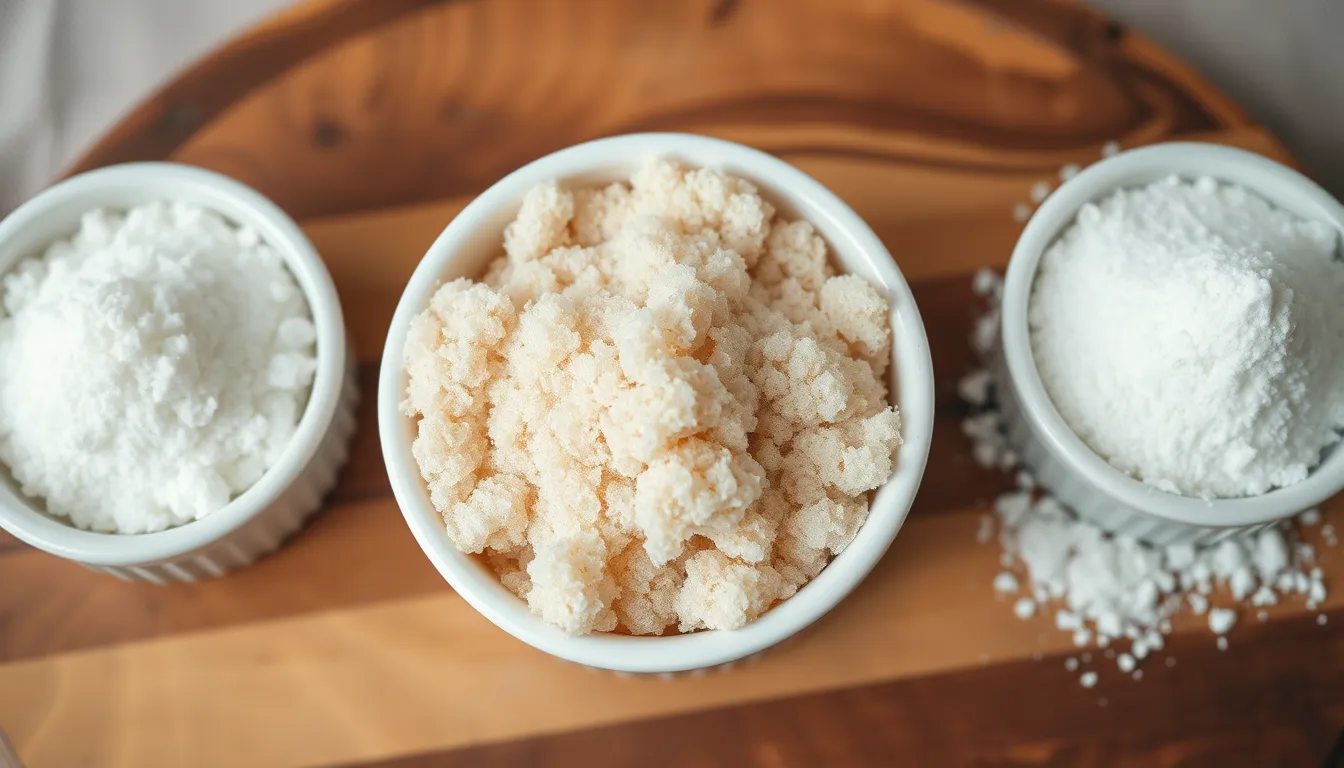
One US cup of granulated white sugar weighs about 198 g (7 oz). A cup of brown sugar, packed firmly, is heavier at about 213 g, and a cup of powdered sugar, spooned in lightly, weighs only about 113 g. Those are the figures in the cups to grams converter, which is based on the King Arthur Baking ingredient weight chart.
So a “cup of sugar” can mean anything from 113 g to 213 g depending on which sugar it is. Here is why they differ, and how to convert a recipe without guesswork.
Sugar weights at a glance
All figures are for a US cup of 236.6 ml.
| Measure | Granulated | Brown, packed | Powdered |
|---|---|---|---|
| 1 cup | 198 g | 213 g | 113 g |
| ¾ cup | 149 g | 160 g | 85 g |
| ⅔ cup | 132 g | 142 g | 75 g |
| ½ cup | 99 g | 107 g | 57 g |
| ⅓ cup | 66 g | 71 g | 38 g |
| ¼ cup | 50 g | 53 g | 28 g |
| 1 tbsp | 12 g | 13 g | 7.1 g |
| 1 tsp | 4.1 g | 4.4 g | 2.4 g |
Many recipes round a cup of granulated sugar to 200 g, and that works fine in practice.
Why the three sugars weigh so differently
Granulated sugar
White sugar is made of small, hard crystals that pour freely and settle into a cup in much the same way every time. That makes it one of the more reliable ingredients to measure by volume. Two people filling a cup of granulated sugar will usually land within a few grams of each other.
Brown sugar
Brown sugar is white sugar coated with molasses, which makes it soft, moist and clumpy. Loose, it traps a lot of air. That is why recipes say “firmly packed”: you press it into the cup until it holds the cup’s shape when turned out. Packed that way, it is denser than white sugar, which explains the higher weight. Light and dark brown sugar weigh about the same per cup.
Powdered sugar
Powdered sugar, also called confectioners’ or icing sugar, is sugar ground to a fine dust, usually with a little cornstarch added to stop it caking. The fine powder traps air between the particles, so a cup holds far less sugar by weight. It also settles in the bag, so a cup scooped from a packed bag can weigh noticeably more than one spooned from a freshly opened one.
Sifting makes it lighter still. “1 cup sifted powdered sugar” means sift first, then measure, and gives less sugar than “1 cup powdered sugar, sifted”, where you measure first and sift afterward.
Metric cups weigh more
Australia, New Zealand, Canada and some other countries use a metric cup of 250 ml, a little larger than the US cup. In the converter, switching to the metric cup gives about 209 g for granulated sugar, 225 g for packed brown sugar and 119 g for powdered sugar.
The difference is about 6%, which is small for one cup but adds up in a recipe with several. Check where a recipe comes from before you convert it. British recipes rarely use cups for sugar, but when they do, they usually mean the metric cup.
Converting a real recipe
Suppose a cake recipe calls for 1½ cups of granulated sugar and ½ cup of packed brown sugar in the batter, 3 tablespoons of granulated sugar for a crumb topping, and 3½ cups of powdered sugar for the frosting. Using the converter with a US cup:
- 1½ cups granulated: 297 g
- ½ cup brown, packed: 107 g
- 3 tbsp granulated: 37 g
- 3½ cups powdered: 396 g
Write the grams next to the original measures once, and you never have to pack or level a cup of sugar again.
It works in the other direction too. A recipe from a metric cookbook asking for 250 g of granulated sugar comes out at 1¼ US cups. The same 250 g of powdered sugar is about 2.21 cups, and 100 g of brown sugar is about 0.47 cup, just under half a cup.
Convert your own recipe:
Why the exact amount matters
Sugar does more than sweeten. It keeps cakes moist, helps cookies spread and crisp, tenderises crumb, feeds browning and stabilises whipped egg whites. A cookie recipe with 10% too much sugar spreads thinner and bakes crisper; one with too little stays thick and pale. In frosting, an extra half cup of powdered sugar can make the difference between spreadable and stiff.
That is why weighing sugar pays off, even though granulated sugar is reasonably consistent by volume. Why bakers weigh ingredients instead of using cups explains the bigger problems cups cause with flour.
If you have to use a cup
No scale to hand? You can still get close to the chart figures by measuring each sugar the way they assume.
- Granulated: spoon or pour the sugar into the cup until it mounds, then sweep off the excess with a straight edge. Don’t tap or shake the cup.
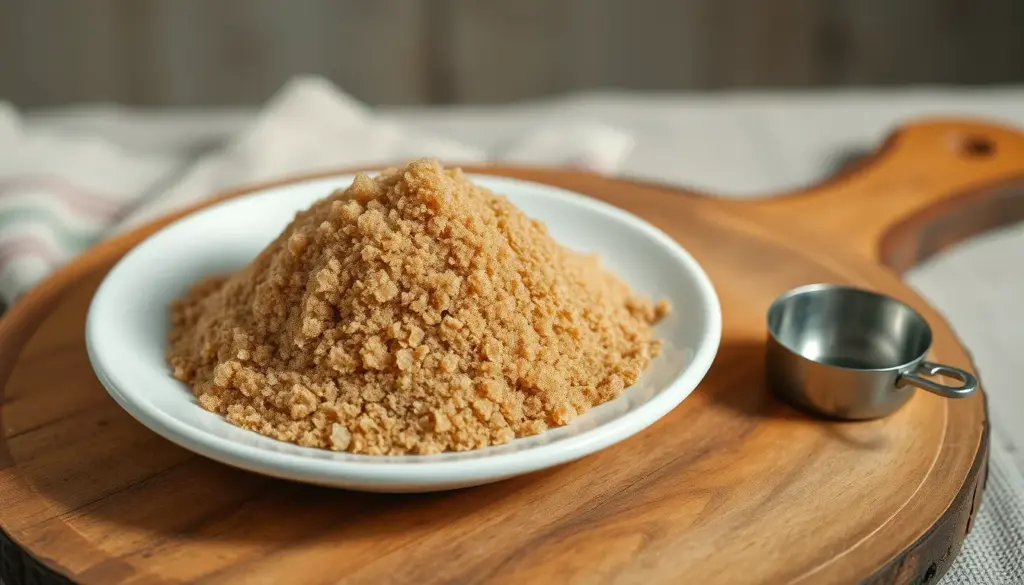
- Brown: press it in with the back of a spoon, a layer at a time, until the cup is full and firm. Level the top. Turned out, it should keep the cup’s shape.
- Powdered: whisk or stir the sugar in the bag to loosen it, spoon it lightly into the cup without pressing, and level it.
Use dry measuring cups for all three. A glass jug meant for liquids can’t be levelled, and the reading depends on how the sugar settles.
Sugars the converter doesn’t list
Caster or superfine sugar, demerara, turbinado and coconut sugar all have their own crystal sizes and densities, so a cup of each weighs a little differently. If a recipe gives cups for one of these, the most reliable approach is to fill a cup the way you normally would and weigh it once. Note the figure on the bag or in your recipe book and use it from then on.
Measuring mistakes
- Scooping brown sugar loosely. A loose cup can weigh far less than a packed one. Press it in until it holds its shape.
- Scooping powdered sugar from a settled bag. Stir or fluff it first, then spoon it in.
- Using the granulated weight for every sugar. Powdered sugar weighs just over half as much per cup.
- Mixing up US and metric cups. Check the recipe’s origin.
- Converting half the recipe. If you weigh the sugar, weigh the flour and butter too, or the balance still depends on the cups.
When you also need to scale a recipe to a different tin, how to convert a cake recipe to a different pan size takes the weighed recipe the rest of the way.
Sugar questions
Is caster sugar the same as granulated for weighing?
Close, but not identical. Caster sugar has smaller crystals that pack a little more tightly, so a cup can weigh slightly more. If you are working from a British recipe in grams, simply weigh the caster sugar and you avoid the question entirely.
My brown sugar has gone hard. Does that change its weight?
Not the weight of the sugar itself, just how it fills a cup. Hard lumps leave gaps, so a cup of hardened brown sugar usually weighs less than it should. Weigh it instead, or soften it first by sealing it in a container with a slice of bread or a damp paper towel overnight.
How many cups are in a pound of sugar?
It depends on the sugar. By the converter’s figures, a pound (454 g) of granulated sugar is about 2.29 cups, a pound of packed brown sugar is about 2⅛ cups, and a pound of powdered sugar is about 4 cups. That is handy when a recipe says “one box” and you want to know how much to buy.
Can I swap brown sugar for white gram for gram?
Yes, by weight the swap is straightforward. Expect a softer, moister result with a faint caramel flavour, and cookies that spread a little less and stay chewier. Swapping by cups is less reliable, because of the difference in packing.