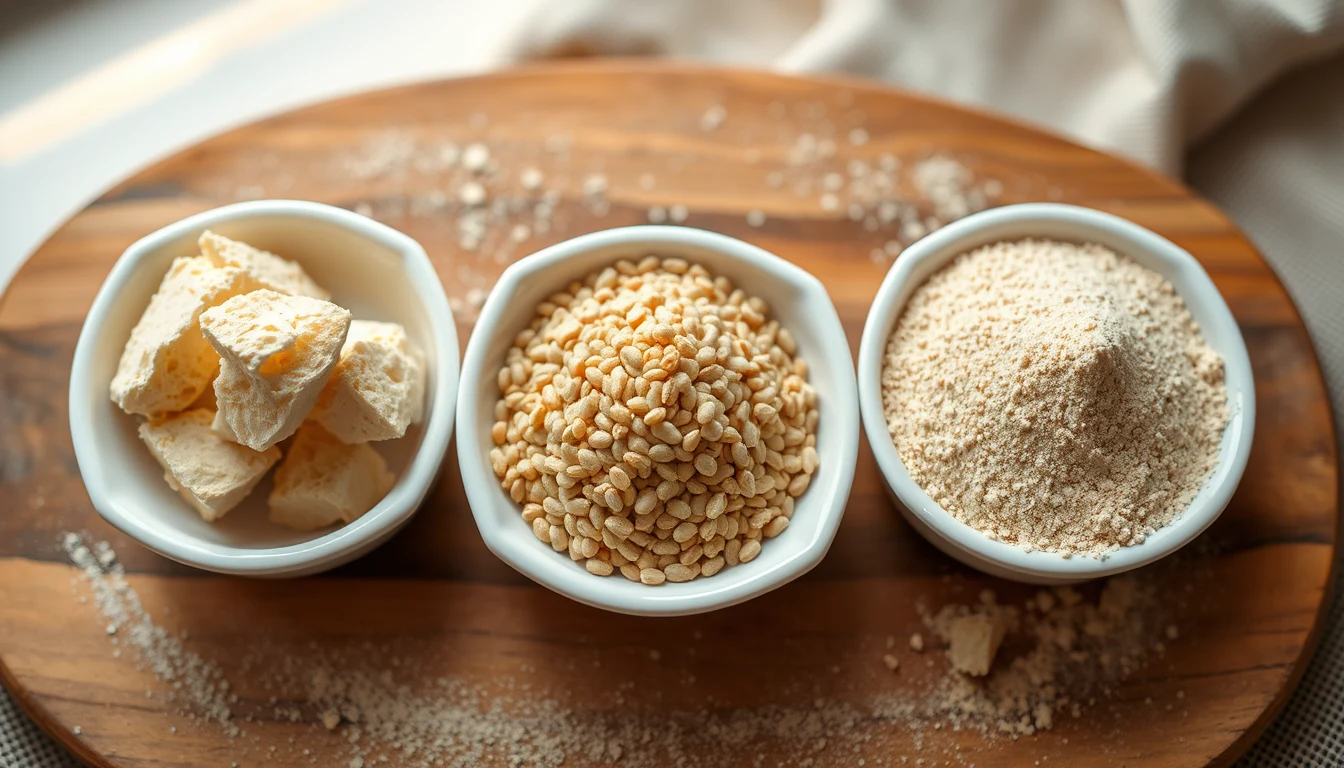
All three are the same baker’s yeast, sold in different forms. Fresh yeast is moist and perishable, active dry yeast is dried into coarse granules, and instant yeast is dried into fine granules that can go straight into the flour. They swap by weight at roughly 3 parts fresh to 1.2 parts active dry to 1 part instant, so 15 g of fresh yeast becomes 6 g of active dry or 5 g of instant. Beyond that, the differences come down mostly to convenience, shelf life and how you add them to the dough.
That means you can bake almost any recipe with whichever yeast is in your cupboard, as long as you convert the amount. Getting that conversion wrong is the usual reason a swapped recipe rises too fast or barely at all.
What sets them apart
Fresh yeast
Also sold as cake or compressed yeast, it comes as a soft, pale, crumbly block that must be kept in the fridge. Much of its weight is water, which is why you need the most of it. It dissolves easily and works well in enriched doughs, and it is common in European recipes and professional bakeries. Its drawback is a short life: use it by the date on the pack, and throw it out if it turns dark, dry or smells unpleasant.
Active dry yeast
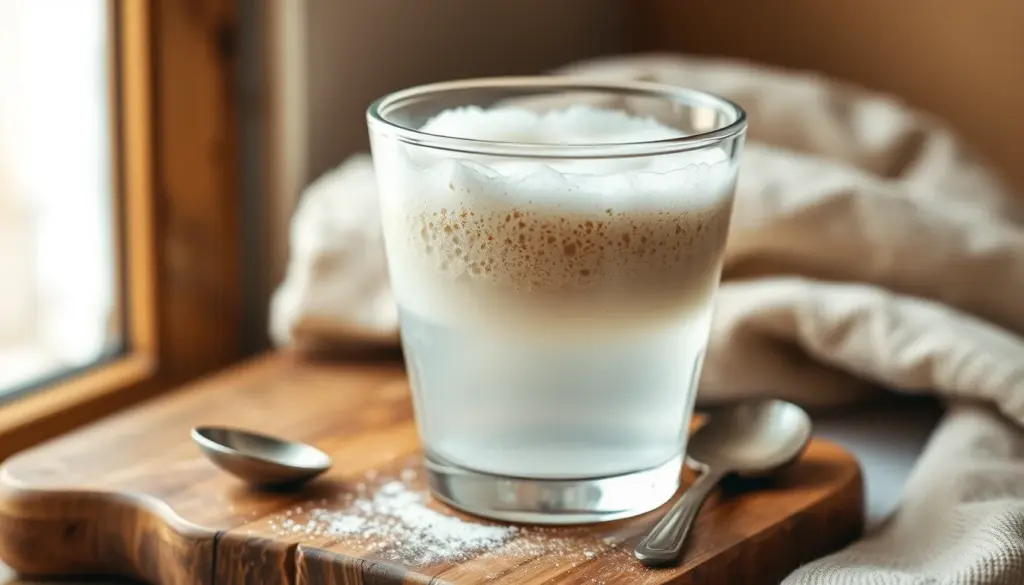
This is yeast dried into larger granules. Traditionally it is stirred into lukewarm water, around body temperature, and left for five to ten minutes before mixing. Many modern active dry yeasts can go straight into the flour, but dissolving it first does double duty as a freshness test: if it hasn’t started to foam by then, the yeast is past its best. Unopened, it keeps for a long time in a cool cupboard.
Instant yeast
Sometimes labelled fast-action, rapid-rise or bread machine yeast, it is dried into very fine particles and is the most concentrated of the three by weight. It goes straight in with the dry ingredients with no soaking. Once opened, keep it in an airtight container in the fridge or freezer and it will stay lively for months. For very sweet doughs there is also an osmotolerant version, often in a gold packet, designed to work in doughs with a lot of sugar, which slows ordinary yeast down.
Converting between them
The standard conversion by weight is 1 part fresh = 0.4 parts active dry = one third of a part instant. The reason is concentration: in a gram of fresh yeast, much of the weight is water, while drying packs more working yeast into every gram of the dried types.
A few conversions worth remembering, all taken from the yeast converter:
- Half a 42 g fresh yeast cube (21 g) equals 8.4 g of active dry or 7 g of instant. That is exactly one 7 g packet of instant yeast, or 2¼ tsp.
- 15 g of fresh yeast, a common amount in European bread recipes, equals 6 g of active dry (about 1⅞ tsp) or 5 g of instant (about 1⅝ tsp).
- Two packets of active dry (14 g) equal 11.7 g of instant or 35 g of fresh.
Which one should you buy?
For most home bakers, instant yeast is the practical choice. It keeps well, needs no soaking, and its concentration makes small quantities easy to weigh. Buy a larger pack and store it in the freezer, and it costs much less per loaf than packets.
Fresh yeast is worth trying if you bake enriched doughs such as brioche or cinnamon rolls often and can find it reliably. Some bakers find it gives those doughs a slightly softer, rounder flavour, though the difference is small compared with fermentation time.
Active dry yeast is perfectly good bread yeast, and in some shops it is the only kind available. Use it the same way as instant, but either dissolve it first or allow a slightly slower start.
Adding each one to the dough
- Instant: stir it through the flour first, then add the liquids, so it ends up evenly spread.
- Active dry: dissolve it in part of the recipe’s water at around body temperature, wait for a little foam, then add it with the rest of the liquid.
- Fresh: crumble it finely into the flour, or stir it into a little lukewarm water or milk taken from the recipe.
Whichever you use, the dough temperature matters more than the water you started with. Why dough temperature matters more than time shows how to pick a water temperature that lands the dough where you want it.
Swapping yeast for sourdough, and back
Commercial yeast and a sourdough starter don’t convert with a simple ratio, because the starter is also flour and water. The yeast to sourdough converter takes care of that.
Take a yeasted loaf with 400 g flour, 280 g water and 8 g salt. Converted to sourdough with 20% starter at 100% hydration, it becomes 80 g of starter, 360 g of flour to add, 240 g of water to add and 8 g of salt, still at 70% hydration. The yeast is left out, and the rise now takes hours rather than one or two. Bulk fermentation: how to tell when it’s done helps you judge the longer rise.
The reverse direction is handy when you need bread today. Enter a sourdough loaf of 475 g flour, 335 g water, 50 g starter and 10 g salt, leave the yeast at the default 1%, and the converter hands back 500 g flour, 360 g water, 10 g salt and 5 g of instant yeast. Switch the type to active dry and it asks for 6 g; switch to fresh and it asks for 15 g, the same trio of numbers from the top of this page.
Common mistakes
- Swapping fresh for dry gram for gram. Using 15 g of instant where a recipe wants 15 g of fresh triples the yeast. The dough races, smells boozy and can collapse in the oven.
- Using water that is too hot. Water that feels hot rather than warm can damage yeast before it has a chance to work.
- Keeping an open packet in a warm cupboard for months. Dried yeast slowly loses strength once opened. Seal it and keep it cold.
- Rounding tiny amounts. In a slow dough with 1 g of instant yeast, a quarter teaspoon too much makes a noticeable difference. Weighing on a 0.1 g pocket scale is the easy fix, and why bakers weigh ingredients covers the wider case for grams.
- Changing the yeast but not the timing. A switch from fresh to instant shouldn’t change rise times if the conversion is right. If it does, look at dough temperature before blaming the yeast.
Yeast questions
Is rapid-rise yeast the same as instant yeast?
Nearly. Both are fine-grained dried yeasts that go straight into the flour. Some rapid-rise products are designed for a single quick rise, so for doughs with a long or cold fermentation, a standard instant yeast is the safer pick. Check the packet if you are unsure.
Can I freeze fresh yeast?
You can, well wrapped, but it loses some strength and turns soft and pasty when thawed. Use it straight from the freezer by crumbling or grating it, and expect a slightly slower rise.
Does the type of yeast change the flavour of the bread?
Only slightly. Flavour comes much more from how long and how cool the dough ferments, and from the flour, than from which form of yeast you used.
Why do some recipes use just a pinch of yeast?
A small amount of yeast multiplies over many hours, so a long, cool rise needs very little to start with. The slow fermentation gives the dough time to develop flavour and makes the timing more forgiving.