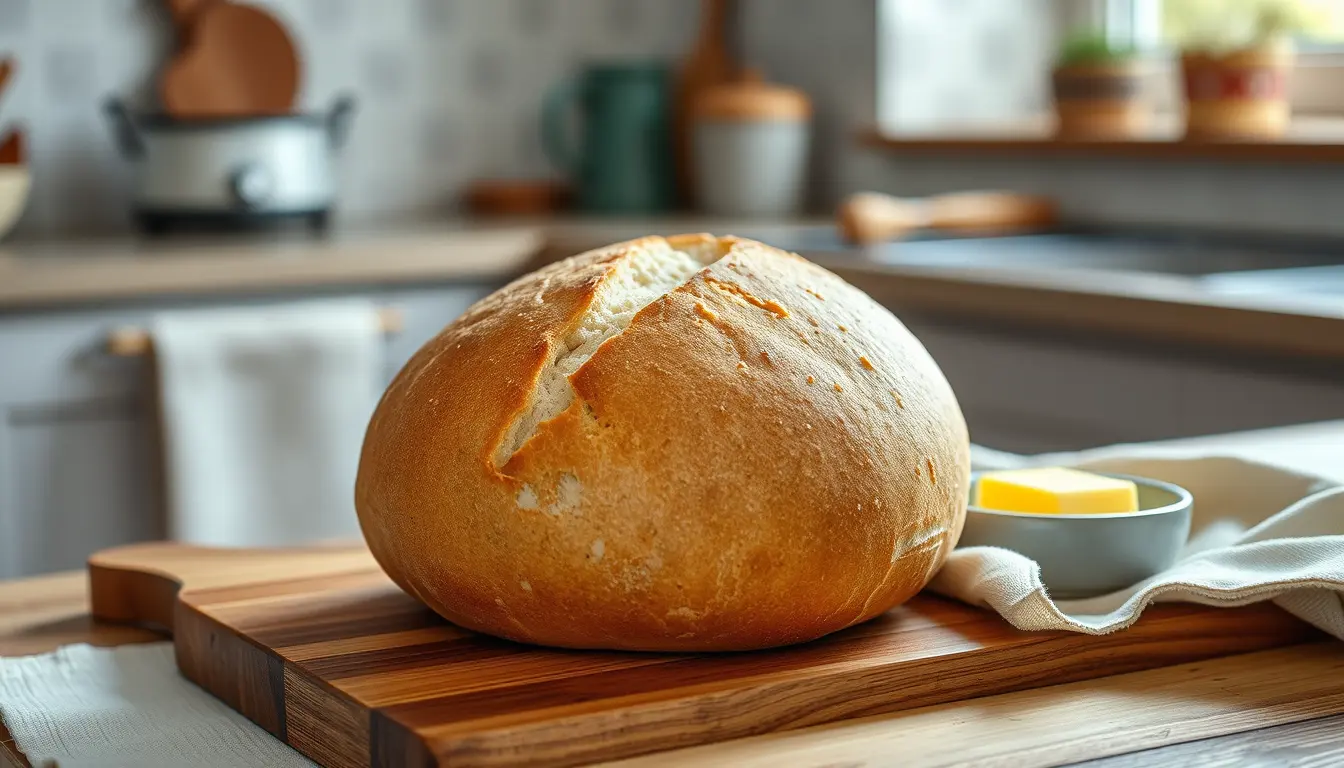
Leave it on the counter for the first two days, cut side down on a board or inside a cloth or paper bag. By day three, slice whatever you won’t eat soon and freeze it. Keep it out of the fridge. That simple routine keeps a sourdough loaf tasting good for most of a week, with a crisp crust at the start and good toast at the end.
Sourdough already has an advantage here. Its acidity slows mould, and a well-fermented loaf stales more slowly than most yeasted bread. The storage choices below make the most of that head start.
A day-by-day plan
| When | Where to keep it | What you get |
|---|---|---|
| Baking day | Uncovered on a rack until fully cool, then on a board | The crispest crust of the loaf’s life |
| Days 1 and 2 | Cut side down on a board, or in a cloth or paper bag | Crust slowly softens, crumb stays moist |
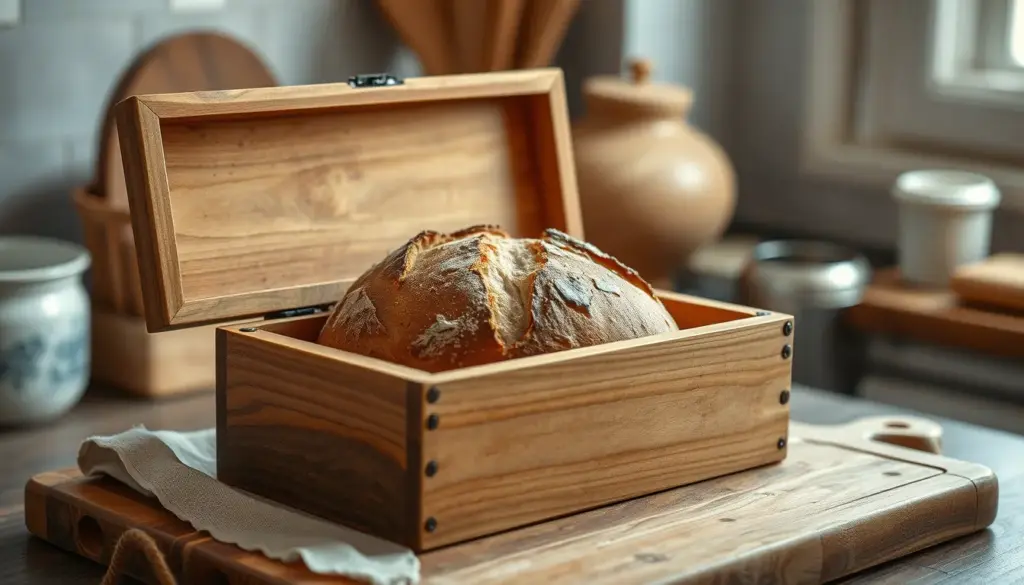
| Days 3 and 4 | In a bread box or loosely closed bag | Softer crust, crumb starting to firm |
| Anything you won’t eat by day 4 | Sliced, bagged and frozen | Toast-ready slices for weeks |
Treat those days as a guide. A large, wet, whole grain loaf keeps longer than a small white one. A dry kitchen speeds things up, and a warm, humid one makes mould more likely.
What “stale” actually means
Bread doesn’t go stale mainly by drying out. Most of the change happens inside the crumb, where starch that swelled and softened in the oven slowly reorganises into a firmer, more crystalline structure as it cools and sits. Bakers call this retrogradation. It is why a stale slice feels dry even when it has lost little water, and why warming it in a toaster or oven briefly softens it again.
The crust goes the other way. Moisture moves outward from the crumb and turns the crisp shell leathery. So there are two things to manage: slowing the crumb’s firming, and deciding how much you care about the crust.
Why the fridge is the worst place
Retrogradation runs fastest at cool temperatures just above freezing, the range most fridges sit in. A loaf kept in the fridge firms up noticeably faster than one on the counter. Freezing is different: well below zero, the process almost stops, which is why frozen bread thaws close to how it went in.
The one argument for the fridge is mould in a very hot, humid climate. Even then, freezing slices is usually the better answer.
Choosing a cover
Each option trades crust against crumb.
- Nothing at all, cut side down on a board: best crust, and the cut face seals itself against the wood. Works well for a day or two.
- Linen or cotton bread bag: lets the loaf breathe, so the crust stays fairly crisp while the crumb dries more slowly than in open air.
- Paper bag: similar to cloth for a day or two, then the loaf dries faster.
- Bread box: holds a little humidity around the loaf. Crust softens gently, crumb keeps well. Keep the box clean and dry, and don’t pack it tight with several loaves.
- Plastic bag or airtight box: keeps the crumb soft longest but turns the crust soft within hours, and in a warm kitchen it encourages mould. Better for sandwich loaves than crusty ones.
- Beeswax wraps: somewhere between cloth and plastic. Fine for a cut half loaf.
If a crisp crust softens on day one, the loaf may simply have been slightly underbaked or bagged before it cooled. Our guide to crust problems explains why some crusts go soft so quickly.
Freezing it properly
Freezing is the most useful storage method for anyone who bakes more than they can eat in three or four days.
- Let the loaf cool completely. Warm bread traps steam in the bag, which turns to ice crystals.
- Slice it first unless you plan to thaw the whole loaf at once. Single slices go straight into the toaster.
- Pack the slices in a freezer bag in stacks, press out as much air as you can and seal it.
- For a half or whole loaf, wrap it tightly in plastic or foil and then put it in a bag.
- Write the date on the bag.
Frozen bread stays safe indefinitely at −18 °C (0 °F), but quality fades as ice crystals form and the crust picks up freezer flavours. For the best texture, use it within about three months.
To thaw a whole loaf, leave it in its wrapping at room temperature for three to four hours so the condensation forms on the wrap rather than the crust. Then crisp it in a hot oven, around 200 °C (390 °F), for 5 to 10 minutes.
Reviving a loaf that has firmed up
A two- or three-day-old loaf can taste close to fresh again. Run the crust quickly under the tap or spray it with water, then put it in an oven at about 180 °C (350 °F) for 5 to 10 minutes, a little longer for a whole loaf. The heat reverses some of the starch firming and re-crisps the crust.
The effect doesn’t last. A revived loaf stales quickly afterwards, so warm only what you’ll eat within a few hours.
Bake smaller loaves
If a large loaf regularly outlasts its best days, make two smaller ones from the same dough and freeze one whole on the day it is baked. The sourdough recipe builder sets the batch from the number of loaves and the weight of each. For two 450 g loaves at 72% hydration with 2% salt and 15% starter, it gives 478 g of flour, 334 g of water, 78 g of starter and 10 g of salt, making 900 g of dough in total.
Smaller loaves also bake faster and cool sooner, so check them about 5 to 10 minutes earlier than a single large loaf. A loaf frozen whole the day it was baked thaws much closer to fresh than one frozen on day three.
Recipes that keep longer
How you make the loaf affects how long it lasts, before storage even comes into it.
- Whole grain flour: holds more water and stays moist longer. Adding whole wheat and rye to sourdough covers how much to use.
- Higher hydration: a wetter dough gives a moister crumb that firms more slowly.
- A full bake: a deeply browned crust protects the crumb better than a pale one.
- A longer, slightly more acidic ferment: acidity slows mould. A loaf with more tang tends to keep a little better, which is one more reason to read how to control sourness.
Signs it’s time to let go
Mould on bread spreads further than you can see, because its threads run through the soft crumb. If you spot fuzzy patches of any colour, throw out the whole loaf rather than cutting the mouldy part away. A loaf that is merely hard and dry, with no mould and no off smell, is still good for breadcrumbs, croutons, bread pudding or panzanella.
Storage mistakes
- Bagging the loaf warm. Trapped steam softens the crust and invites mould.
- Keeping it in the fridge. It firms up faster there than anywhere else in the kitchen.
- Freezing it too late. Freezing preserves the loaf as it is. A three-day-old loaf thaws as a three-day-old loaf.
- Leaving it near the oven or a sunny window. Warmth dries the crust and speeds up mould.
- Slicing from the middle and leaving both faces open. Cut from one end, or cut the loaf in half and slice from the centre outwards, pressing the two halves back together.
Fresh bread questions
Is a bread box worth buying?
If you bake a loaf every week, usually yes. It keeps a crusty loaf in good condition for a day or two longer than a cloth bag in a dry kitchen. In a humid climate, a bag with more airflow can be the safer choice.
Why did my loaf go mouldy in two days?
The likely culprits are warmth, humidity and plastic. Bread sealed in a bag on a warm day traps moisture right where mould grows best. Store it in cloth or a bread box, and freeze anything you won’t eat soon during hot weather.
Can I freeze a loaf that’s already a few days old?
You can, but freezing doesn’t undo staling. A day-old loaf freezes and thaws well. One that’s three or four days old is better turned into toast, croutons or crumbs, which freeze well too.