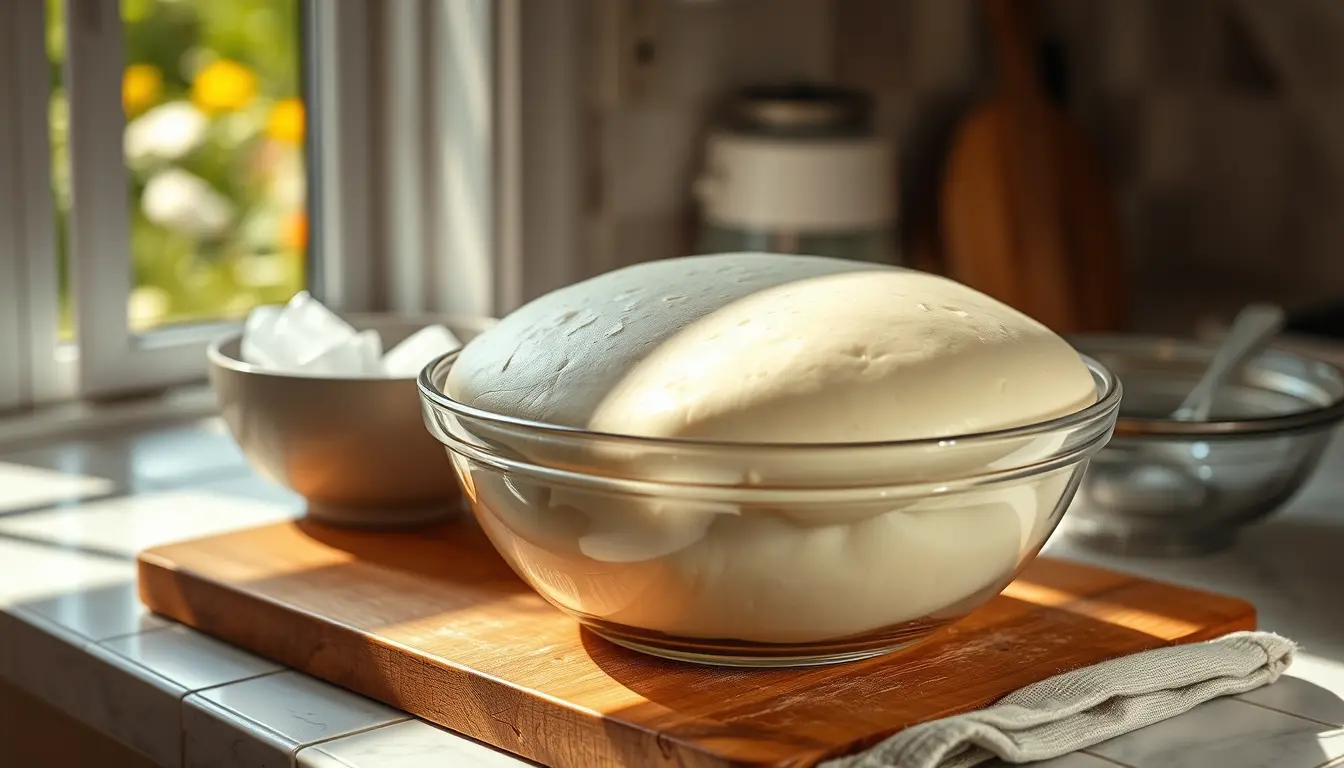
On a 30 °C afternoon, a sourdough recipe written for a mild kitchen can be ready two hours early, and by the time you come back to check, it has gone slack, sticky and overproofed. The fix is not to watch the clock harder. It is to slow the dough down on purpose: mix it cooler, use less starter, end bulk at a smaller rise and let the fridge take over sooner.
Each of those levers is simple. Used together, they turn a summer bake from a race into something you can plan around.
What heat does to a dough
Yeast and bacteria in a starter speed up sharply as they warm. Between about 24 °C and 28 °C, the time a dough needs for bulk drops by about a third. Above about 30 °C the culture still works fast, but the balance shifts: acids build quickly, gluten is broken down faster by enzymes, and the dough loses strength while you wait for it to look ready.
That loss of strength is the real problem. A warm dough can look puffy and lively yet bake flat, because it has fermented past the point where it can hold its shape. Why dough temperature matters more than time explains the relationship in detail. This guide is about the practical moves for a hot kitchen.
Signs you’re running hot
- The dough feels noticeably warm against the back of your hand.
- It loosens and spreads between folds rather than tightening.
- Bubbles appear all over the surface early in bulk.
- The smell turns sharp and boozy before the dough has risen much.
- The shaped loaf flattens as soon as it leaves the basket.
Lever 1: mix with cold water
The water is the one ingredient you can cool easily, and in summer it does most of the work. The dough water temperature calculator works out how cold it needs to be.
Picture a hot spell: the kitchen at 30 °C, the flour at 29 °C and the levain at 30 °C, mixed by hand, with a target dough temperature of 25 °C. The calculator asks for water at 9 °C, colder than any summer tap. Enter a tap temperature of 24 °C and 375 g of total water, and it splits that into 54 g of ice and 321 g of tap water. Weigh the ice into the water, stir until it melts, then mix.
It also helps to keep the flour in a cool cupboard rather than next to the oven, and to mix the levain with cool water so it isn’t adding heat of its own.
Lever 2: use less starter
Starter percentage is the second big dial. Halving it adds a few hours to bulk at any temperature, which is exactly what a hot kitchen needs. The bulk fermentation time estimator shows the effect at a dough temperature of 28 °C:
| Starter, % of flour | Estimated bulk at 28 °C |
|---|---|
| 20% | about 3 h to 4 h 15 min |
| 10% | about 4 h to 5 h 15 min |
| 5% | about 4 h 45 min to 6 h 30 min |
Cutting from 20% to 10% gives back roughly an hour. Combine it with cooler water, so the dough sits at 26 °C instead of 28 °C, and the estimate for 10% becomes about 4 h 45 min to 6 h 30 min. That is close to what a 20% dough takes on a mild spring day.
Try your own temperature and starter amount here:
Lever 3: end bulk at a smaller rise
In a cool kitchen, bakers often let dough grow by 75% or more in bulk. In the heat, that is too far. Above about 26 °C the dough keeps fermenting quickly after shaping, so the estimator’s target rise drops to about 30 to 50%. Stop bulk when the dough has grown by around a third to a half, looks domed at the edges and wobbles as one mass when you shake the container.
A straight-sided, clear container makes this much easier to judge. Mark the starting level with a rubber band or a strip of tape.
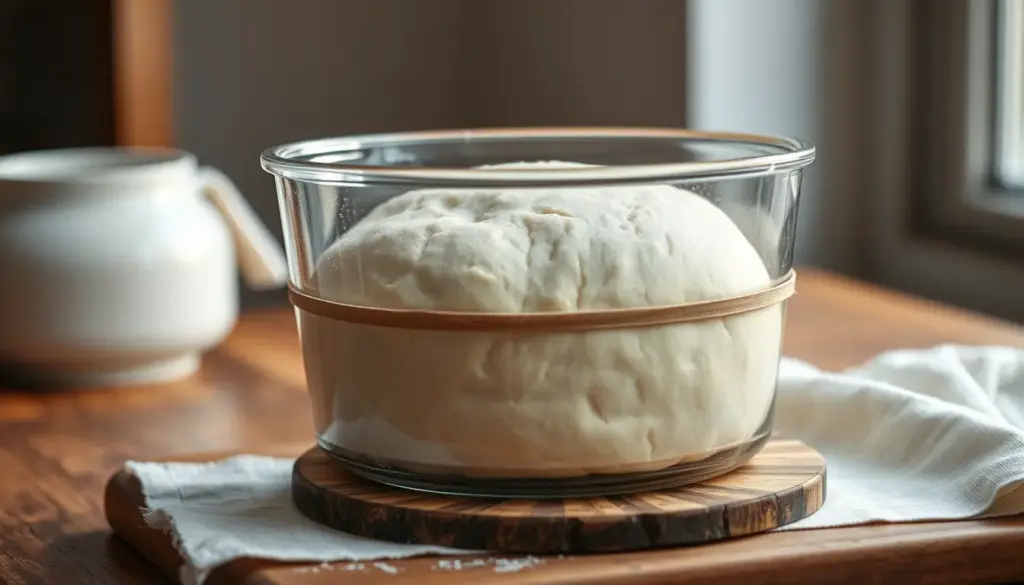
Bulk fermentation: how to tell when it’s done goes through the other signs to look for.
Lever 4: bring the fridge in early
The fridge is the most reliable brake you have. There are two common ways to use it in summer:
- Shape early and retard. End bulk at the low end of the rise, shape, and put the basket straight in the fridge overnight. The loaf keeps proofing slowly while it chills. Cold retard: proofing sourdough in the fridge covers timing and covering.
- Finish bulk in the fridge. Do the folds at room temperature, then move the covered container to the fridge for the second half of bulk. Shape it cold the next morning, proof briefly, and bake.
Either way, the dough spends less of its life in the heat.
Lever 5: look after the starter
A summer starter can peak in three or four hours and collapse soon after. A few changes keep it predictable:
- Feed at a higher ratio, such as 1:5:5, so it takes longer to peak. What starter feeding ratios actually do shows how much time each ratio buys.
- Mix the feed with cool water.
- Keep the jar in the coolest spot in the house, away from sunny windows.
- Use the levain as it reaches its peak, not after it has fallen.
A small hydration trim
Warm dough feels wetter than the same dough at 22 °C, because enzymes loosen the gluten faster. If a recipe feels unmanageable in summer, hold back 2 to 3% of the water. You can always add it during the first set of folds if the dough turns out stiffer than expected.
A plan for a hot day
Here is one way to bake when the kitchen is around 28 to 30 °C, using 10% starter and ice in the water:
- Evening: feed the starter 1:5:5 with cool water and leave it somewhere cool overnight.
- Early morning: mix the dough with iced water, aiming for 25 to 26 °C.
- First two hours: do three or four sets of folds, 30 minutes apart.
- Mid-morning: check the rise every 30 minutes. Stop at about a third to a half.
- Late morning: shape, place in the basket and refrigerate.
- Next morning: bake straight from the fridge.
Mixing early means most of bulk happens before the hottest part of the day.
Hot-weather mistakes
- Following the recipe’s bulk time. It was written for a cooler dough. Go by rise and feel.
- Cooling the dough halfway through bulk only. Chilling a dough that’s already racing helps less than starting it cool.
- Using the starter long after it peaked. An overripe levain makes a weak, acidic dough.
- Leaving the shaped loaf out to proof. In the heat, a counter proof can overshoot in 30 minutes.
- Adding more water because the dough “looks dry”. It will loosen quickly once it warms.
Summer baking questions
Can I do the whole bulk in the fridge?
Yes. Mix with cool water, do your folds over the first hour, then refrigerate the dough for 12 to 24 hours. It rises slowly and may need a short time at room temperature the next day before shaping. Expect a tangier loaf.
Should I add more salt in summer?
Some bakers raise the salt slightly, from 2% to around 2.2% of the flour, because salt slows fermentation a little. The effect is modest. Temperature and starter amount make a much bigger difference, so treat extra salt as a small extra rather than a fix.
My starter peaks in three hours. Is that a problem?
Only if you can’t use it in time. A fast starter is healthy, just warm. Feed it at a higher ratio or with cooler water to stretch the peak toward six to eight hours, or build the levain the night before and keep it cool.
Will air conditioning do the job?
If it keeps the room at 23 to 25 °C, it solves most of the problem. Check the dough itself with a thermometer, though. A spot near a window or appliance can run several degrees warmer than the thermostat suggests.