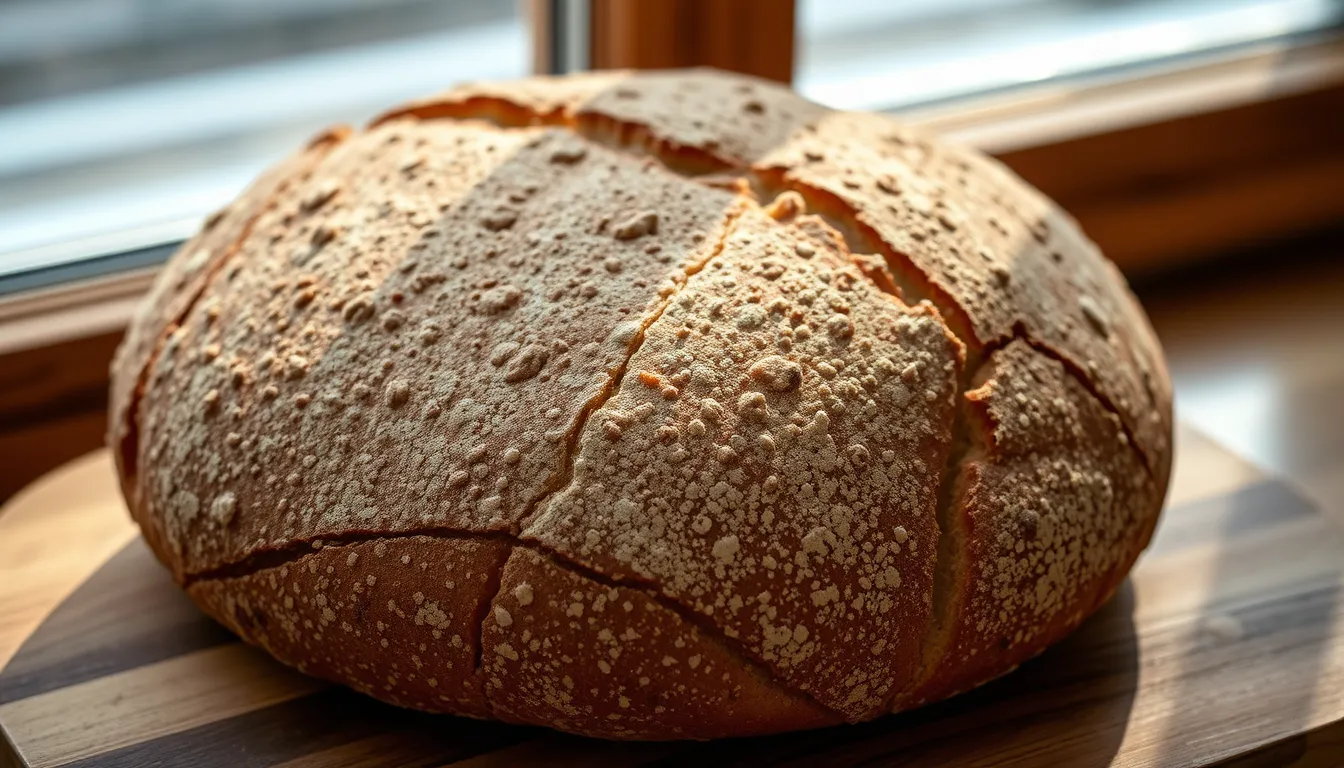
Cold retarding means slowing a dough down by putting it in the fridge, usually after it has been shaped, for anywhere from 8 to 48 hours. At about 3 to 5 °C (37 to 41 °F), fermentation creeps along so slowly that the loaf keeps proofing gently overnight without racing past its peak. You get to bake when it suits you, the flavour deepens, and the cold, firm dough is far easier to score.
For most home bakers it is the single most useful technique in sourdough. Here is how it works, how long to leave the dough, and how to fit it into a real week.
What the cold does to the dough
Fermentation depends heavily on temperature. Every few degrees colder slows the yeast and bacteria noticeably, and at fridge temperature they are working at a small fraction of their room-temperature pace. A final proof that takes two hours on the counter can stretch comfortably across a whole night.
The two partners in a starter don’t slow down equally. Yeast activity drops off sharply in the cold, while the bacteria keep producing acids at a low level. That is why a long retard gives a tangier loaf. It is also why the crust of a retarded loaf often bakes up with small blisters and a deeper colour.
The cold changes the dough’s texture too. Chilled dough is stiffer, holds its shape well when turned out, and lets a blade slide through cleanly. Scores open more predictably, and a well-angled cut is more likely to lift into an ear.
How long can it stay in?
There is no single right answer, because it depends on how far bulk went and how cold your fridge is. These ranges work for most doughs in a fridge at about 4 °C (39 °F):
| Time in the fridge | What to expect |
|---|---|
| 8 to 12 hours | Mild extra flavour, a convenient overnight proof |
| 12 to 24 hours | The most common window, with noticeable tang |
| 24 to 48 hours | Stronger flavour; works best if bulk ended a little early |
| Over 48 hours | Risk of overproofing and a very sour, slack loaf |
If you know the loaf will be in the fridge for a long time, end bulk fermentation slightly earlier than usual. The dough doesn’t chill instantly; a shaped loaf can take a couple of hours to cool through, and it keeps fermenting at a decent pace during that time.
Planning a bake around the fridge
The easiest way to use a cold retard is to decide when you want to bake and work backwards. The sourdough schedule planner does this for you.
Say you want fresh bread at 8:30 AM on Sunday. Your dough sits at about 21 °C (70 °F), you use 15% starter, feed it 1:5:5 the night before, like a 45-minute autolyse and want a 16-hour cold proof. The planner lays it out like this:
- Friday, 7:15 PM: feed the starter; at 1:5:5 it peaks in about 10 h to 15 h.
- Saturday, 6:55 AM: mix the flour and water for the autolyse.
- Saturday, 7:40 AM: add the starter and salt.
- Saturday, 8:10 to 9:40 AM: four sets of stretch and folds, 30 minutes apart.
- Saturday, around 4:00 PM: bulk ends, after about 7 h to 9 h 30 min.
- Saturday, 4:30 PM: shape, then refrigerate the loaf in its basket.
- Sunday, 7:30 AM: preheat the oven with the pot inside.
- Sunday, 8:30 AM: bake straight from the fridge.
Now change the cold proof to 36 hours and keep the Sunday bake. The whole plan shifts back a day: shaping moves to 8:30 PM on Friday, and the starter feed to 11:15 PM on Thursday. Weekday bakers can use exactly this trick to do the hands-on work on a quiet evening. A sourdough schedule for people who work 9 to 5 builds a full weeknight plan around the same idea.
Try your own bake time and fridge hours:
Your fridge matters more than you think
Home fridges vary a lot. One running at 7 °C (45 °F) will proof a loaf much faster than one at 2 °C (36 °F), so the same timing can give very different results in two kitchens. Put a cheap fridge thermometer on the shelf where the dough sits and check it for a day.
Position matters as well. The back of a shelf is usually colder than the door, and the top shelf can be warmer than the bottom. Pick a spot and stick with it so your timings stay repeatable. The reason a few degrees matter so much is explained in why dough temperature matters more than time.
Cover it well
Fridges are dry, and an uncovered dough grows a leathery skin that stops it expanding and makes the crust thick and patchy. Slip the basket into a large food bag, or cover it with a shower cap or an upturned bowl. You want it covered, not sealed airtight with the plastic touching the dough.
Baking straight from the fridge
For most loaves, bake directly from the fridge. The cold dough holds its shape while you turn it out and score it, and the contrast between the cold loaf and the hot pot gives a strong spring.
Do the poke test first. If the dough springs back quickly and feels tight, it is underproofed; leave it at room temperature for 30 to 60 minutes before baking. If it barely springs back at all and feels fragile, it has gone as far as it can, so get it into the oven right away. How to read your crumb shows what each outcome looks like once the loaf is cut.
Retarding the bulk instead
Some bakers put the whole dough in the fridge at the end of bulk, then shape it cold the next day and give it a shorter final proof. It is a useful alternative when you can’t shape at night. The dough is firm and easy to handle, but it needs longer to wake up before the final proof, and cold dough can be stiff to shape. Try the shaped retard first; it is simpler and more forgiving.
Cold retard mistakes
- Treating the fridge as a pause button. Fermentation slows but doesn’t stop, so a dough that was already fully proofed will overproof overnight.
- Leaving bulk to finish in the fridge. A dough that went in underfermented usually stays that way and bakes up dense.
- Opening the fridge door constantly. A crowded, busy fridge runs warmer than its setting.
- Using a fridge that is too cold. Below about 2 °C (36 °F), fermentation nearly stops, and the loaf may still be underproofed after a full night.
- Forgetting the preheat. Plan the hour of oven preheating into your morning.
Fridge proof questions
Can I retard a yeasted loaf the same way?
Yes. Commercial yeast behaves similarly in the cold, and many bakeries retard yeasted doughs overnight. Use a little less yeast than the recipe says, and expect a slightly fuller flavour than the same loaf made in a day.
Can I freeze a shaped loaf instead of retarding it?
You can, but the results are less reliable. Freezing damages some of the yeast, so the thawed loaf rises more slowly and often with less oven spring. The fridge is the better choice for anything up to two days.
Is it safe to leave dough in the fridge for two days?
Yes. Sourdough is acidic and the fridge keeps it cold, so it is well protected. The risk after two days is to the texture and flavour of the loaf, not to safety. Discard it only if you see mould, which is very rare over that time.