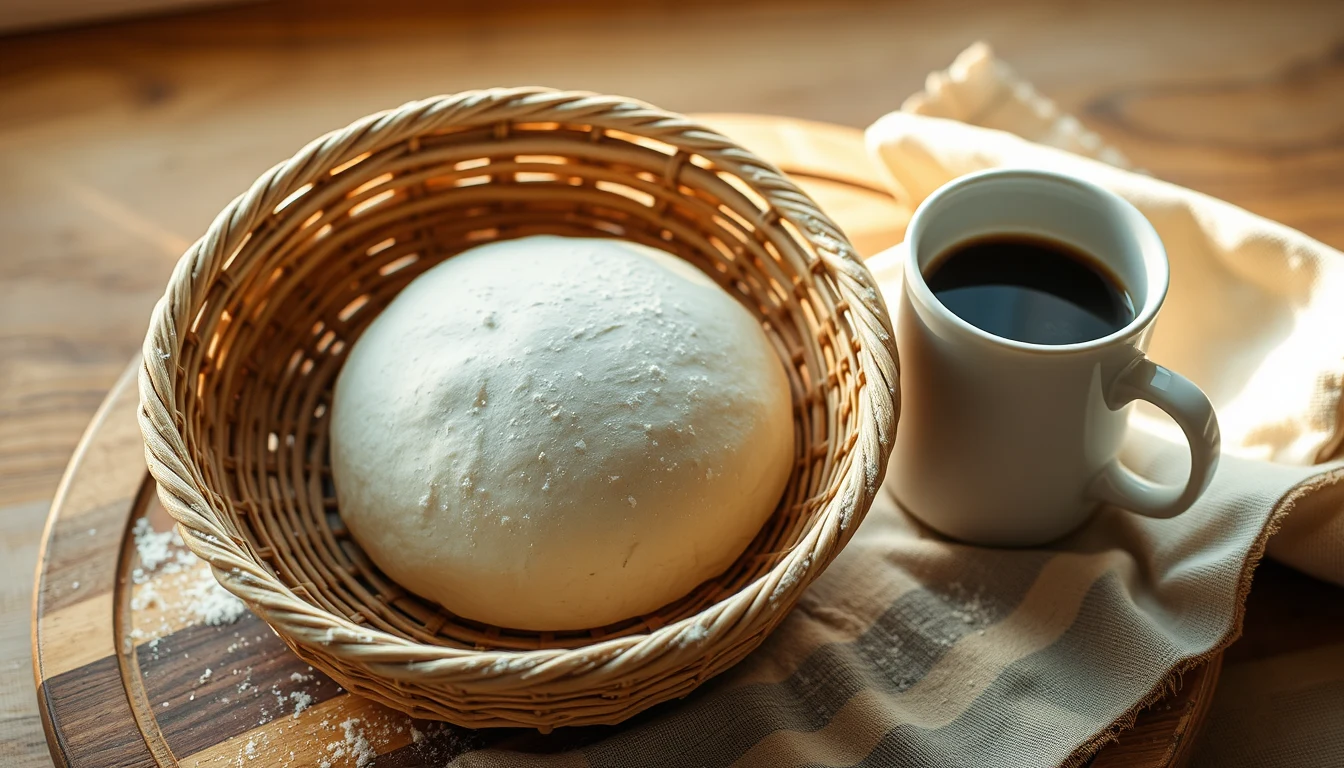
Feed the starter before work, mix the dough in the evening, let it ferment overnight, shape it before you leave in the morning, and bake it when you get home. Two things make that rhythm possible. A small amount of starter stretches bulk fermentation across the night, and the fridge holds the shaped loaf safely through the working day. Below is the full timeline for a kitchen around 21 °C (70 °F), along with how to adjust it if your home runs warmer or cooler.
The typical sourdough recipe assumes a free Saturday: feed at breakfast, mix at lunch, bake by evening. That works if you are home all day. If you aren’t, the answer isn’t to bake less often but to rearrange the steps so the slow parts happen while you sleep or work.
The weeknight plan at a glance
These are the settings entered into the sourdough schedule planner: bake on Wednesday at 7:00 PM, room temperature 21 °C, 10% starter in the dough, a 1:5:5 starter feed, a 30-minute autolyse, and 12.5 hours in the fridge. It returns this timeline:
- Tuesday 8:05 AM: feed the starter 1:5:5 (peaks in about 10 h to 15 h)
- Tuesday 8:00 PM: mix the flour and water, rest 30 min
- Tuesday 8:30 PM: add the starter and salt, mix well
- Tuesday 9:00 PM: stretch and folds, four sets 30 minutes apart, the last at 10:30 PM
- Wednesday 6:00 AM: bulk ends, pre-shape (guide)
- Wednesday 6:30 AM: shape, then into the fridge for 12 h 30 min
- Wednesday 6:00 PM: preheat the oven
- Wednesday 7:00 PM: bake
- Wednesday 7:45 PM: out of the oven
The summary shows bulk fermentation at about 8 h to 11 h and 35 h 45 min from feed to bake. Hands-on time on Tuesday evening is about 20 minutes spread over two and a half hours, and Wednesday morning takes ten minutes.
Why each setting is there
Only 10% starter
The starter percentage is the main dial for how long bulk lasts. At 21 °C, 10% starter gives a bulk of about 8 h to 11 h, long enough to span the night. Leave the starter at the 20% many recipes use and bulk shrinks to about 6 h 15 min to 8 h 30 min. Because it still has to end at 6:00 AM, the planner pushes mixing back to 10:30 PM, runs the folds past midnight with a night flag, and moves the starter feed to 10:05 AM, when you are already at work.
A 1:5:5 feed before work
The starter needs to be ripe when you mix at 8:30 PM, twelve hours after you leave the house. At 21 °C a 1:5:5 feed takes about 10 h to 15 h to peak, which lands neatly in the evening. A 1:1:1 feed made at the same time would peak mid-afternoon and be past its best by dinner. What starter feeding ratios actually do explains why the higher ratio buys so much time.
The autolyse after dinner
Resting the flour and water for 30 minutes before adding starter and salt gives the flour time to absorb the water and makes the first folds easier. It also happens to fit the time it takes to clear the table. Set it to zero if you would rather skip it.
Folds before bed
Four sets of stretch and folds, half an hour apart, build most of the dough’s strength in the first two hours. After the last set at 10:30 PM the dough is left alone to rise overnight.
The fridge proof during work
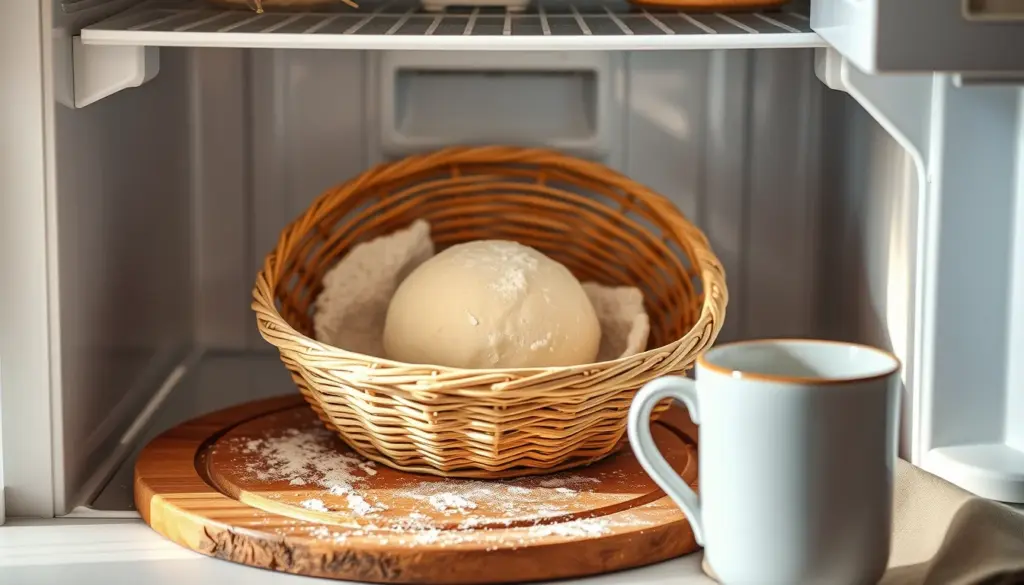
This is the step that makes the plan work. At fridge temperature fermentation slows so much that the shaped loaf can sit for twelve and a half hours without overproofing. The cold dough is also firmer, so it scores cleanly straight from the fridge.
Enter your own bake time, kitchen temperature and fridge hours to see where every step lands:
Adjusting the plan for your home
A cooler house, around 19 °C
At 19 °C everything slows down. Keeping the 1:5:5 feed and raising the starter to 15% puts the feed at 4:35 AM on Tuesday, which the planner flags as a night step. Switch the feed to 1:2:2 instead, and the feed moves to 8:45 AM with mixing at 7:45 PM. Bulk then runs about 8 h 45 min to 11 h 45 min. The faster feed makes up for the slower kitchen, and the extra starter keeps bulk inside the night.
A warmer house, around 23 °C
At 23 °C everything speeds up. Cut the starter to 5% and feed 1:10:10: the feed stays at a workable 8:15 AM, mixing moves to 8:35 PM, and bulk runs about 8 h to 10 h 45 min.
A house that cools down at night
The planner assumes a steady temperature. If your heating drops overnight, bulk will run longer than the estimate. Mix with slightly warmer water so the dough starts a degree or two higher, or leave the container in the warmest room. The water calculation in why dough temperature matters more than time takes care of that.
The morning check
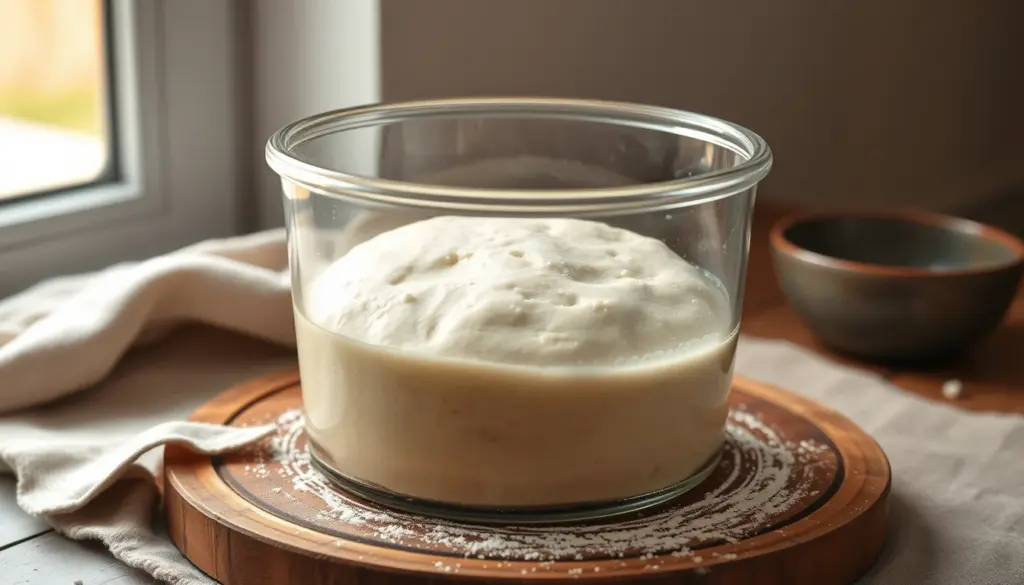
The one decision in this plan comes at 6:00 AM. Before shaping, look for the signs covered in bulk fermentation: how to tell when it’s done: the right amount of rise, a domed surface, bubbles at the sides, and a jiggle when you move the container.
- Ready: pre-shape, rest while you make coffee, shape and refrigerate.
- Clearly behind: move the covered container to the warmest spot in the house while you get ready, then shape it as late as you can before leaving. If it is still well short, put the whole container in the fridge, then shape it when you get home and give it a room-temperature proof before a later bake.
- Gone too far: shape gently, refrigerate straight away and bake as planned. The loaf may be flatter, but it will still be good bread. If it is very slack, turn it into focaccia that evening instead.
After two or three weeks of this routine you will know whether your dough runs ahead of the estimate or behind it, and you can adjust the starter percentage by a few points to match.
Common mistakes with a weekday schedule
- Using the recipe’s starter percentage unchanged. A 20% starter dough that ends bulk at 3 AM is the most common reason weekday sourdough feels impossible.
- Forgetting that a fridge-stored starter needs waking up. If your starter lives in the fridge, take it out on Monday evening and give it one feed at room temperature, so Tuesday morning’s feed starts from an active culture.
- Trusting the thermostat. Put a thermometer where the dough will sit overnight. Many homes run a few degrees cooler than the display suggests.
- Cutting the preheat short. The planner allows an hour for a reason; a heavy pot needs that long to heat through.
Weekday baking questions
Can the shaped loaf stay in the fridge longer if I’m home late?
Usually, yes. An extra hour or two rarely hurts, and many doughs cope with considerably more. Enter the real fridge time in the planner so the rest of the plan adjusts, and bake a little sooner next time if the loaf starts to spread.
Can I use the same plan at the weekend?
Yes. Shift every step by three days: feed and mix on Friday, shape on Saturday morning, and bake on Saturday evening. If you would rather eat it for Saturday lunch, choose a room-temperature final proof and a 9:00 AM bake. The planner keeps the Friday feed at 8:10 AM and mixing at 8:35 PM, then gives the shaped loaf about 1 h 45 min to 3 h before it goes in the oven.
Is it safe to leave dough out on the counter overnight?
Yes. Fermenting dough at room temperature is how sourdough is made. Cover it to keep the surface from drying out, and keep it away from heaters or direct sun.
Can I freeze the baked loaf for later in the week?
Yes. Let it cool completely, slice it, and freeze the slices in a sealed bag. They toast straight from the freezer, which means one bake can cover several breakfasts.