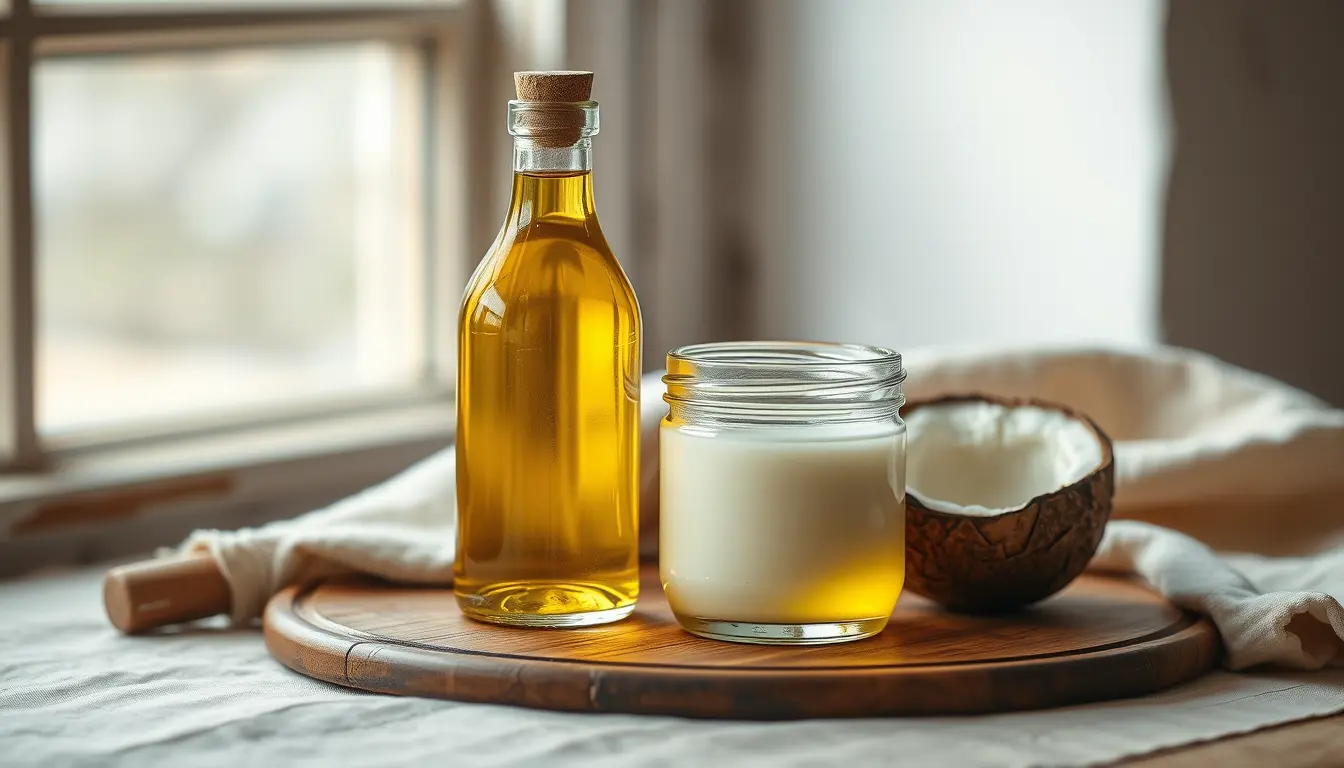
For most cakes, muffins and quick breads, a neutral oil such as rapeseed (canola), sunflower or a vegetable oil blend is the safest choice: it keeps the crumb moist without adding flavour. Olive oil works well where its fruity, sometimes peppery taste suits the bake, as in citrus cakes, chocolate cakes and focaccia. Coconut oil behaves differently because it is solid below about 24 °C (75 °F), so it acts like an oil when melted and more like a solid fat when cool. If you want to use butter in place of oil, use about 25% more butter by weight than the oil and reduce the recipe’s liquid slightly, because butter is roughly a fifth water.
Why oil makes such moist cakes
Oil stays liquid at room temperature. Butter firms up as it cools. That one difference explains most of what oil does in baking:
- Softness that lasts. An oil cake feels moist even straight from the fridge, while a butter cake firms up when chilled.
- Tenderness. Oil coats flour proteins and limits gluten, giving a soft, fine crumb.
- Simplicity. Oil batters are usually mixed by stirring, with no creaming step.
What oil doesn’t do is trap air. Butter creamed with sugar holds tiny air pockets that help a cake rise; oil can’t. That’s why oil recipes rely more on baking powder or soda and on whisked eggs.
Neutral oils
Rapeseed (canola), sunflower, vegetable blends, grapeseed and corn oil all taste mild and weigh almost the same. You can swap them one for another, by volume or by weight, without changing anything else. They are the default choice for carrot cake, chocolate cake, muffins, banana bread and chiffon cake.
Peanut oil is also mild once refined, though unrefined versions taste of peanut. Avoid strongly flavoured nut oils unless the recipe calls for them.
Olive oil
Olive oil comes in two broad styles for baking:
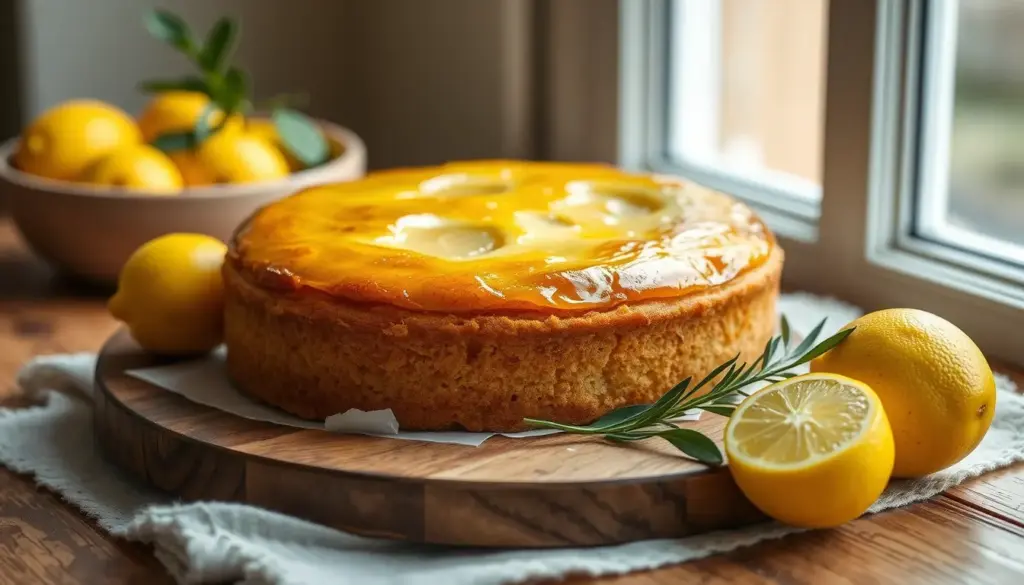
- Extra virgin olive oil has a fruity, grassy or peppery flavour that comes through in the cake. It’s lovely with lemon, orange, almond, chocolate and rosemary.
- Light or mild olive oil is refined, with a much gentler taste. “Light” refers to its colour and flavour, not to fat or calories.
Olive oil weighs almost exactly the same as other oils. Half a US cup is about 108 g, against 109 g for vegetable oil, so the swap is one for one. Taste your oil before using it in a delicate cake; a very peppery one can dominate.
Coconut oil
Coconut oil is solid at cool room temperature and melts at around 24 to 26 °C. That makes it more versatile than other oils, but also more temperamental.
- Virgin coconut oil tastes and smells of coconut.
- Refined coconut oil is close to neutral.
Melted coconut oil can replace other oils one for one, with one catch: mixed with cold eggs or milk, it sets into small lumps. Bring the other ingredients to room temperature first, and add the oil while it’s just warm.
Because it’s solid when cool, coconut oil can also stand in for butter in some creamed or rubbed-in recipes, such as cookies and crumbles. It’s pure fat, while butter isn’t, so recipes often use a little less coconut oil than butter. Results vary, so try a small batch first.
Swapping oil for butter
Butter brings flavour and browning that oil can’t, so you may want to use it in an oil recipe. It works well in muffins, quick breads, brownies and many snack cakes. It’s less suited to chiffon cake and to cakes meant to stay soft in the fridge, because butter firms when cold.
The swap needs a small adjustment. Butter is about 80 to 82% fat, and most of the rest is water. To match the fat in the oil, use about 1.25 times its weight in butter, and take a little of the recipe’s milk or water out to balance the butter’s water.
Take a recipe with ½ US cup of vegetable oil, which is about 109 g. Multiply by 1.25 and you need about 136 g of butter. Enter 136 g into the butter converter and it shows 4.8 oz, about 1.2 sticks or about 9.59 tbsp. In practice, 135 g is exactly 9½ tbsp, so one stick plus 1½ tablespoons does the job. Then reduce the recipe’s milk or water by about 1½ tablespoons, roughly 20 g.
Melt the butter and let it cool slightly before adding it, so it mixes in like the oil did. If you use salted butter, cut the recipe’s salt by roughly ¼ teaspoon per stick.
Some bakers simply swap oil for melted butter cup for cup without other changes. That works in forgiving recipes like muffins, though the result is slightly less rich and a touch drier. Advice on this varies, and both approaches are common.
Going the other way, replacing butter with oil, is covered briefly in butter measurements explained.
Matching oil to the bake
| Bake | Good choice | Why |
|---|---|---|
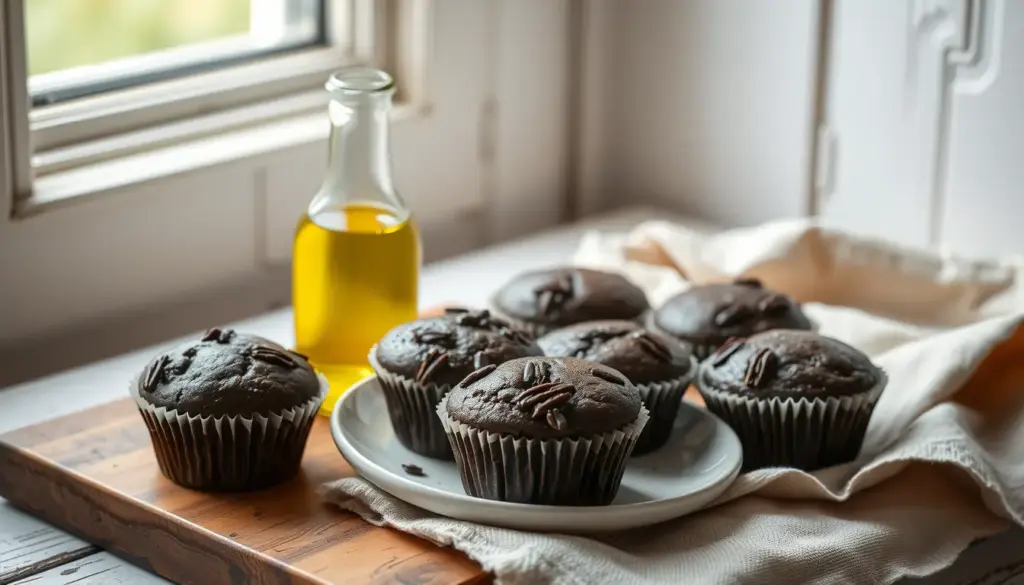
| Carrot cake, chocolate cake, muffins | Neutral oil | Moist crumb, lets spices and cocoa lead |
| Lemon, orange or almond cake | Extra virgin or light olive oil | Fruity flavour suits citrus and nuts |
| Banana bread, quick breads | Neutral oil or melted butter | Oil for softness, butter for flavour |
| Focaccia and savoury bakes | Extra virgin olive oil | Flavour and a crisp, golden base |
| Granola and flapjacks | Neutral or melted coconut oil | Crisp clusters, coconut adds flavour |
| Chiffon cake | Neutral oil | Stays soft and light, even chilled |
Many recipes are flexible. If you change the oil, change only one thing at a time so you can tell what made the difference.
Storing oil
Oils go rancid over time, especially once opened and kept somewhere warm or bright. Rancid oil smells stale, like crayons or old nuts, and gives baked goods a bitter edge. Keep oil in a cool, dark cupboard, close the cap tightly, and smell it before you bake with it.
For measuring oil accurately, weighing it is easiest. Liquid vs dry measuring cups covers measuring it by volume, and why bakers weigh ingredients instead of using cups explains why a scale helps.
Oil mistakes
- Using strongly flavoured extra virgin oil in a delicate vanilla cake. It can taste bitter or grassy.
- Adding melted coconut oil to cold ingredients. It sets in lumps.
- Swapping butter for oil by equal weight. You lose about a fifth of the fat.
- Ignoring the water in butter when it replaces oil. The batter ends up slightly wetter than intended.
- Using stale oil. Rancid flavours carry straight into the bake.
Baking oil questions
Can I use olive oil to grease cake pans?
Yes, though a neutral oil is better for delicate cakes, since olive oil can leave a faint taste on the crust. For savoury bakes and focaccia, olive oil is ideal.
Is light olive oil lower in fat?
No. All oils are essentially 100% fat. “Light” on an olive oil label refers to a lighter colour and milder flavour.
Is oil past its best-before date safe to bake with?
The date is about quality rather than safety. Smell the oil first: if it smells fresh, it’s fine to use. If it smells stale, sharp or like old paint, throw it out, because that flavour will carry into the bake.
Can I use oil in place of vegetable shortening?
In cakes and muffins that call for melted shortening, yes, measure for measure. In pastry, biscuits and some cookies, no. Those recipes rely on a solid fat that stays in small pieces or holds air, and oil gives a greasy, dense or crumbly result instead. Use butter or a solid fat there.