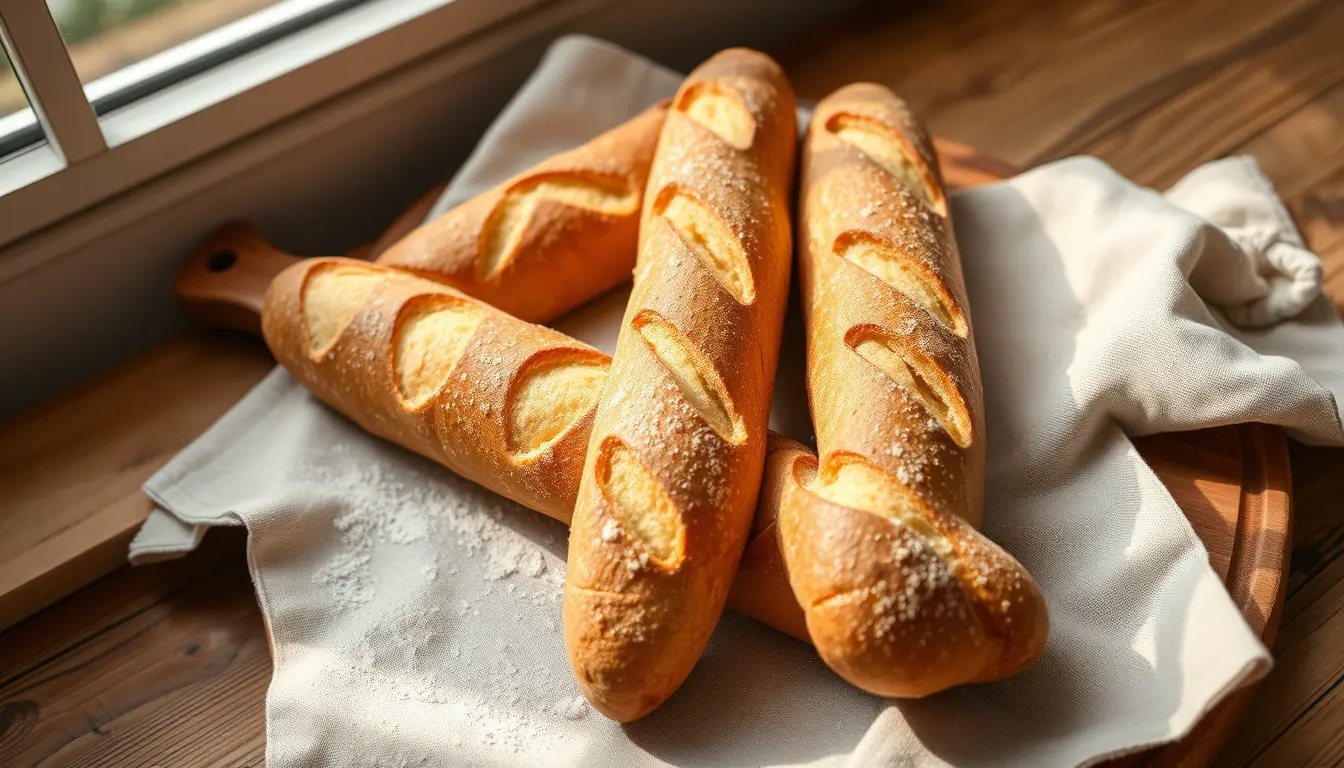
Poolish and biga are both preferments: a portion of a recipe’s flour and water, mixed with a very small amount of yeast and left to ferment for several hours, usually overnight, before the main dough is made. The difference is consistency. A poolish is wet, with equal weights of flour and water, and it gives an extensible dough, an open crumb and a mild, nutty flavour, which is why it is used for baguettes. A biga is stiff, typically around 50 to 60% hydration, and it builds strength and a slightly more complex, faintly tangy flavour, popular in Italian breads and pizza. Either one usually holds 20 to 50% of the recipe’s total flour.
Both bring some of the depth of a long fermentation to bread that is otherwise mixed and baked in a day.
Why bother with a preferment
Flavour in bread comes partly from time. While the preferment sits, yeast and naturally present bacteria produce acids and aromatic compounds, and enzymes break some of the starch into sugars. When you add the preferment to a fresh dough, all of that comes along.
There are practical gains too. The acids strengthen gluten, so the dough is easier to handle. Bread made with a preferment usually stays fresh a little longer. And the main dough often needs less yeast and a shorter first rise, because the preferment is already full of active yeast.
Poolish
A poolish is equal weights of flour and water with a pinch of yeast, often about 0.1% of the poolish’s flour for a 12 to 16 hour ferment at around 20 °C (68 °F). Recipes vary widely here, from 0.05% for warm rooms and long ferments to 0.5% for a ferment of a few hours.
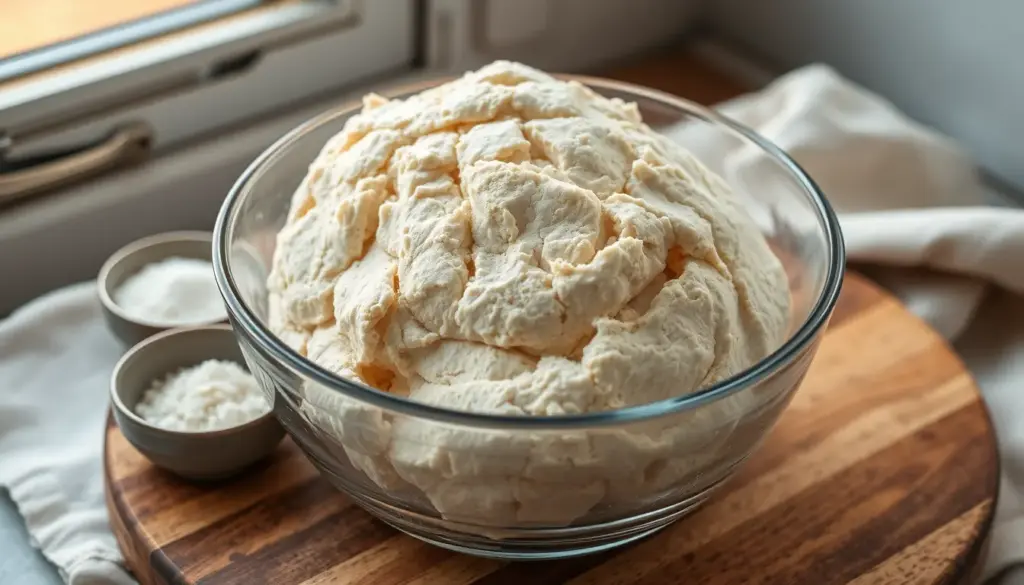
It is ready when it has risen, the surface is covered in bubbles, and the dome has just begun to sink or wrinkle at the edges. It should smell pleasantly sweet and slightly alcoholic. A poolish that has collapsed well back and smells sharply of alcohol has gone too far. It will still work, but the bread can taste flat and rise more slowly.
Biga
A biga uses less water, usually 50 to 60% of its flour, so it starts as a shaggy, crumbly mass rather than a batter. Bigas are commonly left for 12 to 18 hours somewhere cool, often 16 to 18 °C (61 to 64 °F), and they use a little more yeast than a poolish, often a few tenths of a percent of the biga’s flour. Again, practice varies a lot between bakers and regions.
A ripe biga has swollen and softened, looks web-like inside when torn, and has a clear fermented smell. Because it is stiff, it changes more slowly and is a bit more forgiving of timing than a poolish.
Building a recipe with a poolish
Start from the total formula, then move part of the flour and water into the poolish. Take a loaf formula with 1,000 g of flour, 700 g of water (70%), 20 g of salt and instant yeast, with 30% of the flour in a poolish:
- Poolish, the night before: 300 g flour, 300 g water, 0.3 g instant yeast.
- Final dough, next day: 700 g flour, 400 g water, 20 g salt, about 3 g instant yeast, plus all 600 g of poolish.
To check it, enter the final dough in the baker’s percentage calculator: flour 700 g, water 400 g as a liquid, poolish 600 g as a starter at 100% hydration, salt 20 g and yeast 3 g. It shows a final-dough water percentage of 57.1% and an overall hydration, including the poolish, of 70%. That second figure confirms the total formula is intact. The poolish shows as 85.7% because the calculator measures it against the flour added in the final dough.
Building a recipe with a biga
The same calculator handles a biga if you set the starter hydration to match. For a 500 g flour loaf at 70% hydration with half of the flour in a 60% hydration biga:
- Biga: 250 g flour, 150 g water and a small pinch of yeast.
- Final dough: 250 g flour, 200 g water, 10 g salt and 1 g instant yeast, plus the 400 g biga.
With the starter hydration set to 60%, the calculator reads 70% overall. That is how you avoid the most common biga mistake: forgetting that a stiff preferment leaves more water for the final mix.
Weighing tiny amounts of yeast
The yeast in a preferment is often well under a gram. The yeast converter shows 0.3 g of instant yeast as roughly ⅛ tsp, the same as 0.36 g of active dry or 0.9 g of fresh. Teaspoons are imprecise at this size, so there are two better options:
- A small jewellery scale that reads to 0.01 g.
- Dissolving 1 g of instant yeast in 100 g of water, then using 30 g of that water for the preferment. That carries 0.3 g of yeast. Take those 30 g out of the preferment’s water.
For how the three types differ in use, see instant vs active dry vs fresh yeast.
Converting a straight-dough recipe
To add a poolish to a recipe you already make, move 20 to 40% of its flour into the poolish with an equal weight of water, plus a pinch of yeast. Mix the rest the next day. Because the poolish brings active yeast, cut the final dough’s yeast by about a third to a half to begin with, and judge the first rise by the dough rather than the original timings. Baker’s percentages explained simply makes this kind of rearranging easier, and levain vs starter shows the sourdough version of the same idea.
Choosing between them
If you’re unsure which to try first, think about the bread you want.
- For an open, airy crumb and a thin, crackly crust, as in baguettes and rustic white loaves, start with a poolish. It makes the dough more extensible, so it stretches and holds big bubbles.
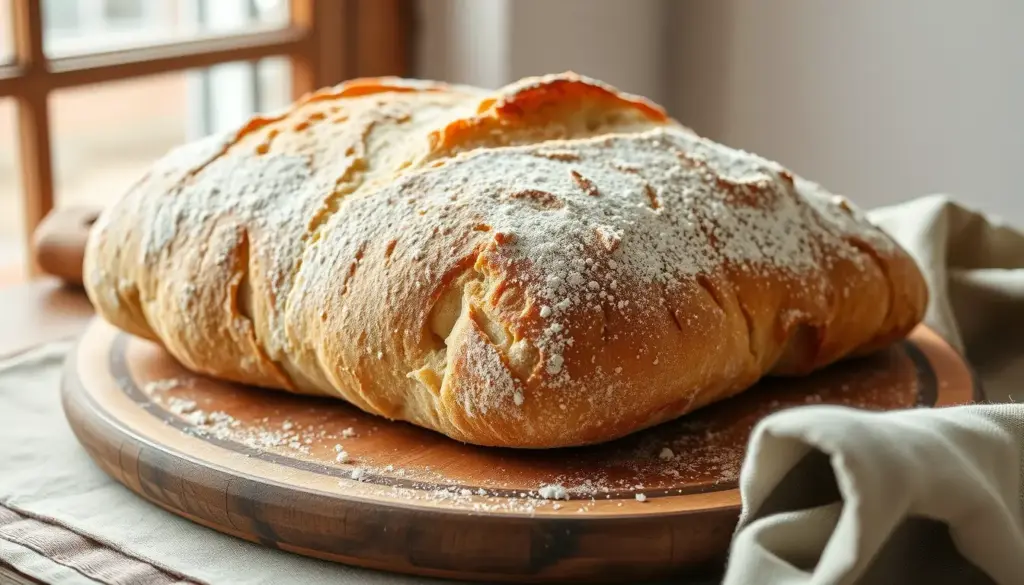
- For a sturdier dough with more chew, as in Italian country loaves, ciabatta made the traditional way and many pizzas, try a biga. It adds strength, which helps with long rises and wet final doughs.
- For convenience, a poolish is easier to mix, since it’s a batter you stir with a spoon. A biga needs a brief knead to bring it together.
Both reward a little experimentation. Changing the share of flour in the preferment from 20% to 40% has a noticeable effect on flavour, so try a few levels and keep notes.
Preferment mistakes
- Too much yeast in the preferment. It peaks in a few hours and collapses long before morning.
- Ignoring the preferment’s water. The final dough ends up too wet or too dry.
- Leaving it somewhere warm overnight. A poolish in a 26 °C kitchen can be spent by dawn. Use less yeast or a cooler spot.
- Using the full original yeast in the final dough. The dough rises fast and loses the flavour you waited for.
Poolish and biga questions
Can a preferment go in the fridge?
Yes. Let it ferment at room temperature for a couple of hours first, then refrigerate it. It slows down a great deal and holds for a day or so. Give it time to warm up a little before mixing.
What is the difference between a sponge and a poolish?
A sponge is a broader term for any wet preferment, often with more yeast and a shorter ferment of one to a few hours. Many sponges also contain some of the recipe’s milk or sugar. A poolish is a specific long, slow, flour-and-water version.
Can I use a poolish or biga for pizza dough?
Yes, and both are popular for it. A biga gives a sturdy, chewy dough. A poolish gives a more extensible, airy one. Keep the total hydration and salt the same as your usual pizza formula.