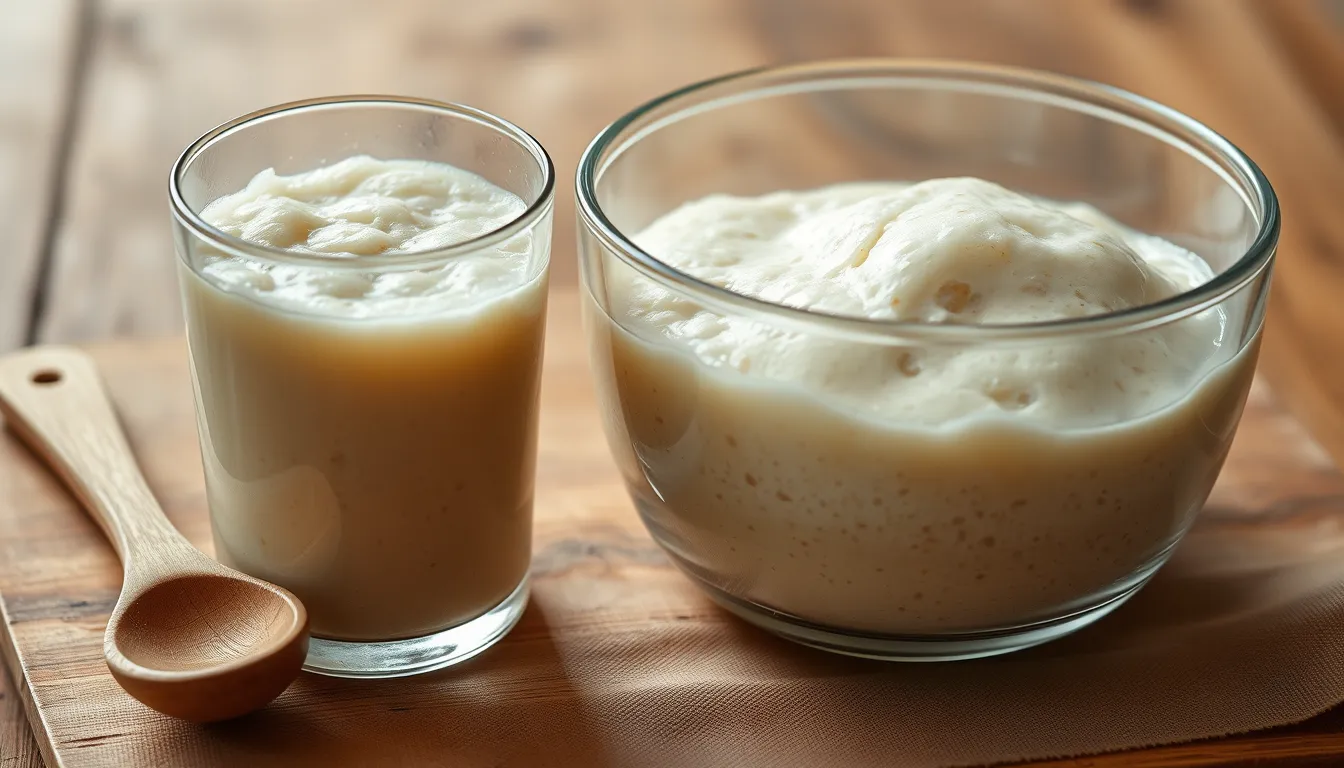
A starter and a levain are the same living culture of wild yeast and bacteria. The difference is how you use it. Your starter is the jar you keep going indefinitely, feeding it and taking a little out for each bake. A levain is a separate batch built from a spoonful of that starter for one particular dough, often with its own flour, hydration and timing, and it goes into the dough in full.
So every levain begins as starter, but not every starter is used as a levain. Whether you need the extra step depends on the recipe and how much control you want.
Side by side
| Starter | Levain | |
|---|---|---|
| How long it lives | Kept going for months or years | Built once, used up in one dough |
| Size | Usually small, just enough to keep | Exactly what the recipe needs |
| Hydration | Whatever suits your routine | Set by the recipe, often 50% to 125% |
| Flour | Your usual feeding flour | Can differ, such as part rye or whole wheat |
| Timing | Fed on your maintenance schedule | Built to peak when you want to mix |
The culture inside is identical. A levain is simply a controlled offshoot.
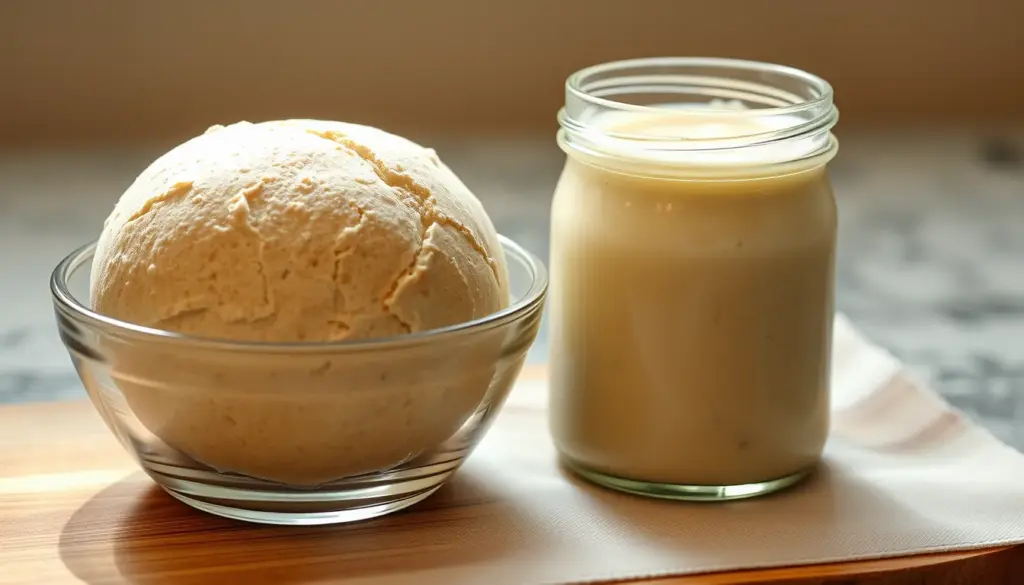
Why recipes ask for a levain
Bakery and cookbook recipes often list “levain” rather than “starter” because a separate build gives the baker more control.
- Exact amount. You build the weight the recipe needs, plus a small allowance, instead of feeding a large jar and guessing.
- Chosen hydration. A recipe may want a stiff levain at 60% or a loose one at 125%. Your jar doesn’t have to change to match.
- Flavour. A levain made partly with rye or whole wheat ferments faster and adds a fuller, tangier taste.
- Timing. The build ratio sets when it peaks, so you can plan an overnight levain for a morning mix or a quick one for the afternoon.
- A safe main jar. The starter stays small and untouched in the fridge. If the bake goes wrong, your culture is fine.
That last point matters more than it sounds. Bakers who keep only a small jar in the fridge, as described in how to store a sourdough starter, build a levain for every bake so the jar never has to grow.
When you can skip it
If the recipe’s levain is made with the same flour you feed your starter and at the same hydration, usually 100%, there is no practical difference. You can feed your starter to make enough and use it directly.
Say a recipe needs 160 g of levain at 100% hydration and you want 10 g left over, with an overnight kitchen at about 20 °C (68 °F). In the sourdough starter feeding calculator, a 1:3:3 feed gives 24 g of starter, 73 g of flour and 73 g of water, peaking in about 9 h 15 min to 14 h. That is a levain in all but name.
The only thing to watch is the leftover. Put back just the small amount you want to keep, and use the rest in the dough.
Building a levain the recipe describes
Things get more interesting when the recipe’s levain differs from your starter. Take the same 160 g, but now the recipe wants it at 80% hydration, built at a ratio of one part starter to three parts flour. Your starter is at 100%.
You can’t just feed 1:3:3 here, because the starter you add brings its own water and would push the levain above 80%. The levain builder accounts for that. With 160 g needed, 10 g extra, 80% hydration, a 1:3 build, a 100% seed starter and 20 °C, it gives:
- Ripe starter: 27 g
- Flour: 81 g
- Water: 62 g
- Levain built: 170 g, holding 94 g of flour and 76 g of water
- Time to peak: about 8 h 45 min to 13 h 15 min
Notice that the water is lower than the flour. That is how the build lands at 80% even though a 100% starter went in. Raise the temperature to 24 °C (75 °F) and the ingredients stay the same while the estimated peak moves forward to about 5 h 45 min to 8 h 45 min, handy if you want to mix the same afternoon.
Enter the levain your recipe asks for:
Fitting the build to your day
The build ratio is the easiest way to move the peak. Keep the same 160 g at 80% hydration and change only the ratio and temperature:
| Build | Conditions | Starter, flour, water | Estimated peak |
|---|---|---|---|
| 1:2 | 24 °C, same-day | 38 g, 76 g, 57 g | about 5 h to 7 h 30 min |
| 1:3 | 20 °C, overnight | 27 g, 81 g, 62 g | about 8 h 45 min to 13 h 15 min |
| 1:5 | 20 °C, long overnight | 17 g, 86 g, 67 g | about 10 h 30 min to 16 h |
A 1:2 build mixed after breakfast in a warm kitchen is ready by early afternoon. A 1:5 build mixed at bedtime gives you until mid-morning or later. In every case the finished levain holds the same 94 g of flour and 76 g of water, so the dough recipe doesn’t change at all. Only the clock does.
Stiff, liquid and whole grain levains
The hydration of a levain changes how it behaves.
Stiff levains
At 50% to 65% hydration, a levain feels like a firm dough. It ferments more slowly, is more forgiving if you mix a little late, and tends to give a tangier loaf, because firmer cultures favour the sharper acetic acid.
Liquid levains
At 100% to 125%, a levain is a thick batter. It ferments faster and gives a milder, creamier flavour. It is easy to stir into the dough, and it is the most common style in home recipes.
Whole grain portions
Replacing some of the levain’s flour with rye or whole wheat speeds it up and deepens the flavour. Even 10% to 20% makes a difference. The levain builder has a field for this, and it splits the flour line for you.
A few words that overlap
Recipes use several names for related things, which causes confusion:
- Leaven is usually just the English word for levain.
- Mother or chef can mean the starter you keep, the piece you build from, or both, depending on the writer.
- Pre-ferment is a broad term for any portion of dough fermented ahead of time. A levain is one type.
- Poolish and biga are pre-ferments made with commercial yeast, not sourdough, so they don’t replace a levain.
When a recipe is unclear, look at the weights. A starter percentage in a formula and a levain weight in a method are often describing the same thing from two angles. Baker’s percentages explained simply shows how starter is written into a formula.
Levain mistakes
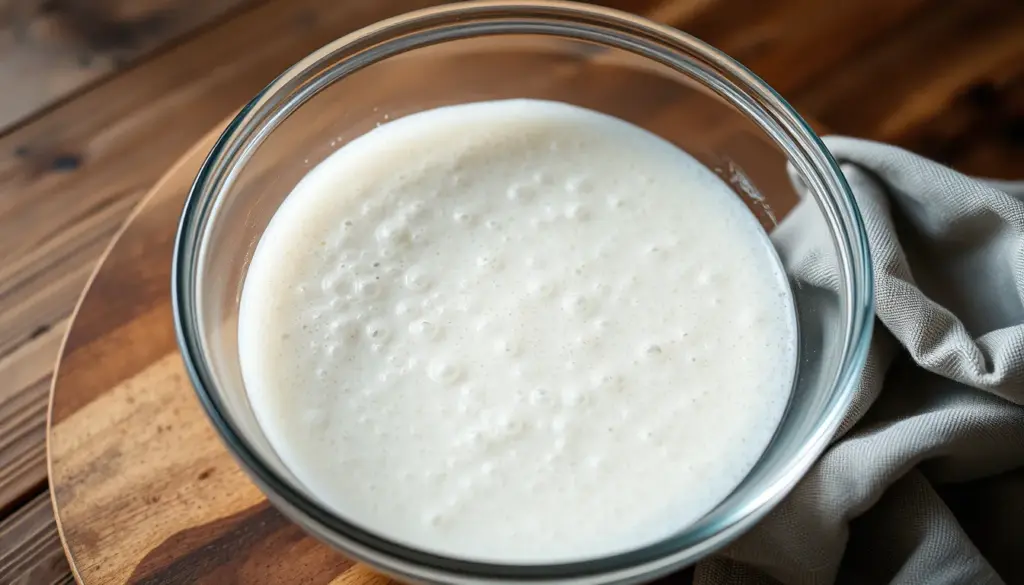
- Mixing before it peaks. A levain used early lacks rising power. Wait until it has domed and is full of bubbles.
- Building far more than you need. Leftover levain is just more discard. Build the recipe amount plus 10 to 20 g.
- Ignoring the seed starter’s hydration. If your starter is stiff but the recipe assumes 100%, the levain comes out stiffer than intended.
- Using the whole jar as levain. Always hold some back, or you will have nothing left to feed.
For more on how the build ratio shapes timing and flavour, what starter feeding ratios actually do compares common ratios side by side.
Questions about building a levain
Can I put leftover levain back into my starter jar?
Yes. If you built a little extra, it is still a healthy culture, so you can stir it back into the jar and feed as usual. Just be aware that a levain made with a different flour or hydration will nudge your starter in that direction.
Does a levain need a different flour from my starter?
No. Many bakers build levains with the same flour they use for feeding. A different flour is a way to change flavour or speed, not a requirement.
Can I build a levain from starter straight out of the fridge?
You can, but expect it to be slower. Cold, unfed starter is sluggish and acidic, so the first build may take several hours longer than the estimate. Some bakers give the fridge starter one quick feed first, then build the levain from that.