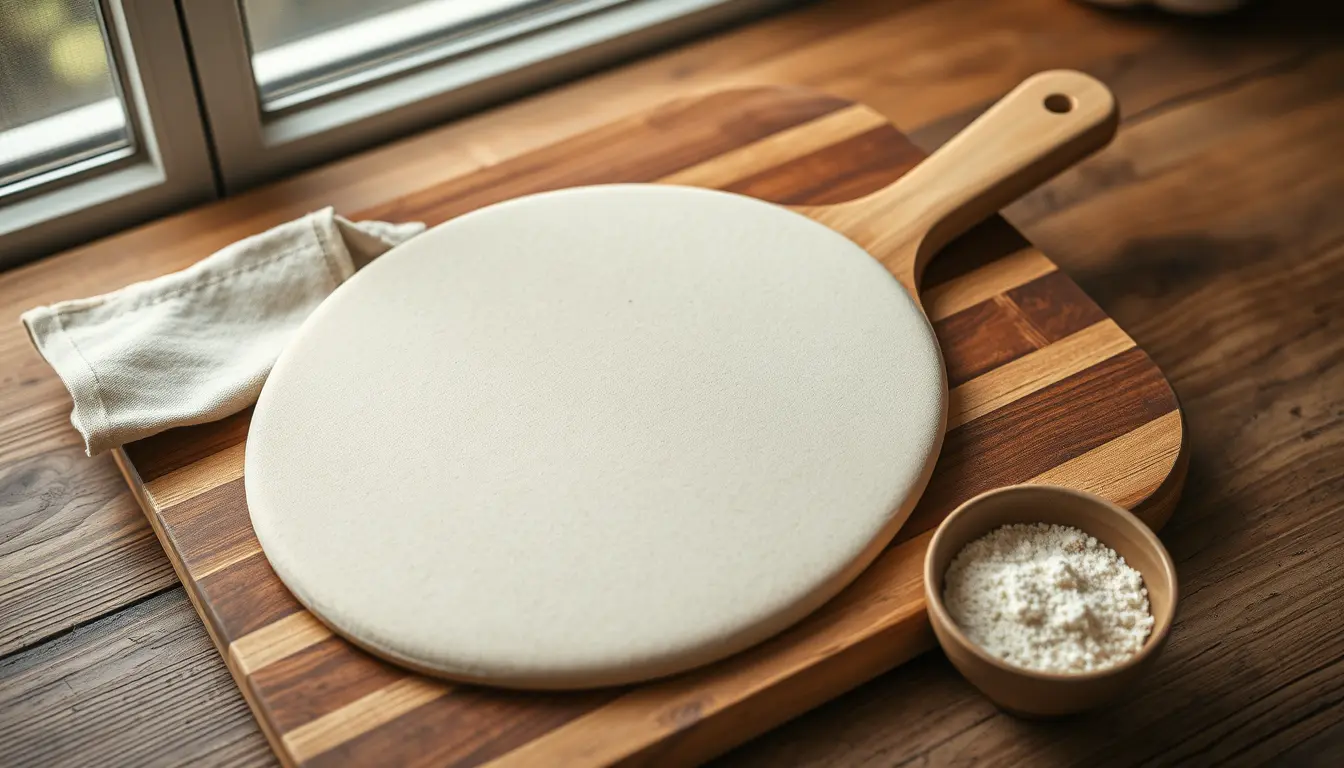
If your oven tops out around 250 to 290 °C (480 to 550 °F), as most home ovens do, a baking steel usually makes the better pizza. It pushes heat into the base faster, so the crust browns and crisps in the few minutes the top needs to cook. A stone is gentler, lighter and cheaper, and it’s the safer choice in very hot pizza ovens and grills, where a steel can scorch the base before the cheese has melted.
Both are a big step up from a baking tray. The rest of this guide covers why they behave differently, how to set up the oven for each, and how to look after them.
Why the base needs a head start
A pizza in a home oven gets heat from two directions: from the hot surface it sits on, and from the air and walls above. The top only needs a few minutes for the cheese to bubble. The base, a layer of wet dough, needs a lot of heat delivered fast to puff, set and brown in the same window.
A thin tray can’t store much heat, so the base steams more than it bakes. A thick, preheated slab acts like a battery: it soaks up heat during the preheat and releases it into the dough the moment the pizza lands. How much heat it stores, and how fast it can pass that heat on, is the whole difference between stone and steel.
How they compare
| Feature | Pizza steel | Pizza stone |
|---|---|---|
| Material | Carbon steel, usually 6 to 10 mm thick | Cordierite or ceramic, usually 1 to 2 cm thick |
| Heat transfer | Very fast; browns the base quickly | Slower and gentler |
| Heat stored | High for its thickness | Lower for its thickness |
| Preheat | 45 to 60 minutes | About 60 minutes |
| Weight | Heavy; a large one can be 7 kg or more | Lighter and easier to move |
| Care | Season and keep dry to stop rust | Never oil or soak; can crack if shocked |
| Best for | Ordinary home ovens | Very hot ovens, grills, gentler bakes |
Steel conducts heat many times faster than stone, which is why the same pizza browns sooner on it. In a home oven at full heat, a pizza on a preheated steel is often ready in 5 to 7 minutes. The same pizza on a stone usually takes 7 to 10. Your oven and dough will shift those figures, so watch the base, not the timer.
Which one suits your oven
- A standard home oven that maxes out at 250 to 260 °C: a steel makes the most of limited heat. This is where the difference is biggest.
- A home oven that reaches 280 to 290 °C: either works. A steel gives a crisper, more spotted base; a stone gives a softer, more even one.
- A portable pizza oven or a grill: these usually come with their own stone for good reason. At 400 °C and above, a steel can burn the base in under a minute.
- Bread as well as pizza: both work well for loaves. A stone is the more forgiving surface for long bakes.
Setting up the oven
Where the slab sits matters almost as much as what it’s made of.
- Put the steel or stone on a rack in the upper third of the oven, roughly 15 to 20 cm below the top element or grill.
- Preheat at the highest setting for 45 minutes to an hour. The oven may say it’s ready after 15 minutes, but the slab won’t be.
- Slide the pizza on with a lightly floured peel.
- If the top is pale when the base is done, switch the grill on for the last minute or two.
Recipes give pizza temperatures in different ways, and some fan ovens run hotter or cooler than the dial suggests. The oven temperature converter puts the common settings side by side: 260 °C conventional is 500 °F, 240 °C on a fan setting and gas mark 10. A recipe asking for 550 °F wants about 288 °C, beyond many home ovens, so use the hottest setting yours has. Fan vs conventional oven temperatures has more on when the fan helps.
A dough that browns at home-oven heat
Home ovens are far cooler than pizzeria ovens, so a dough with a little oil and sugar browns better in the time available. Both help the crust colour before the base dries out. Neapolitan vs New York pizza dough explains why New York-style formulas include them.
The pizza dough calculator builds a batch from the number and size of the dough balls. For three 280 g balls at 65% hydration, with 2% salt, 2% oil, 1% sugar, 0.4% instant yeast and 2% added for losses, it gives:
- 503 g of flour
- 327 g of water
- 10 g of salt
- 2.01 g of instant yeast, about two thirds of a teaspoon
- 10 g of oil
- 5 g of sugar
That’s 857 g of dough in total, or 286 g per ball once the allowance for losses is included. A ball that size stretches to about a 30 cm (12 in) pizza, which suits most steels and stones.
For the hydration side of the choice, pizza dough hydration by oven matches water levels to each setup.
Looking after a stone
- Let it heat up and cool down in the oven. Moving a hot stone onto a cold counter, or a cold one into a hot oven, is how most stones crack.
- Never oil it and never wash it with soap; it soaks up both.
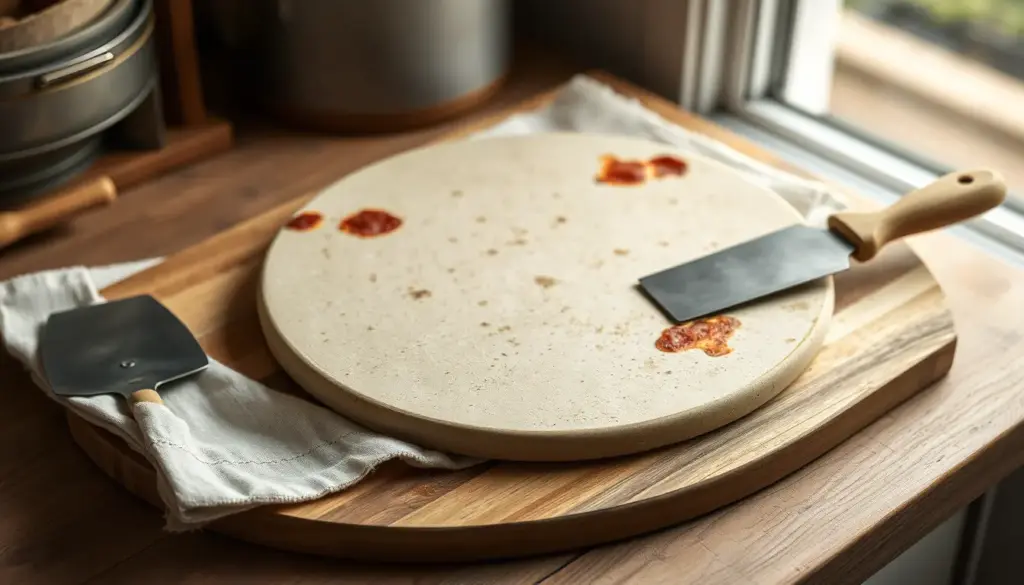
- Scrape off burnt bits with a scraper once it’s cool, and brush it clean.
- Expect dark stains. They’re normal and don’t affect the bake.
- Avoid spilling water on it while it’s hot.
Looking after a steel
- Most come pre-seasoned. Keep that coating by wiping the steel clean and drying it straight away.
- After washing, warm it briefly in the oven to drive off moisture, then rub on a very thin layer of oil.
- If spots of rust appear, scrub them off with a scourer and re-season, as you would a cast-iron pan.
- Lift it with care. A heavy steel dropped on a glass hob or oven door can do real damage.
Stone and steel mistakes
- A short preheat. An underheated slab gives a pale, soft base however long the pizza stays in.
- The slab on the lowest rack. The top cooks slowly, and the base can burn while you wait.
- A heavily floured peel. Loose flour scorches on the hot surface and tastes bitter.
- A steel in a very hot pizza oven. It’s built for home ovens; at 400 °C and above it overdoes the base.
- Cleaning a stone with soap and water. It traps moisture that can crack it on the next preheat.
Stone and steel questions
Can I put a stone or steel on the oven floor?
Check your oven’s manual first. Some ovens have a heating element hidden under the floor, and covering it can overheat the oven or damage the enamel. In ovens where it’s allowed, the floor gets very hot, so watch the base closely.
Is an upside-down baking tray good enough?
It’s better than nothing, especially a heavy one, but it stores far less heat than a thick slab. Expect a softer base and a longer bake. Preheating the tray for at least 20 minutes helps.
Why does the base burn before the top is done?
The slab is hotter than the air around the pizza. Move it a rack higher, closer to the top heat, or switch to the grill for the last minutes. On a steel, you can also let it sit a few minutes after the preheat so the surface cools slightly.