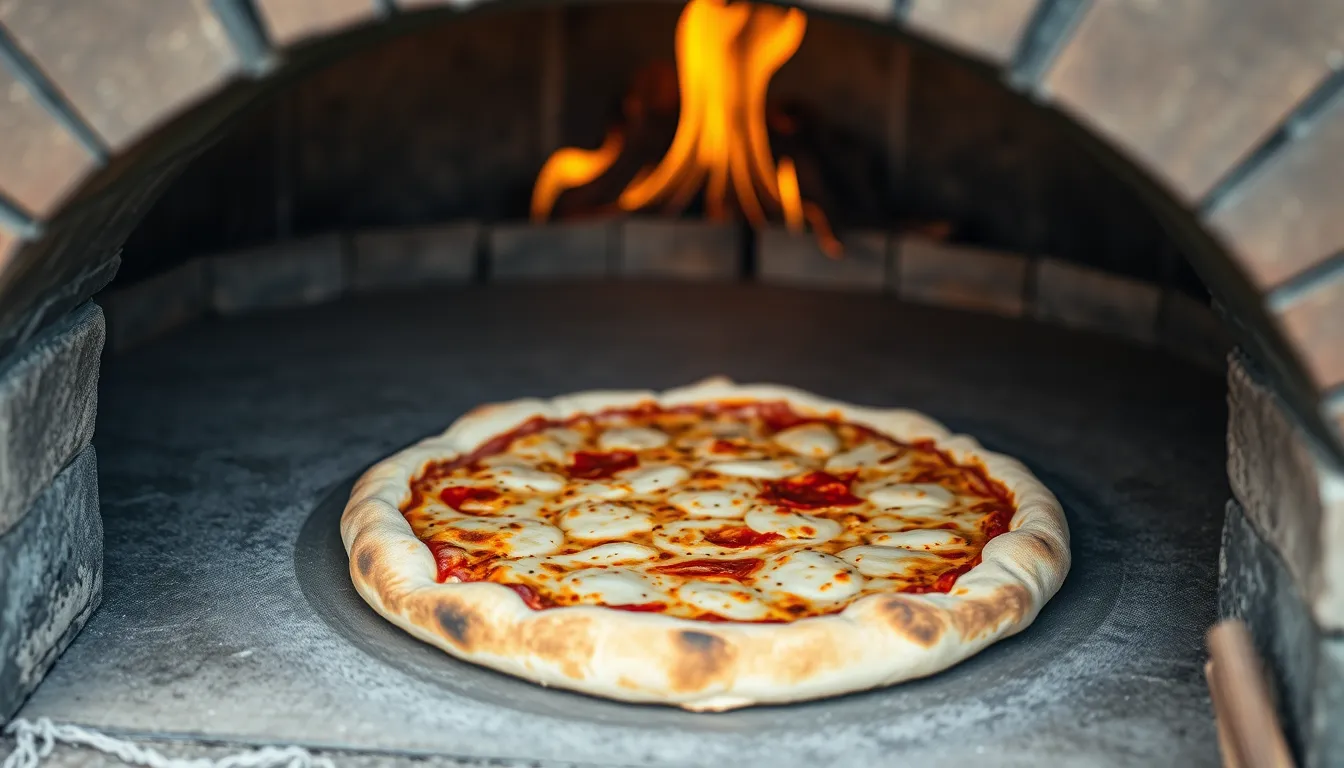
The hotter the oven and the shorter the bake, the less water a pizza dough needs. As a starting point:
| Oven | Typical bake | Hydration to start with |
|---|---|---|
| Wood-fired or portable pizza oven, 400 °C (750 °F) and up | 60 to 120 seconds | 58% to 65% |
| Home oven with a steel or stone, 250 to 290 °C (480 to 550 °F) | 5 to 8 minutes | 63% to 70% |
| Home oven, baking tray only | 8 to 12 minutes | 60% to 65%, with 2% to 3% oil |
| Pan pizza in a home oven | 12 to 20 minutes | 70% to 80% |
Those ranges assume a typical pizza or bread flour. The reasons behind them, and how to fine-tune for your own setup, are below.
Why the oven decides
Hydration compares water to flour by weight: a dough at 65% holds 65 g of water for every 100 g of flour. That water does two jobs in the oven. It turns to steam and inflates the rim, and whatever is left keeps the crust tender.
The length of the bake decides how much of that water escapes. A pizza in a very hot oven is done in about a minute and a half. There is no time for the crust to dry out, so a moderate hydration bakes up soft and puffy. A wetter dough in that oven is harder to stretch and launch, and it can turn soggy under the toppings.
A home oven is a different story. At 250 °C (480 °F) the pizza needs several minutes, and all that time the crust is losing moisture. A dough at 60% can bake into a dry, crackery disc. A few extra points of water keep it tender and give the rim a lighter, more open crumb. Neapolitan vs New York pizza dough looks at how oven heat shaped both of those styles.
Three setups, three formulas
The pizza dough calculator turns a hydration into weights. Each of these uses instant yeast and the default 2% allowance for dough left in the bowl.
A portable pizza oven
Four 250 g balls at 60% hydration, 2.8% salt, no oil or sugar, and 0.3% yeast. The calculator gives 625 g of flour, 375 g of water, 18 g of salt and 1.88 g of yeast, for 1,020 g of dough, or 255 g per ball.
A home oven with a baking steel
Three 280 g balls at 68% hydration, with 2.5% salt, 2% oil, 1% sugar and 0.3% yeast. Now it lists 493 g of flour, 335 g of water, 12 g of salt, 9.9 g of oil, 4.9 g of sugar and 1.48 g of yeast, for 857 g in total and 286 g per ball. The oil keeps the crust tender through a longer bake, and the sugar helps it brown at the lower temperature.
A pan pizza
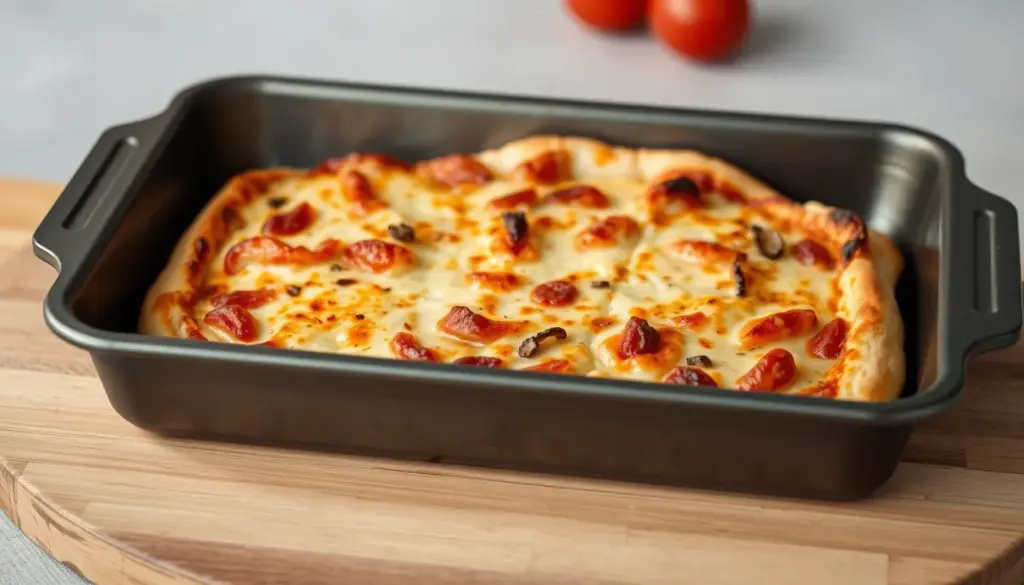
One 900 g dough at 75% hydration, with 2.2% salt, 3% oil and 0.5% yeast, pressed into an oiled pan. The calculator gives 508 g of flour, 381 g of water, 11 g of salt, 15 g of oil and 2.54 g of yeast, 918 g in all. In a pan the dough doesn’t need to hold its own shape, so it can be much wetter, and the oil in the pan fries the base crisp.
Enter your own ball count, weight and hydration:
Checking the hydration of a recipe you already have
Plenty of pizza recipes don’t state their hydration. The baker’s percentage calculator works it out from the weights.
Enter a recipe with 500 g of flour, 325 g of water, 12 g of salt, 2 g of instant yeast and 15 g of olive oil, with the oil set as “Other”. The calculator shows a hydration of 65%. Now change the oil’s type to “Liquid” and the hydration jumps to 68%.
Most pizza makers leave oil out of the hydration figure, and that is the usual convention. Still, oil softens the dough, so a dough with 3% oil feels a little looser than its hydration number alone suggests. When you compare two recipes, check whether both count oil the same way. Baker’s percentages explained simply covers the reading of a formula in more detail.
Flour changes the numbers
The ranges above are starting points for a flour with moderate to strong protein. Adjust for what is in your bag:
- Italian 00 flour is milled very fine and usually absorbs less water. It suits the lower end of each range.
- Bread flour absorbs more and can handle the upper end.
- All-purpose flour sits in between but is weaker, so very wet doughs made with it tear more easily.
- Whole grain flour absorbs a lot more. With 10% to 20% whole wheat, add two or three points of water.
Moving to a wetter dough
If your home-oven pizza comes out dry, raise the hydration by two or three points at a time. A few habits make the wetter dough easier to handle:
- Let time do the work. A long rest or a cold ferment in the fridge makes wet dough much smoother and easier to stretch. The difference between a 65% and an 80% dough in your hands is described in dough hydration: what 65% vs 80% really means.
- Ball it firmly. A tight ball gives the dough the strength to be stretched thin.
- Flour the counter, not the dough. Press the ball into a generous layer of flour or semolina just before stretching.
- Launch quickly. Top the pizza fast and use a well-floured peel or a sheet of parchment, so it slides off cleanly.
Reading the finished pizza
The pizza itself tells you which way to move next time.
| What you see | What it suggests |
|---|---|
| Dry, crackery crust that snaps rather than bends | Too little water for the length of the bake |
| Pale, dense rim with few bubbles | Dough too stiff, or underfermented |
| Soggy centre, rim fine | Too much water for a very hot, quick bake, or heavy toppings |
| Dough tore while stretching and stuck to the peel | Hydration above what the flour and handling could manage |
| Light, open rim, tender but crisp underneath | About right for your oven |
Change hydration by two or three points between bakes, and keep notes. After three or four pizzas you will know your oven’s number.
Hydration mistakes
- Using a pizza-oven formula in a home oven. Very lean, low-hydration dough dries out during a long bake.
- Making a home-oven dough very wet on a thin tray. Without strong heat from below, the base steams instead of crisping. Preheat a steel or stone, or bake it as a pan pizza.
- Changing flour and hydration together. Swap one at a time so you know what made the difference.
- Ignoring the rest of the formula. Salt, oil and sugar all change how the dough bakes. Hydration isn’t the only lever.
Pizza hydration questions
Does higher hydration make a crispier pizza?
Not on its own. A wetter dough gives a lighter, more open rim, but crispness comes mostly from strong heat underneath and enough time to drive off moisture. In a home oven, a preheated steel does more for a crisp base than extra water.
Why does my wetter dough tear when I stretch it?
It usually needs more rest or more strength. Give the balls longer at room temperature so the gluten relaxes, and make sure they were shaped tightly. If it still tears, the flour may be too weak for that hydration.
Should I change the hydration for sourdough pizza?
Count the starter’s water. Add 50 g of a 100% hydration starter, which carries 25 g of flour and 25 g of water, to a dough of 500 g of flour and 325 g of water that reads as 65%, and the sourdough hydration calculator puts the true figure at 66.7%. Once the starter is counted, the ranges above still apply.
Should the hydration change with the seasons?
Many pizza makers drop it by a point or two in hot, humid weather, when dough feels softer and ferments faster, and raise it slightly in winter. Flour also absorbs a little less water in humid conditions. Let the feel of the dough guide small changes.