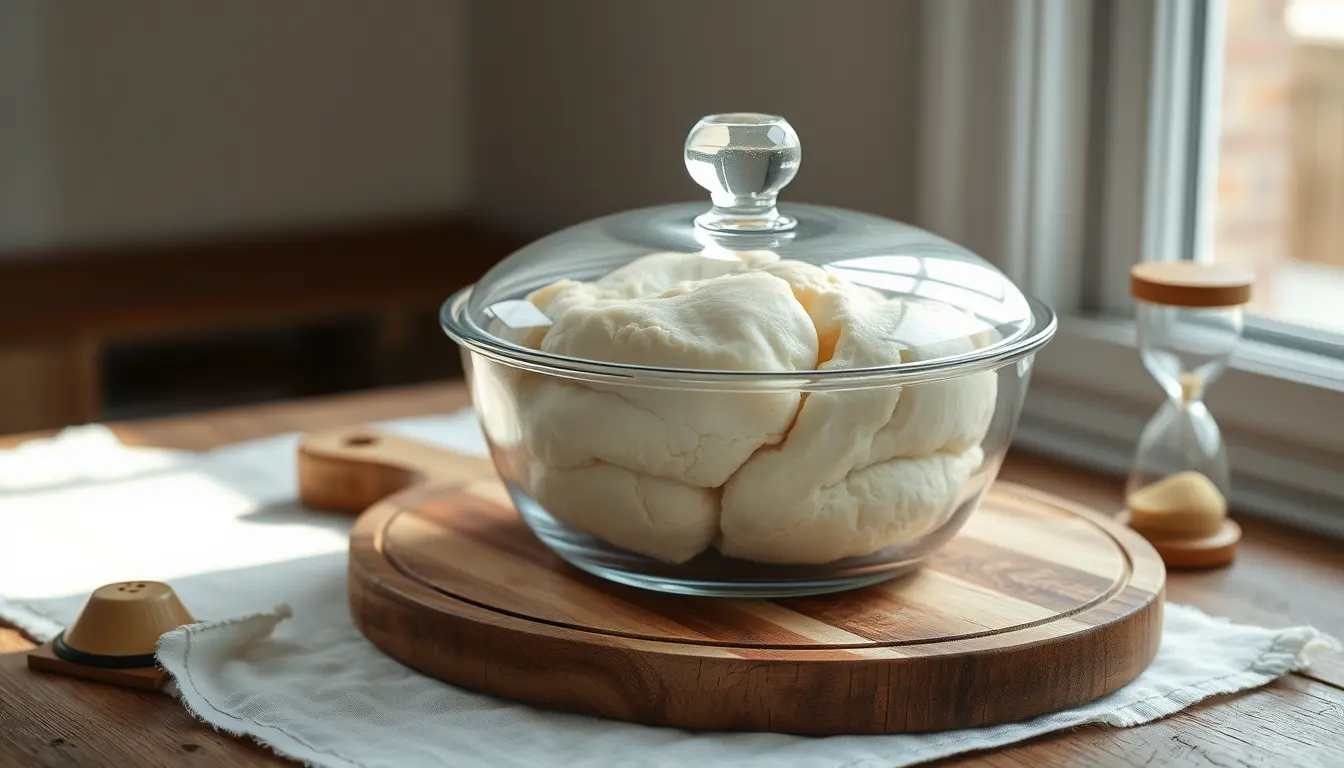
Yes, you can use less yeast to make dough rise more slowly, and it’s one of the easiest ways to fit bread around your day. As a rough guide for a lean dough at about 24 °C (75 °F): instant yeast at 1 to 1.5% of the flour weight gives a first rise of one to two hours, 0.5% stretches it to roughly three to four hours, around 0.2% to five to eight hours, and 0.1% or less can carry a dough through a night in a cooler room. These are starting points, not promises, because flour, dough temperature and the recipe all shift them. The slower rise also tends to give bread more flavour.
Why less yeast means more time
Yeast multiplies as it ferments. A dough with plenty of yeast reaches the amount of gas it needs quickly. A dough with a small amount starts with fewer cells, so it takes longer for the population and the gas to build up. The end point is the same, roughly the same rise and the same feel, but it arrives later.
That extra time has benefits beyond convenience:
- Flavour. Enzymes in the flour and bacteria in the dough have more hours to produce sugars, acids and aromas.
- Texture. Long-fermented dough is usually more extensible and easier to shape.
- Keeping. Bread made from a slow dough often stays fresh a little longer.
A rough guide to yeast and time
The table below gives starting points for a lean bread dough using instant yeast, with the dough at about 24 °C. The second column shows the amount for 500 g of flour.
| Instant yeast, % of flour | For 500 g of flour | Approximate first rise at 24 °C |
|---|---|---|
| 1 to 1.5% | 5 to 7.5 g | 1 to 2 hours |
| 0.5% | 2.5 g | about 3 to 4 hours |
| 0.2 to 0.25% | 1 to 1.25 g | about 5 to 8 hours |
| 0.1% or less | 0.5 g or less | 10 hours or more, often overnight in a cooler room |
Published recipes vary, and you’ll find bakers who use less yeast for the same times or more. Treat the right-hand column as the window in which to start checking the dough. A cooler dough moves more slowly and a warmer one faster, so note your own results and adjust.
Converting amounts with the yeast converter
Recipes often give yeast in packets or teaspoons, which makes small fractions awkward. The yeast converter handles both directions and all three common types.
A standard 7 g packet of instant yeast is 2¼ tsp. Suppose you want to cut it to about a quarter for a slow afternoon rise. Enter 2 g of instant yeast and the converter shows:
- Instant yeast: 2 g, about ⅝ tsp
- Active dry yeast: 2.4 g, about ¾ tsp
- Fresh yeast: 6 g
Go further for an overnight dough. At 1 g of instant yeast, it shows ⅜ tsp, matching 1.2 g of active dry or 3 g of fresh. At 0.5 g, instant yeast reads as ⅛ tsp, while the active dry equivalent is 0.6 g, about ¼ tsp.
Each type behaves a little differently once mixed in, which instant vs active dry vs fresh yeast covers.
Measuring very small amounts
At a gram or less, kitchen scales that read in whole grams aren’t reliable, and teaspoons are rough. Two ways to get it right:
- A pocket scale that reads to 0.01 g. They are inexpensive and useful for salt and yeast in small batches.
- Dilution. Stir 1 g of instant yeast into 100 g of the recipe’s water. Each 10 g of that water now carries 0.1 g of yeast. Use as much as you need, and make up the rest with plain water.
Temperature still matters most
Yeast amount is a useful lever, but dough temperature changes the timing even more. A dough at 20 °C may take nearly twice as long as the same dough at 26 °C. If your kitchen swings with the seasons, expect the same yeast amount to behave differently in winter and summer.
The same pattern shows up in sourdough. The bulk fermentation time estimator is built for sourdough, so its numbers don’t apply to commercial yeast, but it shows clearly how a few degrees can shift a rise by hours. Controlling it with water temperature is covered in why dough temperature matters more than time.
Planning a slower rise
- Decide when you want to shape the dough.
- Count back to when you can mix it.
- Pick a yeast amount from the table that fits that gap at your dough temperature.
- Check the dough at the start of the window, judging by size and feel rather than the hour.
The second rise, after shaping, also runs a little slower with less yeast, though by then the yeast population has grown. Expect it to take somewhat longer than the recipe’s original proofing time, and use the poke test to decide.
A worked example
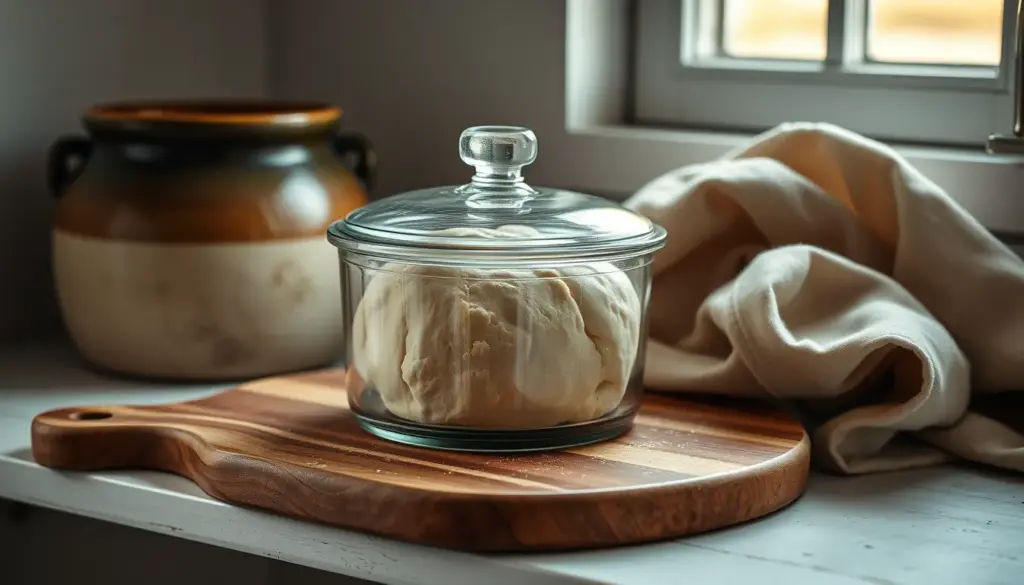
Say a sandwich loaf recipe uses 500 g of flour and one 7 g packet of instant yeast, which is 1.4%, and the first rise takes about an hour. You want to mix at 1 PM and shape at about 6 PM, a gap of five hours, in a kitchen near 24 °C.
From the table, 0.2 to 0.25% suits a five to eight hour rise, so use about 1 to 1.25 g of instant yeast. The yeast converter shows 1 g as ⅜ tsp. Mix as usual, check the dough from about 5 PM, and shape it when it has roughly doubled and a floured finger leaves a dent that fills slowly.
If you only have active dry yeast, the converter gives 1.2 g for the same job. Fresh yeast would be 3 g. Keep notes on how long the rise really took, and you’ll be able to fine-tune the amount next time.
When to be careful
- Warm kitchens. At 28 °C and above, even small amounts of yeast move quickly. Combine a low yeast dose with cooler water, or use the fridge.
- Sweet and rich doughs. Sugar and fat slow yeast, so cutting it too far can stall the rise. Reduce less, or use a yeast suited to sweet doughs.
- Very long room-temperature rises. A dough left too long overproofs and loses strength. If you won’t be around, a cool room or the fridge is safer than an even smaller dose. Cold fermentation for pizza dough shows how the fridge stretches a rise over days.
If a reduced-yeast dough barely moves for hours, check the yeast and the temperature. Why is my yeast bread not rising? works through the usual suspects.
Slow-rise mistakes
- Cutting the yeast without changing the timing. The dough is underproofed at the original time.
- Measuring tiny amounts by teaspoon. Small errors become big percentage changes.
- Ignoring dough temperature. The same yeast amount behaves very differently at 20 °C and 27 °C.
- Leaving it far past ready. A slow dough still overproofs eventually.
Slow-rise questions
Does less yeast make bread taste less yeasty?
Usually, yes. A strong yeasty or beery smell often comes from a lot of yeast working fast. A slower, smaller dose lets the wheat flavour and the gentle acidity from fermentation come through instead.
Will a reduced-yeast dough work in a bread machine?
Only if you skip the machine’s timed programme. Bread machines run fixed cycles, so a slow dough won’t be ready when the machine starts baking. Use the dough setting, then shape and bake by hand.
Is fresh yeast easier to measure in small amounts?
A little. Fresh yeast is about three times the weight of the same amount of instant yeast, so 0.3 g of instant becomes about 0.9 g of fresh, which is easier to weigh. It doesn’t keep as long, though, so buy it only if you bake often.