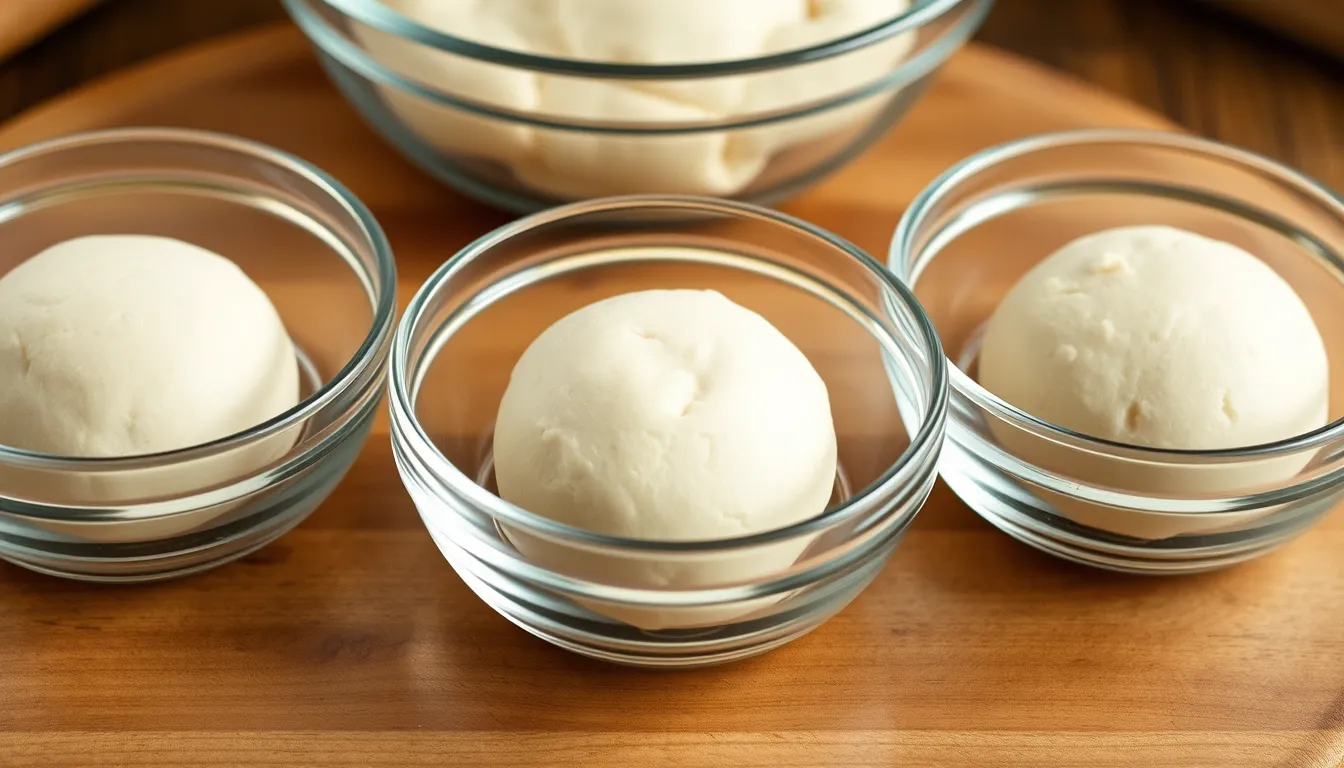
Cold fermentation means letting pizza dough rise slowly in the fridge, usually for 24 to 72 hours, instead of for a few hours on the counter. With a small amount of yeast and a fridge at about 4 °C (39 °F), the dough rises gently while enzymes in the flour break starch down into sugars and build flavour. You end up with a crust that tastes richer, browns more readily and stretches without fighting back.
It also moves the work around. You can mix on Wednesday evening and have pizza on Friday with nothing to do that day but stretch and bake.
What happens in the fridge
Three useful things go on at once.
Flavour develops. A long, slow ferment gives the yeast and bacteria time to produce aromatic compounds that a two-hour dough never gets to. The taste is fuller and slightly nutty, with none of the raw, yeasty edge of a fast dough.
Sugars build up. Enzymes naturally present in flour keep breaking starch into simple sugars. With so little yeast working in the cold, many of those sugars are still there at baking time, which is why cold-fermented crusts brown faster and more evenly, especially in a home oven.
The gluten relaxes. Over a day or more the gluten network becomes more extensible. A cold-fermented ball stretches thin without springing back, which makes shaping far easier.
How long to leave it
| Time in the fridge | What you get |
|---|---|
| 12 to 24 hours | Noticeably better flavour and stretch than a same-day dough |
| 24 to 48 hours | The sweet spot for most home bakers |
| 48 to 72 hours | The most complex flavour; needs less yeast |
| Over 72 hours | Possible with very little yeast, but the dough may weaken and taste sour |
The right time depends on how much yeast you use and how cold your fridge runs. A fridge at 6 °C (43 °F) moves noticeably faster than one at 3 °C (37 °F). Why dough temperature matters more than time puts numbers on that effect.

How much yeast for a long ferment
The longer the ferment, the less yeast you need. As a starting point in a fridge at about 4 °C, use around 0.2% to 0.3% instant yeast for 48 to 72 hours, and around 0.4% to 0.5% for 24 hours. These are small numbers, so a scale that reads to 0.1 g is worth having.
The pizza dough calculator works out the weights. Say you want four balls of 270 g at 65% hydration, with 2.5% salt, 2% olive oil, 0.2% instant yeast for a three-day ferment, and the default 2% allowance for dough left in the bowl. It gives:
- Flour: 649 g
- Water: 422 g
- Salt: 16 g
- Olive oil: 13 g
- Instant yeast: 1.3 g, about 0.42 tsp
- Total dough: 1,102 g, or 275 g per ball
For a 24-hour ferment, change the yeast to 0.4%. The yeast doubles to 2.59 g, about 0.83 tsp, and the flour and water shift by a gram each to 648 g and 421 g. If you prefer fresh yeast, choose it as the leavening and use about three times the instant figure; at 0.6% fresh yeast the calculator asks for 3.89 g. The yeast types are compared in instant vs active dry vs fresh yeast.
Set up your own batch:
Balls first or bulk first?
There are two ways to organise a cold ferment.
Ball it before the fridge
Mix the dough, let it rest at room temperature for one to two hours, then divide and shape it into balls and put them in the fridge. Most home pizza makers do it this way. Each ball ferments in its final shape, so it keeps a smooth, even skin and is ready to stretch after a short rest on the day.
Bulk in the fridge, ball later
Mix, rest briefly, and put the whole mass in one container in the fridge. Divide and ball it on the day you bake, then let the balls rest for two to four hours before stretching. This saves space in the fridge and gives you a chance to adjust ball sizes later, but it needs more time on baking day.
A three-day timeline
Here is how the 0.2% batch above fits into a week, with pizza on Saturday evening:
- Wednesday, 7:00 PM: mix the dough with cool water and let it rest, covered, at room temperature.
- Wednesday, 8:30 PM: divide it into four balls, put them in oiled containers and move them to the fridge.
- Thursday and Friday: leave them alone. They will rise slowly and start to relax.
- Saturday, 4:30 to 5:00 PM: take the balls out and let them warm up on the counter.
- Saturday, 6:00 PM: preheat the oven with a stone or steel inside for 45 minutes to an hour.
- Saturday, 7:00 PM: stretch, top and bake.
Hands-on time across the three days is well under an hour, and most of it is on the evening you mix.
Containers and storage
Use individual lidded containers, a large tray with a lid, or bowls covered with a plate. Oil them lightly so the dough releases cleanly, and give each ball room to roughly double. A dry surface forms a skin that tears when you stretch it, so keep the dough covered.
Put the dough in the coldest part of the fridge and leave it alone. Opening and closing the container releases gas and moisture for no benefit.
Taking it out
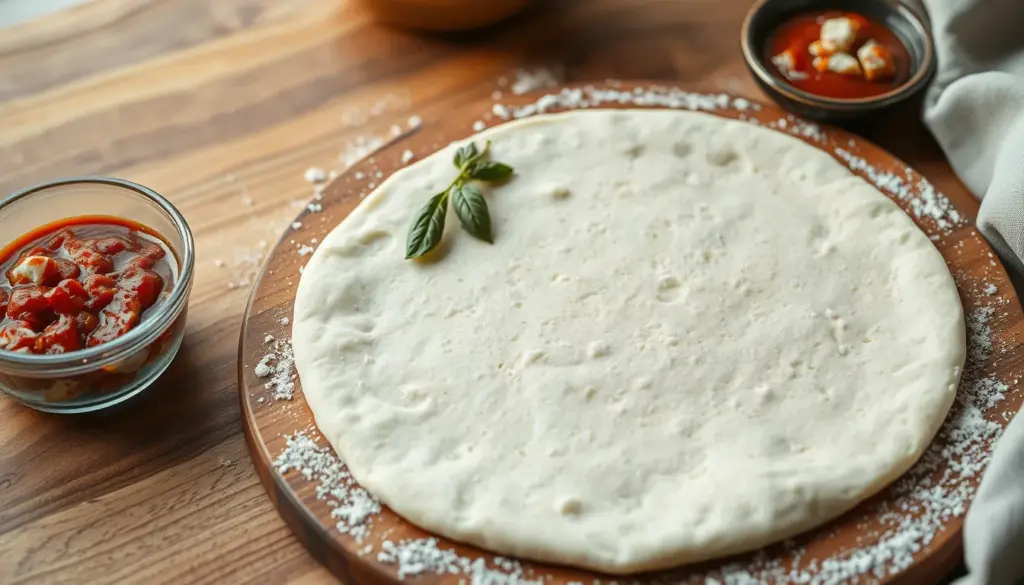
Cold dough is stiff and springs back when you stretch it. Take the balls out one to three hours before you plan to bake, depending on how warm your kitchen is. They are ready when they have warmed through, feel soft and relaxed, and show some bubbles when you look at the underside of a clear container.
Don’t leave them out much longer than they need. A cold-fermented dough that then sits for many hours in a warm kitchen can overproof and turn slack.
Signs something has gone too far
- The ball has flattened into a wide, loose disc with large bubbles breaking the surface.
- It smells strongly of alcohol or tastes sour.
- It tears easily and won’t hold a rim when stretched.
- The crust bakes up pale and flat, because the yeast has used much of the available sugar.
If you see these regularly, cut the yeast by a third or shorten the ferment by a day.
Cold fermentation mistakes
- Using a same-day yeast amount. A dough with 1% yeast will overferment within a day in most fridges.
- Putting warm dough in a packed fridge. It takes hours to cool, and fermentation races ahead meanwhile. Mix with cool water so the dough goes in at about 20 to 22 °C (68 to 72 °F).
- Stretching it cold. It fights back and tears. Give it time to warm.
- Changing yeast and time together. Adjust one at a time so you can tell which change helped.
The style you are making matters too. Neapolitan vs New York pizza dough compares how the two are usually fermented and why.
Cold pizza dough questions
Can I freeze dough after it has cold fermented?
Yes. After a day or two in the fridge, oil each ball lightly, wrap it well and freeze it. Thaw it overnight in the fridge, then give it the usual one to three hours at room temperature. It will be slightly less lively than fresh dough but still makes good pizza.
Can I cold ferment sourdough pizza dough?
Yes, and it works well. Use a small amount of starter, around 5% to 10% of the flour, so the dough doesn’t overferment or turn very sour. Sourdough pizza dough usually needs a little longer at room temperature on the day to become relaxed and puffy.
Do the containers need to be airtight?
They don’t need to be sealed, but they should be covered well enough that the dough doesn’t dry out. A loose lid or plate is fine. Very tight lids can pop off as gas builds up, which is harmless but messy.