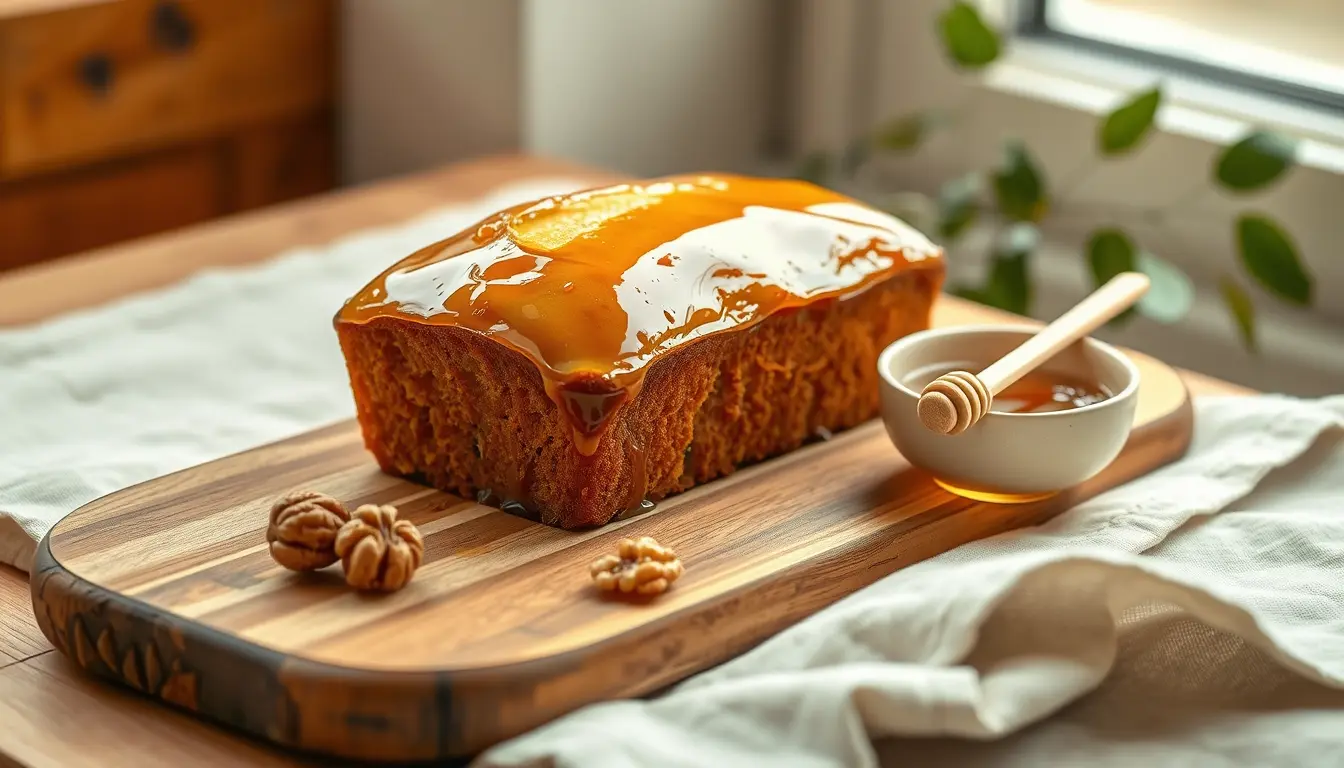
To use honey or maple syrup instead of sugar, a common starting point is about ¾ cup of syrup for each 1 cup of granulated sugar, with the recipe’s other liquid reduced to make up for the water the syrup brings. With honey, many bakers also add about ¼ tsp of baking soda per cup to balance its acidity, and lower the oven by about 15 °C (25 °F) because liquid sweeteners brown faster. These are approximate guidelines, not exact conversions, and the swap works best in moist bakes like muffins, quick breads, snack cakes and yeast breads.
Why it isn’t a simple swap
Granulated sugar is almost pure sucrose with no water. Honey and maple syrup are sugars dissolved in water, along with small amounts of acids, minerals and flavour compounds. That changes three things in a recipe:
- Moisture. Honey is roughly 17 to 18% water and maple syrup about 32 to 33%. Both add liquid that a dry sugar wouldn’t.
- Sweetness. Honey tastes sweeter than sugar to most people, partly because of its fructose. Maple syrup is a little less sweet than honey but has a strong flavour.
- Browning. Both brown faster than sucrose in the oven, so crusts darken earlier.
They also change texture. Sugar creamed with butter traps air and helps cookies spread and crisp; a liquid sweetener can’t do that, so it gives softer, cakier results.
These water and sweetness figures are approximate and vary by product.
Weighing the swap
Volume makes this swap confusing, because a cup of syrup weighs much more than a cup of sugar. The cups to grams converter puts the main amounts at:
| Amount | Weight |
|---|---|
| 1 cup granulated sugar | 198 g |
| ¾ cup honey | 252 g |
| ¾ cup maple syrup | 234 g |
| ½ cup granulated sugar | 99 g |
| ⅜ cup honey (6 tbsp) | 126 g |
So ¾ cup of honey actually weighs more than the cup of sugar it replaces. Its water, about 40 to 45 g in that amount, is what you take out elsewhere. Maple syrup brings even more: roughly 75 to 80 g of water in ¾ cup. Both of these water figures are approximate.
If you need a refresher on how liquid sweeteners compare by weight, how much does a cup of milk, oil or honey weigh covers that side of things, and how much does a cup of sugar weigh covers the dry sugars.
A step-by-step swap
- Start with part of the sugar. Replacing half the sugar is a safe first try. You keep some of sugar’s structure while getting the flavour of the syrup.
- Use about ¾ of the volume. For each cup of sugar you replace, use about ¾ cup of honey or maple syrup.
- Reduce the other liquid. For each cup of honey used, a commonly cited guide is to cut the milk, water or juice by about ¼ cup (60 ml). Maple syrup carries more water, so reduce a little more, or simply aim for a batter of the usual thickness.
- Balance honey’s acidity. Add about ¼ tsp of baking soda per cup of honey if the recipe relies on baking powder alone. Maple syrup is milder, and many bakers skip this step for it.
- Lower the oven. Drop the temperature by about 15 °C (25 °F) and check a little earlier.
The oven temperature converter shows the numbers for the most common case. A recipe at 350 °F (177 °C) becomes 325 °F, which is 163 °C, usually set as 160 °C on a dial, or 143 °C in a fan oven.
Example: a muffin recipe
Suppose a muffin recipe calls for 1 cup of sugar, 1 cup of milk and baking powder. To replace half the sugar with honey:
- Keep ½ cup (99 g) of sugar.
- Add ⅜ cup (6 tbsp, 126 g) of honey in place of the other half.
- Reduce the milk by about 1½ tbsp, since the honey brings around 20 g of water.
- Add a small pinch, about ⅛ tsp, of baking soda.
- Bake at 160 °C instead of 177 °C, and start checking 5 minutes early.
The result is a moister, slightly denser muffin with a more golden top. It stays soft for longer, because honey attracts and holds moisture.
Where the swap works best
- Muffins and quick breads: very forgiving. The extra moisture is welcome.
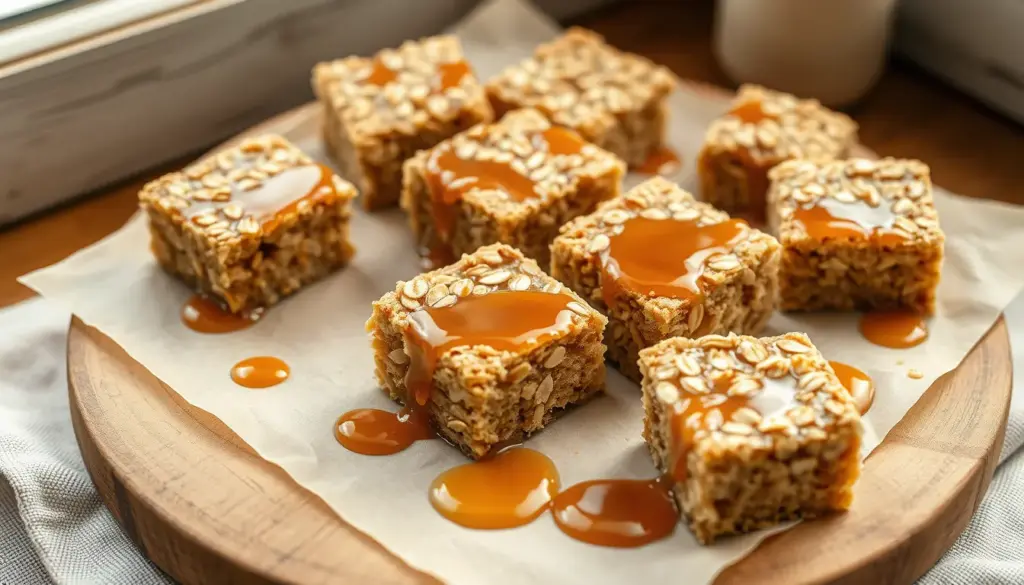
- Snack cakes and bars: work well, with a slightly denser crumb.
- Yeast breads: easy. Honey or maple in a sandwich loaf swaps roughly gram for gram for sugar, with a spoonful less water.
- Granola and oat bars: syrups are often better than sugar here, as they bind the oats.
Where it struggles
- Crisp cookies and shortbread: they turn soft and cakey, and spread differently.
- Meringues and macarons: they need dry sugar to stabilise the egg whites.
- Sponge cakes made by whipping eggs with sugar: the foam is weaker.
- Caramel and candy: different sugars behave differently when cooked to high temperatures.
Swapping in yeast dough
Bread is the easiest place to start. Sugar in a sandwich loaf or soft roll dough is usually only a few percent of the flour weight, so the extra water from a syrup barely matters. Replace the sugar with the same weight of honey or maple syrup, then hold back a spoonful of the recipe’s water and add it only if the dough feels stiff. Honey also helps bread stay soft for an extra day.
Keep the amount modest. Large quantities of any sugar slow yeast down, and honey’s mild acidity has little effect at bread-dough levels. A loaf with more than about 10% sweetener by flour weight is in sweet-dough territory and may need more yeast or a longer rise, as enriched doughs explained describes.
Measuring sticky syrups
Syrups cling to cups and spoons, so a measured ¾ cup often leaves a spoonful behind. Weighing straight into the mixing bowl avoids the problem. If you’re using cups, a light coat of oil inside the cup helps the syrup slide out cleanly. Warm, runny honey is easier to measure than cold, crystallised honey, so stand the jar in warm water first if it has set.
Honey or maple: which to choose
Honey brings a floral, sometimes strong flavour that changes with the type. Light, mild honey is the most versatile. Maple syrup has a deep, warm caramel flavour that suits oats, nuts, pumpkin and spice. Use pure maple syrup, not pancake syrup, which is usually corn syrup with flavouring and behaves differently.
Common mistakes
- Swapping cup for cup. The bake comes out too sweet and too wet.
- Not reducing the liquid. Batters run, and the crumb ends up gummy.
- Keeping the original temperature. The outside darkens before the middle is done.
- Using a syrup in a creamed cookie. The texture changes completely.
Sweetener swap questions
Can I use agave or golden syrup in the same way?
Yes, roughly. Both are liquid sweeteners and need a similar reduction in liquid. Agave is sweeter than honey, so start with a little less.
Does honey make baked goods last longer?
Usually, yes. Honey draws in moisture from the air, so cakes and breads made with it stay soft for longer.
Can I replace brown sugar with maple syrup?
You can, with the same adjustments. The result is softer, and the flavour shifts from molasses toward maple.
Is honey safe in baking for young children?
Health authorities advise against giving honey to babies under 12 months, and baking doesn’t make it safe for them. For older children and adults, baked honey is fine.