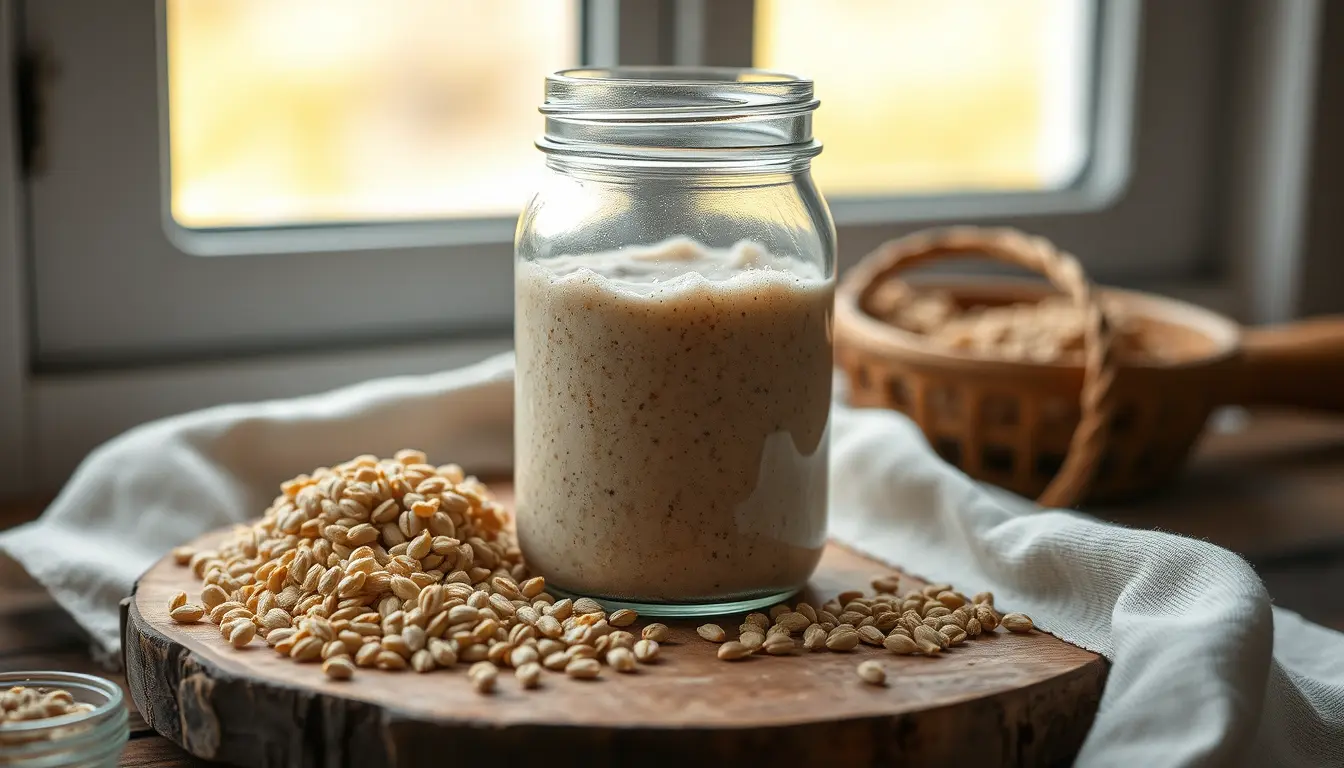
You make a gluten-free sourdough starter the same basic way as a wheat one: mix gluten-free flour with water, keep it warm, and feed it regularly until it becomes active. The differences lie in the details. Use certified gluten-free flour such as brown rice, sorghum or buckwheat, start in a clean jar with clean utensils, and expect a thicker, paste-like starter that may rise less than wheat. Most gluten-free starters become usable in about one to two weeks, though some take longer.
Start with the right flour
The flour is everything here. If you bake gluten-free because of coeliac disease or a gluten intolerance, use flours labelled certified gluten-free. Grains like buckwheat, sorghum and millet are naturally free of gluten, but they’re often milled or packed alongside wheat, and cross-contact can make an otherwise safe flour unsuitable.
Good choices for a starter include:
- Brown rice flour. Mild, easy to find and a dependable base.
- Sorghum flour. Slightly sweet and ferments readily.
- Buckwheat flour. Earthy and lively, but it can become very thick and sticky.
- Teff or millet. Useful in a blend for flavour.
Wholegrain flours generally work better than refined starches. Starches such as tapioca or potato have few of the nutrients and wild microbes that get fermentation going, so leave them for the bread itself.
You can’t convert a wheat starter into a gluten-free one by feeding it gluten-free flour. Traces of the original wheat remain, so a gluten-free starter must begin from scratch.
Keep everything separate
Use a jar, spoon and spatula that you keep only for the gluten-free starter, or that have been washed thoroughly. If you also bake with wheat, keep the starters apart and don’t share discard, spoons or scrapers between them. Label the jar clearly so no one feeds it the wrong flour.
A day-by-day guide
The timing below is approximate. Warmth speeds things up and a cool room slows them down; somewhere around 24 to 26 °C (75 to 79 °F) is ideal.
- Day 1: mix 50 g brown rice or sorghum flour with 55 to 60 g lukewarm water to a thick paste. Cover loosely and leave it somewhere warm.
- Day 2: you may see nothing at all. Stir, then add another 50 g flour and 50 to 60 g water.
- Days 3 to 5: bubbles may appear, sometimes followed by a sudden burst of activity and an odd smell. This early rush comes from bacteria that won’t last. Start discarding: keep 50 g, and feed it 50 g flour and 50 to 60 g water once or twice a day.
- Days 6 to 14: the starter should settle into a pattern of rising and falling after each feed, with a pleasant, tangy smell.
Gluten-free flours absorb water differently from wheat, so adjust the water to keep a thick paste, roughly like porridge. If it looks runny and separates, add less water at the next feed; if it’s stiff and dry, add a little more.
How much to feed
Once your starter is active, you’ll want a steady routine. The sourdough starter feeding calculator works out amounts for any ratio. For 100 g of starter to use plus 20 g to keep, a 1:1:1 feed is 40 g starter, 40 g flour and 40 g water. A 1:2:2 feed, which slows things down, uses 24 g starter, 48 g flour and 48 g water.
Many gluten-free bakers need a little more water than wheat bakers. Set a custom ratio of 1:1:1.2 and the same totals become 38 g starter, 38 g flour and 45 g water, a 113% hydration starter.
The calculator also estimates how long the starter takes to peak: about 4 to 6 hours for a 1:1:1 feed at 24 °C. That model was calibrated on wheat starters, so treat it as a rough guide for gluten-free flours and watch your own jar. What starter feeding ratios actually do explains how the ratio changes timing and flavour.
Signs it’s ready
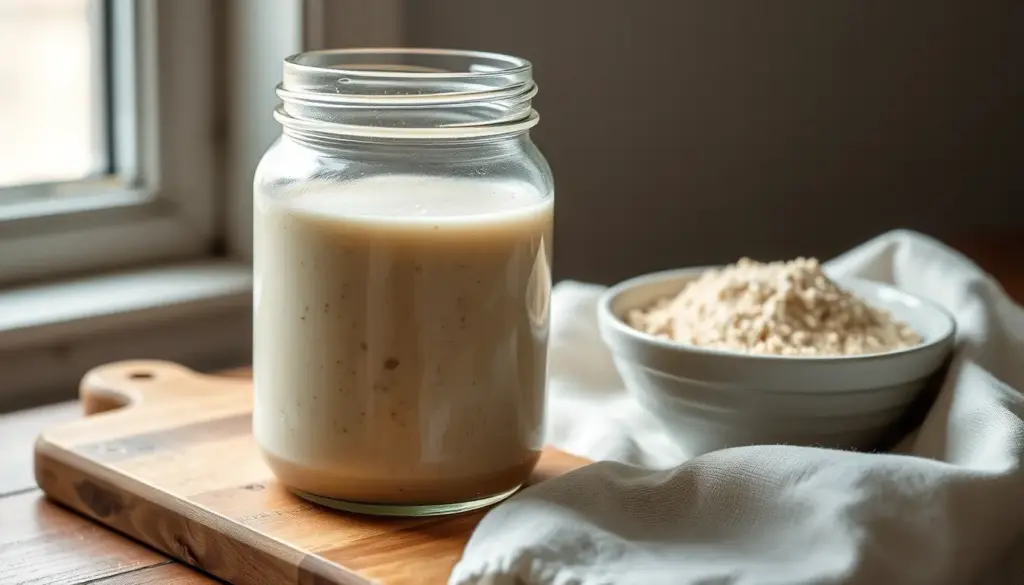
Gluten-free starters often look different from wheat ones. Without gluten to trap gas, many don’t double in volume, and buckwheat starters can look more like a mousse than a dome. Instead of waiting for a dramatic rise, look for:
- A clear rise after each feed, often by half or more, peaking at a similar time each day.
- Bubbles throughout the starter, not just on top.
- A pleasant, sour or yogurt-like smell, without the harsh, nail-polish note of a hungry starter.
What your starter’s smell is telling you helps decode the smells during these first weeks. If you see pink or orange streaks or fuzzy mould, throw the starter away and start again with a clean jar.
When it seems stuck
A starter that bubbled happily on day 3 and then went quiet is the most common worry, and it’s usually nothing. The first burst comes from bacteria that thrive before the mixture turns acidic. Once the acidity rises, they fade, and the yeasts and lactic acid bacteria you actually want take a few more days to build up. Keep feeding on schedule.
If nothing has changed after about two weeks, look at three things. First, temperature: move the jar somewhere warmer, for example the top of the fridge, or a switched-off oven with its lamp lit. Second, the flour: try a different brand or add a little buckwheat or sorghum to a rice-based starter. Third, the water: if your tap water is heavily treated, let it stand uncovered for a few hours or use filtered water for the feeds. These are common fixes rather than guarantees, but one of them usually gets a slow starter moving.
Using it in gluten-free bread
A gluten-free starter adds flavour, rise and keeping quality, but it can’t create structure by itself. Gluten-free bread still needs a binder, most often psyllium husk or xanthan gum, to hold the gas. Follow a recipe designed for gluten-free sourdough the first few times; a wheat sourdough recipe with the flour swapped will not behave the same way.
Keeping it going
Between bakes, the starter can live in the fridge and be fed about once a week. Bring it back to room temperature and give it one or two feeds before baking. How to store a sourdough starter covers fridge, dried and frozen storage, and the same methods work for gluten-free starters.
Common mistakes
- Using flour that isn’t certified gluten-free. For anyone with coeliac disease, cross-contact matters as much as the grain itself.
- Giving up in the first week. A quiet starter on day 4 or 5 is normal, especially after the first burst of bubbles fades.
- Feeding a runny batter. Too much water makes the starter separate and lose strength.
- Expecting it to double. Judge it by bubbles, smell and a consistent pattern instead.
- Keeping it too cold. Below about 20 °C (68 °F), progress can stall for days.
Gluten-free starter questions
Can I use oat flour?
Yes, if it’s certified gluten-free. Ordinary oats are often contaminated with wheat during growing and milling. Oat flour also makes a fairly thick, slow starter, so it works well in a blend with brown rice.
My buckwheat starter turned into a thick jelly. Is that a problem?
No. Buckwheat becomes very gelatinous when it ferments. Add a bit more water at the next feed if you find it hard to stir.
Can I switch from rice flour to sorghum later?
Yes. Feed the new flour for two or three days and the starter will adjust. Its smell and timing may change a little as it does.
Is a gluten-free starter safe for someone with coeliac disease?
Only if every flour, jar and tool involved is gluten-free and kept separate from wheat. If you’re unsure about a flour, check the label for a certified gluten-free mark.