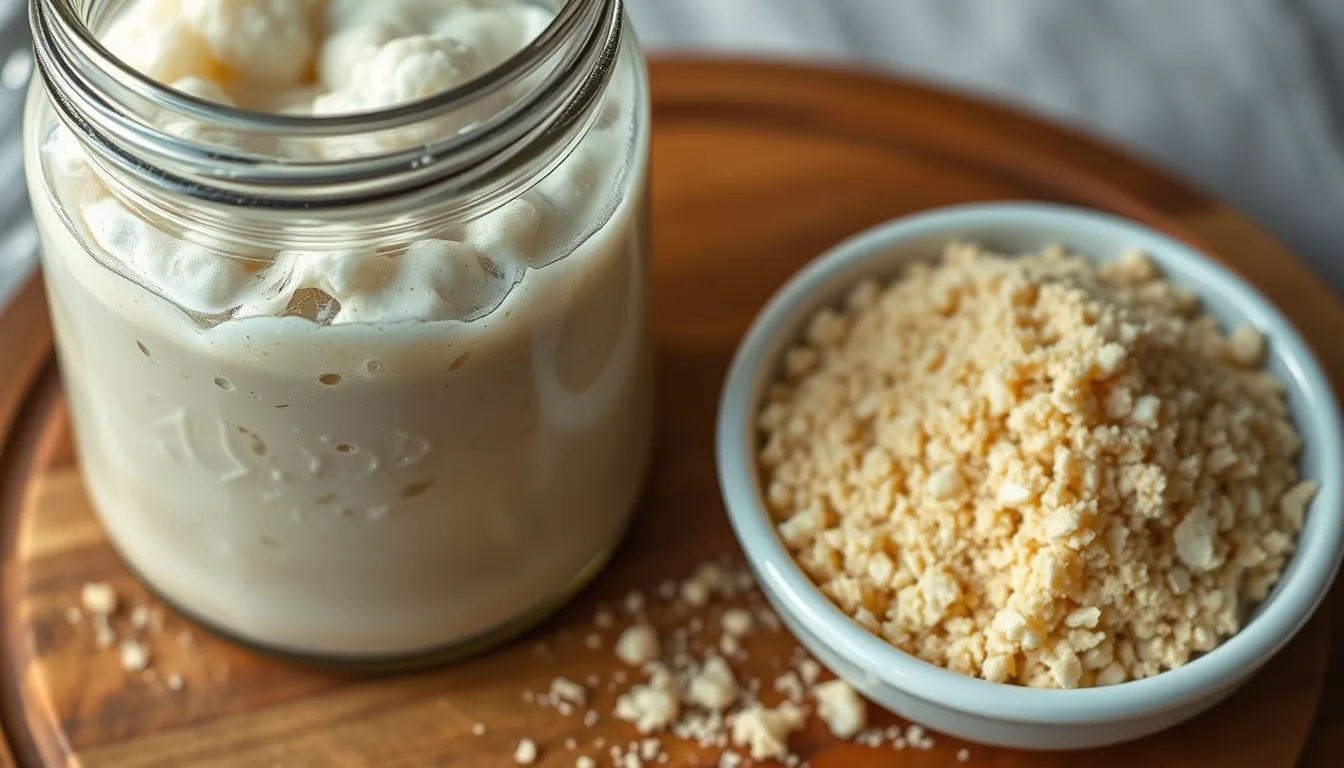
To turn a yeasted recipe into a sourdough one, leave out the yeast and use ripe sourdough starter instead, at about 15% to 25% of the flour weight. Then take the flour and water that the starter contains out of the recipe’s own flour and water, so the finished dough has the same totals as before. The salt, fat, sugar and flavourings stay as they are.
What changes most is time. A dough that rose in an hour with packet yeast may take five to eight hours with starter, depending on how warm your kitchen is. Plan for that and almost any lean bread converts well.
What stays and what changes
- Stays the same: total flour, total water, salt, oil or butter, sugar, seeds, herbs and the baking temperature.
- Changes: the yeast disappears, the starter comes in, and the flour and water you add are reduced to make room for it.
- Changes a lot: rising times, and to a lesser extent the flavour, which becomes fuller and a little tangy.
Step 1: get the recipe into grams
Conversion is simple arithmetic, but only with weights. If the recipe uses cups, convert each line once and write the grams beside it. The cups to grams converter handles flour, sugar, butter and liquids; why bakers weigh ingredients instead of using cups explains why it matters so much for bread.
Note three figures: the total flour, the total water and the salt. Those are the numbers the conversion works from.
Step 2: decide how much starter to use
Starter is measured as a percentage of the total flour. The amount sets the pace:
- 10% suits a long, slow bulk, such as mixing in the evening and shaping in the morning in a cool kitchen.
- 15% to 20% is the everyday range for a same-day loaf.
- 25% or more speeds things up, useful in a cold kitchen or for richer doughs.
More starter doesn’t make better bread, just faster bread. Pick the amount that fits your day.
Step 3: take out the starter’s flour and water
When a starter is kept at 100% hydration, every 100 g of it holds 50 g of flour and 50 g of water. When you add it, you are adding both, so the recipe’s own flour and water need to go down by the same amounts.
Take a rustic loaf made with 750 g of bread flour, 510 g of water, 15 g of salt and 15 g of fresh yeast. In the yeast to sourdough converter, enter the flour, water and salt, choose 15% starter at 100% hydration, and it gives:
- Starter: 113 g
- Flour to add: 694 g
- Water to add: 454 g
- Salt: 15 g
- Total flour: 750 g, at 68% hydration
- Flour prefermented in the starter: 7.5%
The loaf has exactly the same flour, water and salt as the original. The yeast is simply gone, and the starter does its job.
Convert your own recipe here:
How fast was the original meant to rise?
It helps to know whether the original recipe was designed to be quick or slow, because that tells you how big a change the conversion is.
The 15 g of fresh yeast in that loaf is the same as 5 g of instant yeast, or 6 g of active dry, according to the yeast converter. Five grams of instant yeast on 750 g of flour is about 0.7%, a moderate amount for a loaf meant to be ready in an afternoon. Recipes with 1.5% or more instant yeast were written for speed and will feel the biggest change in timing. Recipes with only 0.2% to 0.5% were already slow, so the switch to starter is a small step. Instant vs active dry vs fresh yeast covers the other swaps between yeast types.
Step 4: plan for the new timing
Throw out the recipe’s rising times and use the dough’s temperature and starter amount instead. With 15% starter, the bulk fermentation estimator gives about 5 h 15 min to 7 h at 24 °C (75 °F), and about 6 h 30 min to 8 h 45 min at 22 °C (72 °F). The original yeasted dough probably needed an hour or two.
Judge the end of bulk by the dough, not the clock: a clear rise, a domed surface, bubbles along the sides and an airy wobble. Bulk fermentation: how to tell when it’s done explains how to read each one. The final proof after shaping usually takes one and a half to three hours at room temperature, or you can leave the shaped dough in the fridge overnight.
A second example: focaccia
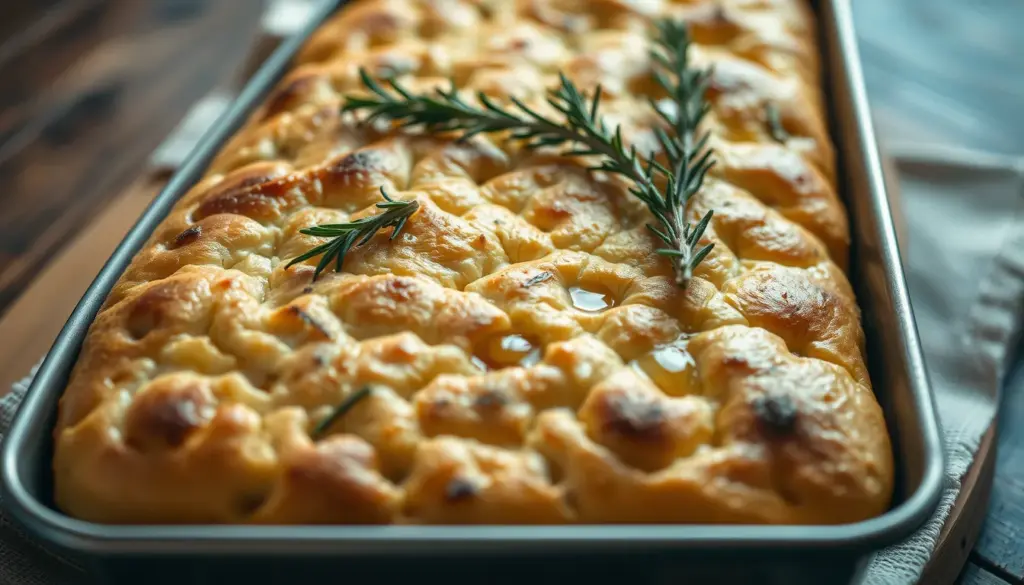
Focaccia converts especially well. A typical recipe uses 500 g of flour, 400 g of water, 10 g of salt, 25 g of olive oil and 4 g of instant yeast. With 20% starter at 100% hydration, the converter gives 100 g of starter, 450 g of flour and 350 g of water, with the salt unchanged and the hydration still 80%. The oil doesn’t change either, because the converter only moves flour and water.
Keep a stiff starter? Enter its hydration in the converter. With the same 20% of a starter at 60% hydration, the flour to add drops to 438 g and the water rises to 363 g, because a stiff starter brings more flour and less water.
Recipes that need extra care
Enriched doughs
Butter, eggs, milk and sugar all slow a sourdough culture down. Brioche, cinnamon rolls and soft sandwich loaves convert, but plan on 25% to 30% starter, a warm spot around 26 °C (79 °F) and a long rise. Many bakers keep the dough in the fridge overnight to make the timing easier.
Milk instead of water
If a recipe uses milk as its only liquid, take the starter’s water out of the milk. The small difference in fat and solids won’t matter.
Very wet or very dry doughs
Check the converted recipe’s hydration. If the starter is wetter than the dough, a low-hydration recipe like bagels can end up with very little water left to add. A stiffer starter or a slightly smaller percentage keeps it workable.
A checklist for your first conversion
- Write every line of the original in grams.
- Total up the flour and water, including any from a pre-ferment.
- Pick a starter amount that suits your schedule, usually 15% to 20%.
- Subtract the starter’s flour and water from the recipe’s own.
- Leave out the yeast and keep everything else.
- Feed the starter so it peaks when you plan to mix.
- Ferment by temperature and by the look of the dough, not the recipe’s times.
- Write down what happened, so the second bake can be adjusted.
The first loaf rarely comes out perfect, but it usually comes out good. The notes from it make the second one better.
Conversion mistakes
- Adding starter on top of the full recipe. That puts extra flour and water into the dough, so it comes out slacker and heavier. Always subtract.
- Keeping the yeasted timings. The dough will be badly underfermented.
- Using starter that hasn’t peaked. It lacks rising power. Feed it the night before and use it when it is domed and bubbly.
- Skipping the salt check. The starter’s flour counts toward the total, but the salt doesn’t need to change.
Conversion questions
Will the converted bread taste sour?
It will taste fuller and a little tangy, but not necessarily sour. A warm, fairly quick fermentation with a freshly peaked starter gives a mild loaf. Long, cool fermentation and a fridge proof make it more sour.
Can I convert a bread machine recipe?
You can convert the ingredients, but most machines run a fixed programme timed for yeast. The dough won’t be ready in time. Use the machine for mixing only, or its dough setting, then let the dough rise and bake it outside the machine.
What about recipes that already use a poolish or sponge?
Treat the poolish or sponge as part of the recipe’s flour and water. Add up all the flour and water from every stage, then convert the totals. The starter replaces both the pre-ferment’s yeast and the final dough’s yeast.
Do quick breads convert?
No. Banana bread, soda bread and muffins rise with baking powder or baking soda, not yeast. You can add sourdough discard to them for flavour, but it doesn’t replace the leavening.