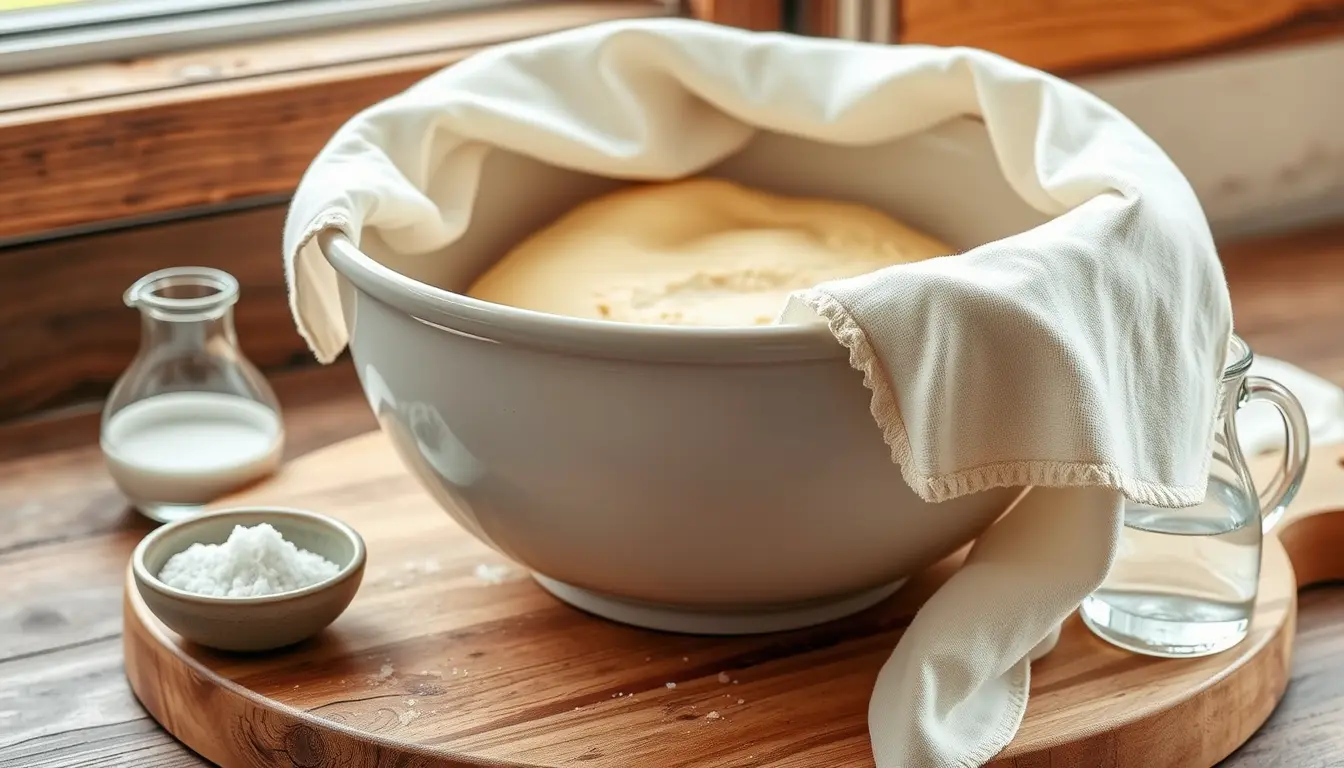
Autolyse is a rest at the very start of making bread: you mix only the flour and water, cover the bowl and leave it for somewhere between 20 minutes and an hour before adding the starter and salt. In that time the flour soaks up the water fully and gluten begins to form on its own, so the dough comes together smoother and stretchier with less work.
It is useful, but it isn’t compulsory. Plenty of good loaves are made without it, and for some doughs it is better skipped. Here is what happens during the rest, how to fit it into a recipe, and how to decide whether it earns its place.
Where it came from
The technique was popularised in the 1970s by the French baking teacher Raymond Calvel. Commercial bakeries had moved to fast, intensive machine mixing, and the bread was suffering: pale crumb, flat flavour, overworked dough. Calvel found that resting the flour and water before mixing let bakers mix for much less time and still get a strong dough. The French word refers to the flour’s own enzymes doing some of the work.
Home bakers rarely over-mix by hand, but the same rest makes wet doughs much easier to handle.
What happens in the bowl
Three things go on at once while the dough sits.
The flour hydrates
Flour doesn’t absorb water instantly. Bran and the larger particles take time, and a freshly mixed dough feels rough and patchy because some flour is still dry inside. After a rest, every particle has had its fill and the mass feels even.
Gluten starts building itself
Wheat flour contains two groups of proteins that bond into gluten once wet. Mixing speeds the process up, but bonds also form passively while the dough sits still. A dough that was a shaggy mess at minute one will stretch noticeably further at minute forty.
Enzymes get to work
Flour carries its own enzymes. Protease trims some gluten bonds, which makes the dough more extensible and less springy. Amylase breaks starch into sugars, giving the culture more food and the crust more colour later. Both are helpful in moderation, and both are part of why very long rests can backfire.
Why the salt and starter wait
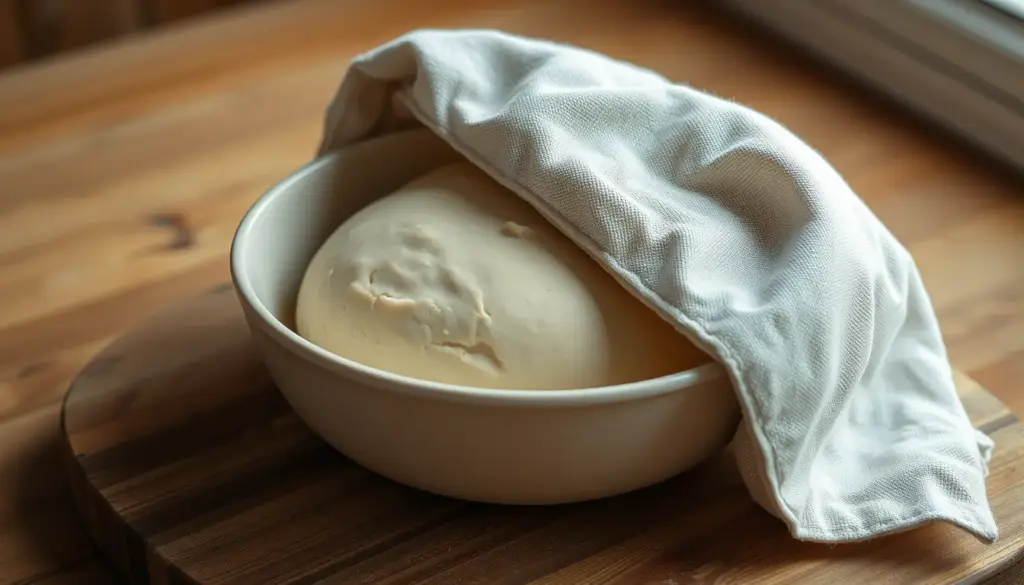
Salt tightens gluten and draws water to itself, so it slows the very hydration the rest is meant to encourage. The starter brings acidity, which also tightens dough, and it starts the fermentation clock. Leaving both out keeps the rest about water and flour.
When the rest is over, add the starter and salt with a splash of water you held back from the recipe. Squeeze and fold the dough until both disappear, then carry on with folds as usual. How much salt should go in bread dough? covers why adding salt late does no harm.
A variation called fermentolyse puts the starter in from the start and leaves only the salt out. It saves a step but shortens the rest’s effect, because fermentation is already under way.
How long to rest it
| Dough | Typical rest | Why |
|---|---|---|
| White bread flour, 70 to 80% hydration | 30 to 60 minutes | The classic case, with clear gains in smoothness |
| All-purpose or weaker flour | 20 to 30 minutes | Long rests can make a weaker dough slack |
| 20 to 50% whole wheat | 20 to 45 minutes | Bran soaks water slowly, but enzymes are more active |
| Mostly rye | Usually skipped | Rye forms little gluten, so there’s little to gain |
These ranges are where most recipes sit, and you’ll find bakers who rest dough far longer, sometimes several hours in a cool place. It can work, but with more enzyme activity the dough gets softer, so start in the middle of the range and adjust from there.
Counting the water you hold back
The water you keep aside for the salt and starter is still part of the recipe. It is easy to treat it as extra and end up with a wetter dough than planned. It also helps to remember that the starter brings water of its own.
Here is a typical case. The recipe lists 480 g of bread flour and 360 g of water, which looks like a neat 75%, plus 96 g of starter at 100% hydration and 10 g of salt. You rest the flour with 330 g of the water and set 30 g aside. Put the full amounts into the sourdough hydration calculator and it shows what the dough really holds: 528 g of flour and 408 g of water once the starter is counted, for an overall hydration of 77.3%.
If that is wetter than your flour can handle, enter a target of 75% and the calculator suggests 348 g of water in total, 12 g less than the recipe. Take it off the autolyse portion and keep the 30 g reserve the same.
To see the whole formula as percentages, including the salt and starter, run the same weights through the baker’s percentage calculator. Dough hydration: what 65% vs 80% really means explains how the numbers translate into dough you can feel.
When to skip it
The rest is a tool, not a rule. These are the cases where leaving it out often makes sense:
- Stiff doughs. Bagels, pretzels and some sandwich doughs below about 60% hydration are mixed hard on purpose. A rest adds little.
- Enriched doughs. Butter and sugar go in gradually after a long mix anyway. Some bakers still rest the flour with the milk and eggs, and both approaches work.
- A levain at its peak in a hot kitchen. If the levain is ready now, an hour’s wait can push it past its best. Mix it in straight away, or use fermentolyse.
- Mostly rye or heavy whole grain doughs. There’s little gluten to build, and the extra enzyme activity can turn the dough sticky.
- When time is short. A few extra minutes of mixing or one more set of folds does the same job.
How to tell it worked
Pull a corner of the dough up and stretch it before adding the starter. A good rest leaves dough that stretches a long way before tearing and feels silky rather than rough. After the starter and salt go in, the dough should come together in a couple of minutes of squeezing and folding.
Because the rest builds strength for you, you may need fewer sets of folds during bulk. Stretch and folds vs kneading shows how to judge when the dough has had enough.
Common autolyse mistakes
- Adding the salt at the start. It isn’t harmful, but you lose much of the benefit.
- Leaving the bowl uncovered. The surface dries into a skin that never fully mixes back in.
- Forgetting the held-back water. Count it in the recipe total, or the dough ends up wetter than planned.
- Resting a weak flour for hours. It may turn slack and hard to shape.
- Letting the dough cool down. A long rest drifts toward room temperature, so a cold kitchen can leave the dough cool at the start of bulk.
Autolyse questions
Can I autolyse overnight?
Some bakers do, usually in the fridge so the enzymes work slowly. Strong white flour copes best. Whole grain and weaker flours can become very soft. Try it with part of a batch first, and bring the dough back toward your target temperature before adding the starter.
Does it replace kneading or folding?
No, but it reduces how much of either you need. The rest builds some gluten passively. Mixing or folding still organises and strengthens it, especially in a wet dough.
Should the water be warm for the rest?
Use water that gets the whole dough to your target temperature after the starter goes in. Over a 45-minute rest the mix drifts toward room temperature, so in a cold kitchen it helps to start slightly warmer.
Is it worth doing for pizza dough?
It can make a high-hydration pizza dough easier to mix by hand, and some pizza makers swear by a short one. For a firm dough mixed in a machine, the difference is small.