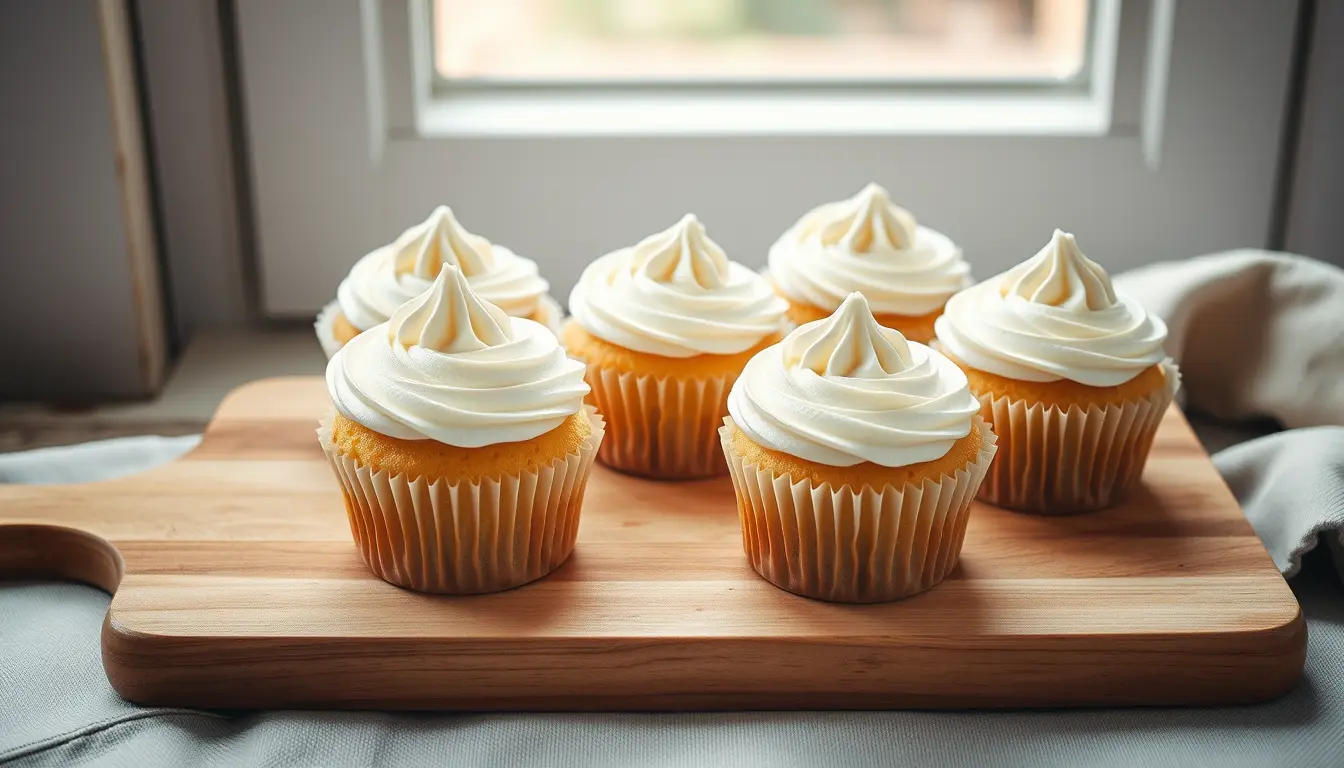
Most butter cakes and oil cakes make good cupcakes with no change to the recipe. Line a standard muffin tin, fill each cup about two-thirds full, which is roughly 45 to 50 g or 3 to 4 tablespoons of batter, and bake at the temperature the cake recipe gives. The main change is time: start checking standard cupcakes at about 15 minutes, since most are done somewhere between 17 and 22. A recipe for two 20 to 23 cm (8 to 9 in) layers usually fills 22 to 26 cups, and a 23 × 33 cm (9 × 13 in) sheet cake recipe a few more.
Light, foam-based cakes like angel food and chiffon are the exceptions, and they are covered below.
How much batter goes in each cup
Two-thirds full is the standard for a reason. It leaves room for the cupcake to rise into a gentle dome without spilling over the liner. Fill to the top and the batter overflows into a flat, mushroom-shaped cap. Fill only halfway and the cupcakes look sunken below the paper.
For consistent cupcakes, weigh the first one. Put the tin on a scale, tare it, and spoon batter into one liner until it reads 45 to 50 g. Then use the same scoop for the rest. A #20 portion scoop holds about 3 tablespoons and a #16 about 4, which covers the usual range.
How many cupcakes a recipe makes
You can estimate the count before you start. Weigh your empty mixing bowl, make the batter, weigh again, and divide the batter’s weight by 47 or so. A batter of 1,150 g, typical for a two-layer cake, gives about 24 cupcakes.
If you have no scale, count as you go. Fill the first tin, see how much batter is left, and set out the right number of liners for the rest.
Scaling to the number you need
If a recipe makes 24 and you want 12, halve it. That’s easy for most ingredients but awkward for eggs. The recipe scaler handles it line by line. Choose scale by servings, set it from 24 to 12, and paste in the recipe. For a simple vanilla cake made with 2¼ cups of cake flour, 1½ cups of sugar, 3 large eggs, 1 cup of milk, ½ cup of butter, 2½ tsp of baking powder, ½ tsp of salt and 2 tsp of vanilla, it gives:
- 1 cup + 2 tbsp cake flour
- ¾ cup sugar
- 1½ large eggs, with the note: beat 2 and use 75 g
- ½ cup milk
- ¼ cup butter
- 1¼ tsp baking powder
- ¼ tsp salt
- 1 tsp vanilla
Save the leftover beaten egg for an egg wash or breakfast. How to halve or double a baking recipe explains when scaling needs more care, such as with very large batches.
Going the other way: cupcakes into a cake
A cupcake recipe that makes about 24 will usually fill two 20 to 23 cm round layer pans or one 23 × 33 cm sheet pan. The cake pan size converter shows why those are interchangeable for batter quantity: a 23 × 33 cm pan has about 1.84 times the area of a single 23 cm (9 in) round. Two rounds hold roughly the same batter as the sheet. How to convert a cake recipe to a different pan size covers pan swaps in detail.
Temperature and timing
Keep the oven at the cake’s temperature, typically 175 to 180 °C (350 °F). Cupcakes bake through quickly because the batter is shallow and surrounded by hot metal.
| Size | Batter per cup | Starting check |
|---|---|---|
| Mini | about 1 tablespoon, 15 g | 9 to 10 minutes |
| Standard | 3 to 4 tablespoons, 45 to 50 g | 15 minutes |
| Jumbo | about ½ cup, 110 to 120 g | 20 to 22 minutes |
Some bakers raise the oven by 10 to 15 °C for the first few minutes to encourage a taller dome, then lower it. It works for some recipes and dries out others, so try it on a half batch if you’re curious.
A cupcake is done when the top springs back after a light press and a toothpick in the centre comes out clean or with a few moist crumbs. If you use a thermometer, most butter cakes are baked at about 95 to 99 °C (203 to 210 °F) in the centre.
Liners, tins and filling
Paper liners make cupcakes easy to remove and carry, and they keep the sides soft. Foil liners hold their shape better and don’t go translucent with buttery batters. Greasing the tin and skipping liners works too, giving cupcakes a slightly crisper edge, but grease every cup well, including the rim.
Metal muffin tins conduct heat quickly and give the most even bake. Silicone tins are easy to release but bake a little more slowly and can leave the bottoms pale, so set them on a baking sheet for support and allow an extra minute or two.
If you want filled cupcakes, bake them plain and fill them afterwards. Cut a small cone from the top of each cooled cupcake, add jam, curd or ganache, and replace the cap before frosting. Adding fillings to raw batter often makes them sink to the bottom and stick to the liner.
For an even bake, rotate the tin halfway through if your oven has hot spots, and fill any empty cups in a partly used tin with a little water to protect the tin and help the batter beside it bake evenly.
Cakes that don’t convert well
- Angel food and chiffon. These rely on climbing up the sides of a tall, ungreased pan. In liners, they can rise and collapse. Specific cupcake versions of these exist and are worth seeking out.
- Cheesecake. It needs gentle, even heat and a different bake. Mini cheesecake recipes work better.
- Very dense pound cake. It converts, but needs a longer bake and can dry at the edges. Fill slightly fuller and watch closely.
- Cakes with heavy fruit or chunks. Large pieces sink in small cups. Chop them finely.
Cupcake conversion mistakes
- Using the cake’s baking time. A standard cupcake bakes in a fraction of the time of a layer. Check early.
- Overfilling the liners. Batter spills, sticks and forms a cap.
- Opening the oven in the first 10 minutes. The domes can fall before they set.
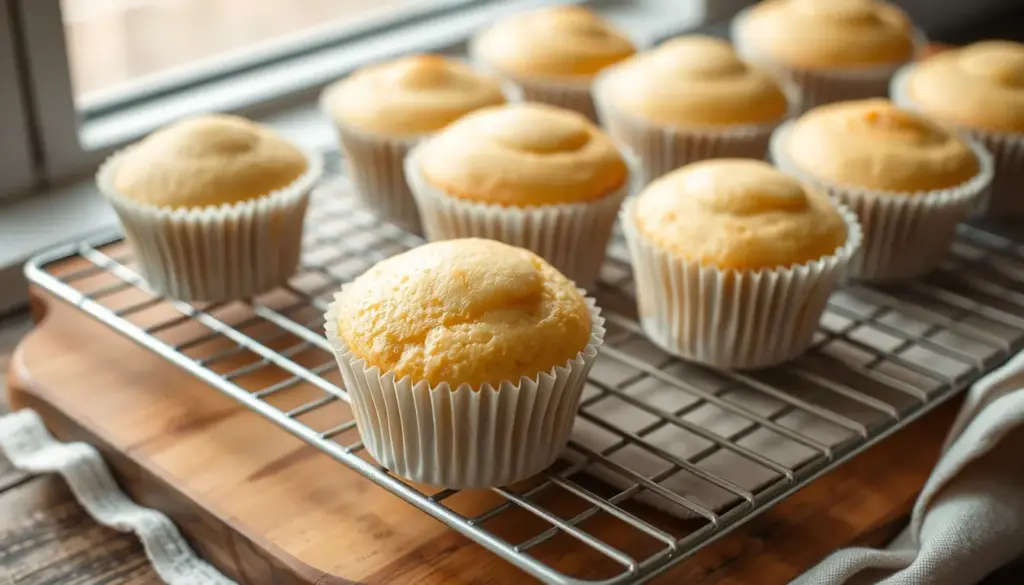
- Leaving cupcakes in the hot tin. They keep baking and steam. Move them to a rack after a few minutes.
- Frosting too early. Warm cupcakes melt the frosting. Let them cool fully first.
Cupcake questions
What makes cupcakes sink after baking?
They were underbaked, or the batter had too much leavening or was overmixed. Check that your baking powder is fresh, measure it carefully, and give them another minute or two before testing.
Why are the liners peeling away?
Steam is getting trapped between the cake and the paper. That usually happens when the cupcakes cool in the tin or are stored while still warm. Move them to a rack promptly, and let them cool fully before covering.
Can the second batch of batter wait while the first one bakes?
Yes, for 20 to 30 minutes at room temperature, covered. Most recipes use double-acting baking powder, which keeps some rise for the oven. The second tray may be slightly less domed, but rarely noticeably.
How far ahead can I bake cupcakes?
Unfrosted cupcakes keep well for a day or two in an airtight container at room temperature, and they freeze for a few weeks if wrapped well. Thaw them in their wrapping so condensation forms on the outside rather than on the cake, then frost them on the day you serve them.