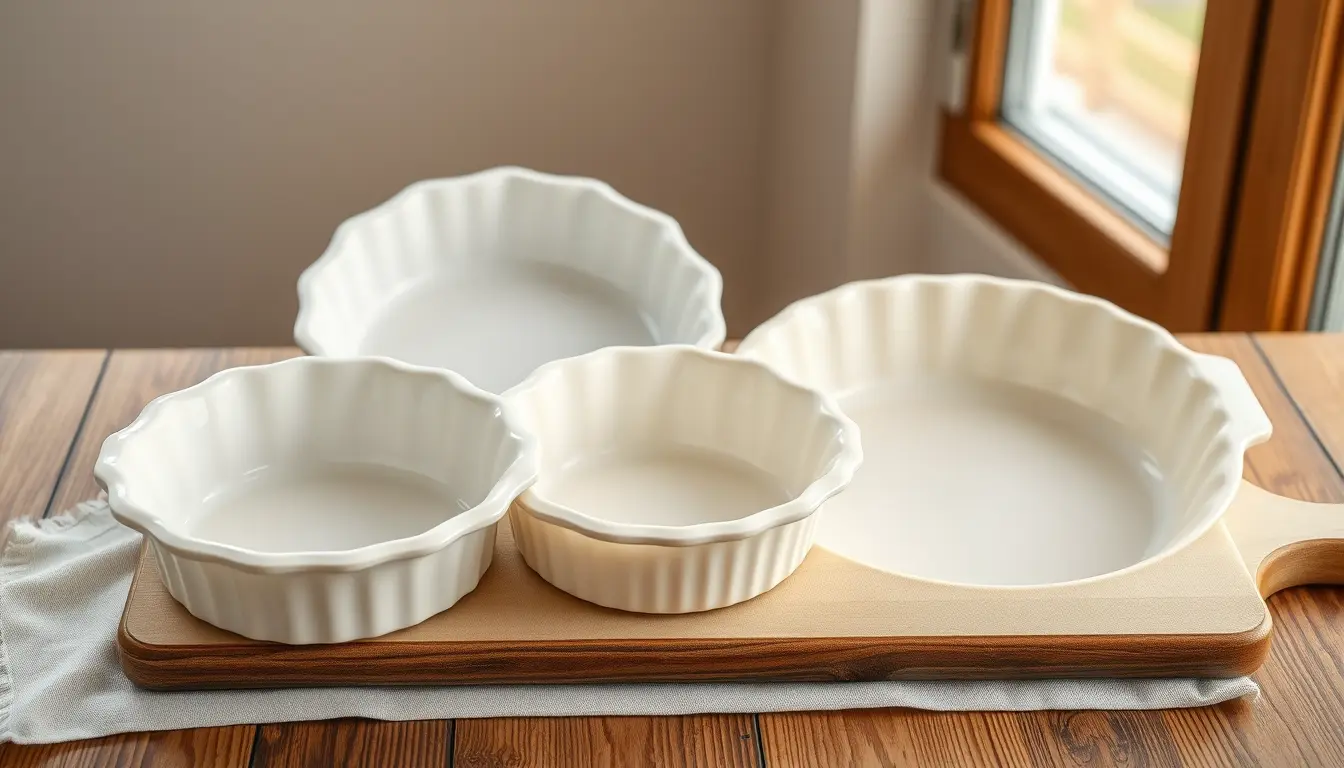
To move a pie recipe to a different dish size, scale the filling and the crust separately. For the filling, compare the dishes: if they have similar depths, the area of the top works well, which makes a 10 inch pie need about 1.23 times the filling of a 9 inch pie, and an 8 inch pie about 0.79 times. If the depths differ, measure each dish’s volume with water instead. For the crust, scale by the size of the circle you roll out, not the dish itself: a 9 inch pie usually needs a 12 inch circle and a 10 inch pie about 13 inches, so the dough grows by about 1.17 times.
Why a pie is trickier than a cake pan
Cake pans have straight sides, so the area of the base tells you nearly everything. Pie dishes are shallow bowls with sloping sides and varying depths. A “9 inch” dish might be 3 cm deep or 5 cm deep, and that changes how much filling it holds far more than the extra inch across the top.
Pie also has two parts that scale differently. The filling fills a volume. The crust covers a surface, including the sides and the overhang. A single multiplier for the whole recipe gives you either too much dough or too little filling.
Common pie dish sizes
Most American recipes are written for a standard 9 inch (23 cm) pie dish, measured across the inside of the top rim. You’ll also see 8 inch (20 cm) dishes, 9½ inch deep-dish versions and 10 inch (25 cm) dishes. Volumes vary by brand, but as a rough guide a standard 9 inch dish holds about 4 cups (around 1 litre) to the rim, and deep-dish versions noticeably more. These capacity figures are approximate.
The most reliable way to know your dish is to fill it with water to just below the rim, one cup at a time, and count. Do the same for the dish the recipe was written for, or use 4 cups for a standard 9 inch.
Scaling the filling by area
When two dishes have about the same depth, the ratio of their top areas is a good guide. The cake pan size converter works for round pie dishes too:
| Recipe dish | Your dish | Area | Scale filling by |
|---|---|---|---|
| 9 inch | 10 inch | 63.6 → 78.5 in² | × 1.23 |
| 9 inch | 8 inch | 63.6 → 50.3 in² | × 0.79 |
Measure the inside of the dish at the top rim. Because pie dishes slope, the area-based figure is a guide rather than an exact answer, but for dishes of similar depth it lands close.
If your dish is clearly deeper, as deep-dish pies are, use the volume ratio instead. For example, if your water test gives 6 cups and the recipe was written for a 4 cup dish, scale the filling by 6 ÷ 4 = 1.5.
Scaling the crust by the circle you roll
The dough has to cover the base, climb the sides and leave a little overhang to crimp. That’s why recipes tell you to roll the dough a few inches wider than the dish: commonly a 12 inch circle for a 9 inch pie and a 13 inch circle for a 10 inch pie, depending on the depth. These are typical figures.
Compare those circles in the cake pan size converter, round 12 inch to round 13 inch, and you get a factor of 1.17. That’s smaller than the 1.23 for the filling, because the extra dough for the sides and overhang stays about the same.
Here’s a single-crust recipe scaled by 1.17 in the recipe scaler:
| Ingredient | 9 inch pie | 10 inch pie (× 1.17) |
|---|---|---|
| All-purpose flour | 150 g | 176 g |
| Cold butter | 113 g | 132 g |
| Salt | 3 g | 3.5 g |
| Ice water | 45 g | 53 g |
For a double-crust pie, scale both crusts the same way. The top crust needs a slightly smaller circle, but it’s simplest to make two equal discs and trim the excess.
If your recipe is in cups, the scaler still works, but the results get fiddly: 1¼ cups of flour scaled by 1.17 becomes 1¼ cups + 3 tbsp + 1¼ tsp. Weighing the dough ingredients is much easier, as why bakers weigh ingredients explains.
Scaling a fruit filling
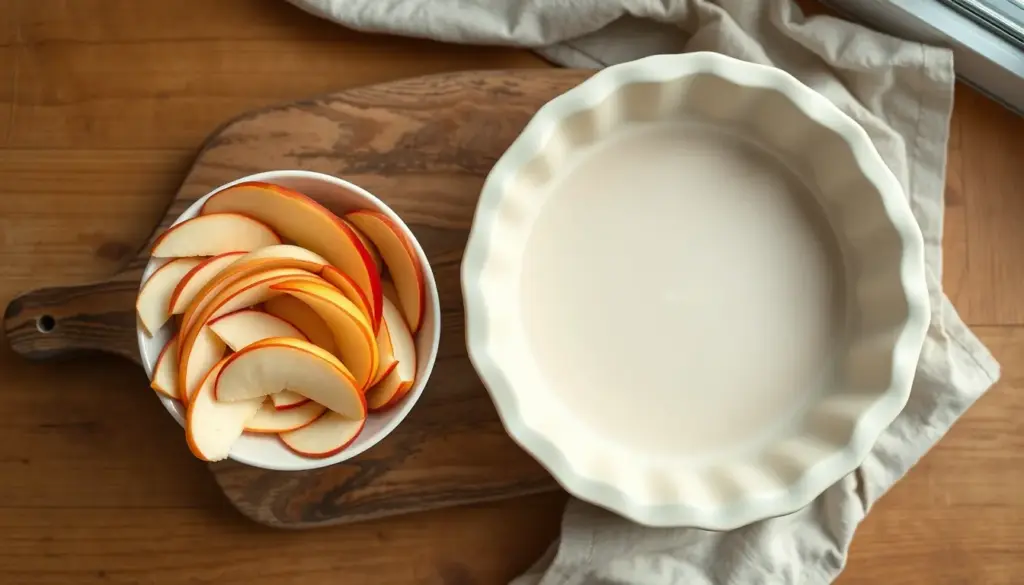
Take a classic 9 inch apple pie filling and move it to a 10 inch dish. Area says × 1.23. Many bakers round fruit fillings up slightly, because apples settle as they bake, so × 1.25 is a sensible figure here. The scaler gives:
- 7½ cups sliced apples (from 6 cups)
- ¾ cup + 3 tbsp sugar (from ¾ cup)
- 2 tbsp + 1½ tsp cornstarch (from 2 tbsp)
- 1¼ tsp cinnamon (from 1 tsp)
- 1 tbsp + ¾ tsp lemon juice (from 1 tbsp)
Scale the thickener with the fruit. A filling with too little cornstarch or flour for its volume turns runny when sliced.
Custard and cream fillings
Pumpkin pie, custard pies and cream pies follow the same area or volume rule. With a liquid filling, it’s especially worth doing the water test, because an overfilled custard pie spills in the oven and an underfilled one looks thin. If you have a little extra filling, bake it in a small greased ramekin alongside the pie.
Baking times change too
A larger pie of the same depth bakes in a similar time, though the middle may need a few extra minutes. A deeper pie needs noticeably longer. A smaller, shallower pie finishes sooner. Check by the signs rather than the clock:
- Fruit pies: the filling bubbles thickly through the vents near the centre, not just at the edges.
- Custard pies: the edges are set and the middle wobbles slightly as a whole, rather than rippling like liquid.
Shield the crust edge with foil or a pie ring if it browns before the filling is ready. A baking tray on the rack below catches drips from a full fruit pie, which is especially useful the first time you bake a scaled-up recipe and aren’t sure how high the filling will bubble.
Pie scaling mistakes
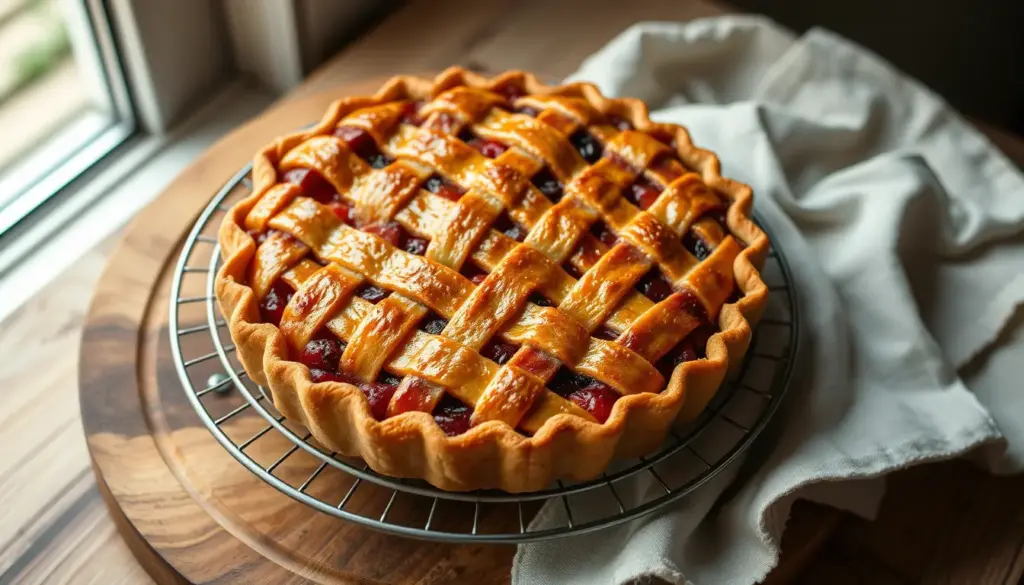
- Scaling the whole recipe by one factor. The crust and the filling grow at different rates.
- Ignoring depth. A deep-dish 9 inch holds far more than a standard 9 inch.
- Forgetting the thickener. Under-thickened fillings run when cut.
- Rolling the crust to the dish size. Without the extra for the sides, it won’t reach the rim.
For cakes rather than pies, how to convert a cake recipe to a different pan size covers straight-sided pans.
Pie dish questions
Is a 9½ inch dish close enough to a 9 inch recipe?
Usually, if it’s a standard depth. It holds a little more, so the filling sits slightly lower. If it’s labelled deep-dish, scale up.
Can I bake a 9 inch pie recipe in a tart tin?
Tart tins are shallower and straight-sided, so they hold less filling. Measure both with water and scale the filling down by the ratio.
Should I change the oven temperature for a bigger pie?
Generally no. Keep the temperature and extend the time, shielding the crust if needed.
How do I make mini pies from a 9 inch recipe?
Measure the total volume of your mini tins with water and compare it to about 4 cups. Small pies need more crust relative to their filling, so make a little extra dough.