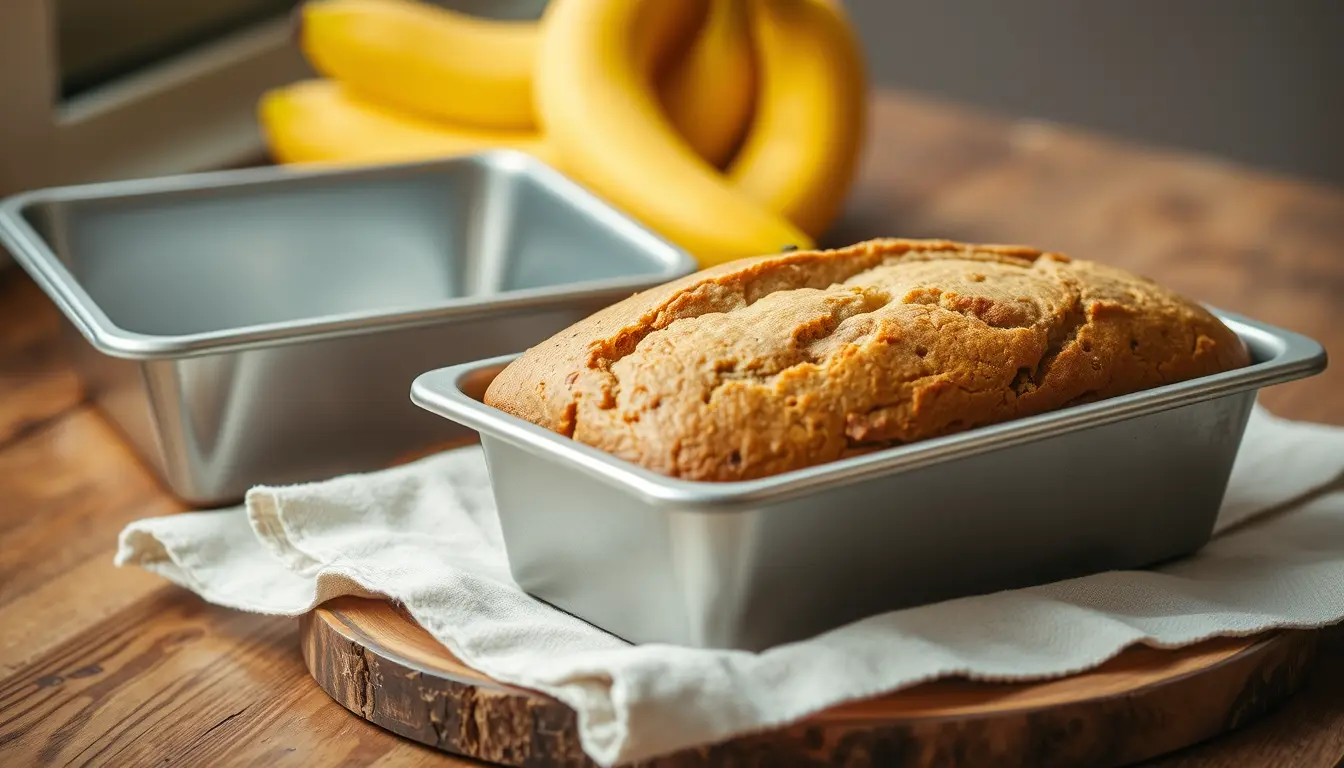
A 23 × 13 cm (9 × 5 in) loaf pan and a 20 cm (8 in) square pan each hold about 2 litres (8 cups), so most quick bread recipes swap between them with no change to the batter. What changes is the depth. The batter sits much shallower in the square pan, so it bakes faster, often in roughly half to two-thirds of the loaf time. Keep the oven temperature the same and start checking early. Going the other way, from a square pan into a loaf pan, the batter is deeper and needs longer, sometimes with foil over the top so the crust doesn’t darken before the centre sets.
Why volume and area tell different stories
There are two ways to compare pans, and both matter.
- Volume tells you whether the batter will fit. A 9 × 5 loaf pan and an 8 × 8 square pan hold close to the same amount, so a recipe for one won’t overflow the other.
- Area tells you how deep the batter will be, and depth controls baking time. A loaf pan is narrow and tall; a square pan is wide and shallow.
The cake pan size converter compares pans by area. Enter a 9 × 5 in rectangle as the original pan and an 8 in square as the new one, and it shows:
- Original area: 290 cm² (45 in²)
- New area: 413 cm² (64 in²)
- Scale factor: × 1.42
- Depth: shallower, × 0.7
So the same batter in the square pan sits at about 70% of its depth in the loaf pan. If you entered a batter weight of 900 g, the converter would suggest 1,280 g to keep the depth unchanged.
Should you scale the batter or not?
For a loaf-to-square swap, you usually shouldn’t. A quick bread in a square pan isn’t meant to be as deep as a loaf. Pour in the same batter, accept the shallower depth, and shorten the bake. You get a snack-cake style bar with more crust and a lighter crumb.
Scaling makes sense when you want the same thickness as the original. If you wanted a deep, loaf-like slab in a square pan, you’d need to multiply the recipe by about 1.4, which in practice means making one and a half batches.
Going from square to loaf, the converter shows the opposite: a × 0.7 factor and batter that is about 1.42 times deeper. Since the two pans hold similar volumes, the batter still fits, but it’s now deep enough to need noticeably more time.
Common pan sizes compared
| Pan | Approximate volume | Area |
|---|---|---|
| 21 × 11 cm (8½ × 4½ in) loaf | about 1.5 litres (6 cups) | 247 cm² (38 in²) |
| 23 × 13 cm (9 × 5 in) loaf | about 2 litres (8 cups) | 290 cm² (45 in²) |
| 20 cm (8 in) square | about 2 litres (8 cups) | 413 cm² (64 in²) |
| 23 cm (9 in) square | about 2.5 litres (10 cups) | 523 cm² (81 in²) |
Volumes vary a little between brands because of sloped sides and rim heights. If you’re unsure, fill your pan with water from a measuring jug and note how much it holds.
Watch out for the smaller loaf pan. A recipe written for a 9 × 5 in pan comes out about 1.18 times deeper in an 8½ × 4½ in pan, according to the converter, and that can push it over the rim. Fill no more than about two-thirds full and bake any extra as a couple of muffins.
Adjusting the bake
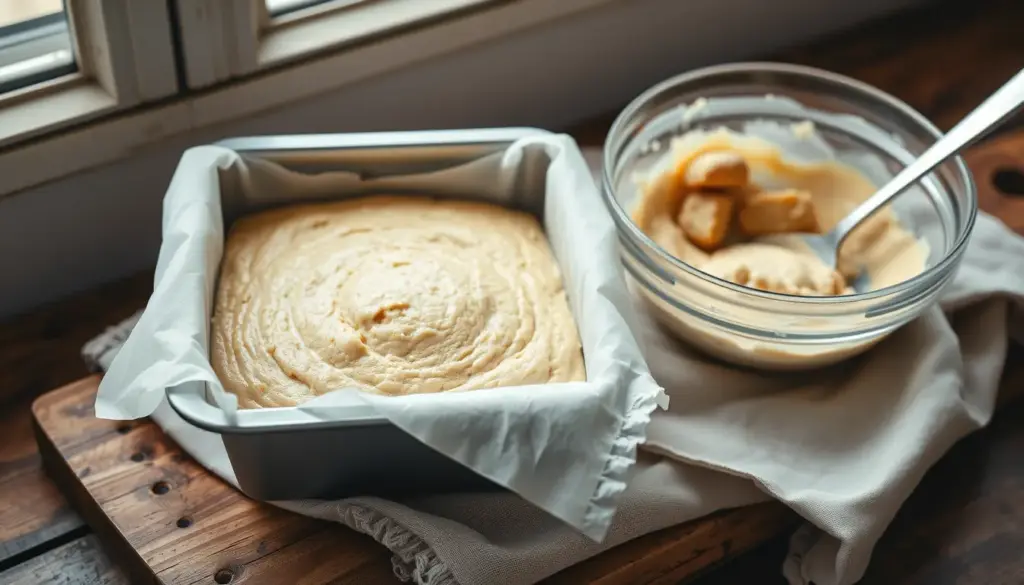
Keep the temperature the recipe gives, usually 175 to 180 °C (350 °F). Changing both the pan and the temperature makes it hard to know what went wrong if the bake isn’t right.
| Swap | Depth change | Starting check |
|---|---|---|
| 9 × 5 loaf to 8 × 8 square | about 0.7 times as deep | at about half the loaf time |
| 9 × 5 loaf to 9 × 9 square | about 0.56 times as deep | a little before half the loaf time |
| 8 × 8 square to 9 × 5 loaf | about 1.4 times as deep | at the square time plus about half again |
For a banana bread that takes 55 to 65 minutes in a loaf pan, start checking an 8 × 8 version at about 30 minutes. Most finish somewhere between 30 and 40 minutes.
Push a skewer into the middle. If it comes out clean or with a crumb or two clinging to it, and the centre springs back under a fingertip, the bread is baked. With a thermometer, look for about 95 to 99 °C (203 to 210 °F) in the middle.
Pan material matters too
- Dark metal browns faster. Check a few minutes earlier.
- Light aluminium gives the most even, gentle browning.
- Glass or ceramic heats slowly and holds heat. Many bakers lower the oven by about 10 to 15 °C (25 °F) when using glass. Advice varies, so check the manufacturer’s guidance.
Things that change beyond time
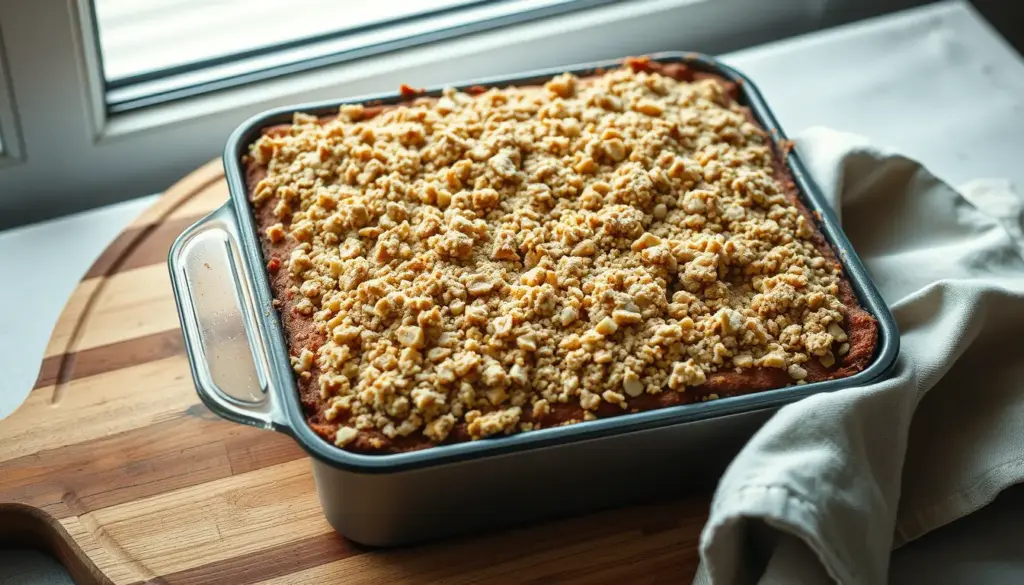
A loaf pan gives a domed top that often cracks along the centre, which many people expect from banana bread. A square pan gives a flatter top with more crust around the edges. Streusel and crumb toppings suit the square pan especially well, since there’s more surface to cover.
How to convert a cake recipe to a different pan size covers round and rectangular cake pans. How much dough for a 9×5 loaf pan is the yeasted-bread counterpart, where the rules are different because the dough rises after shaping.
Turning a loaf recipe into muffins
Quick bread batters make good muffins, and the swap is often handier than changing pans. A typical 9 × 5 in loaf recipe fills about 12 standard muffin cups at two-thirds to three-quarters full. Many bakers raise the oven by 10 to 15 °C for muffins to encourage a domed top, though the original temperature works too.
The time drops dramatically. Muffins from a banana bread batter usually take 18 to 25 minutes, against about an hour for the loaf. Start checking at 15 minutes, and test with a skewer as you would the loaf.
Batters with large chunks of fruit or nuts may sink more in small cups. Chop them a little finer, and toss them in a spoonful of the recipe’s flour before folding them in.
Pan-swap mistakes
- Keeping the loaf baking time. A shallow square pan overbakes and dries out.
- Raising the temperature to speed things up. The outside sets and browns before the centre catches up.
- Overfilling a smaller loaf pan. Batter rises over the rim and the centre sinks.
- Ignoring dark pans. They can scorch the base and corners of a sugary batter.
Pan swap questions
What happens if I pour a loaf recipe into a 9 × 13 in pan?
Yes, but it will be thin. The converter gives that pan about 2.6 times the area of a 9 × 5 loaf pan, so one batch spreads to less than half the depth. Doubling the recipe gives a more normal thickness. Start checking very early.
Why did my quick bread sink after I changed pans?
A deeper pan can leave the centre underbaked even when the top looks done. It may also have been overfilled. Bake longer at the same temperature, using foil on top if needed, and check the centre with a skewer.
Can I split a loaf recipe into mini loaf pans?
Yes. Fill them about two-thirds full and start checking at roughly half the full loaf time. Mini pans vary a lot in size, so the number you get depends on your set.