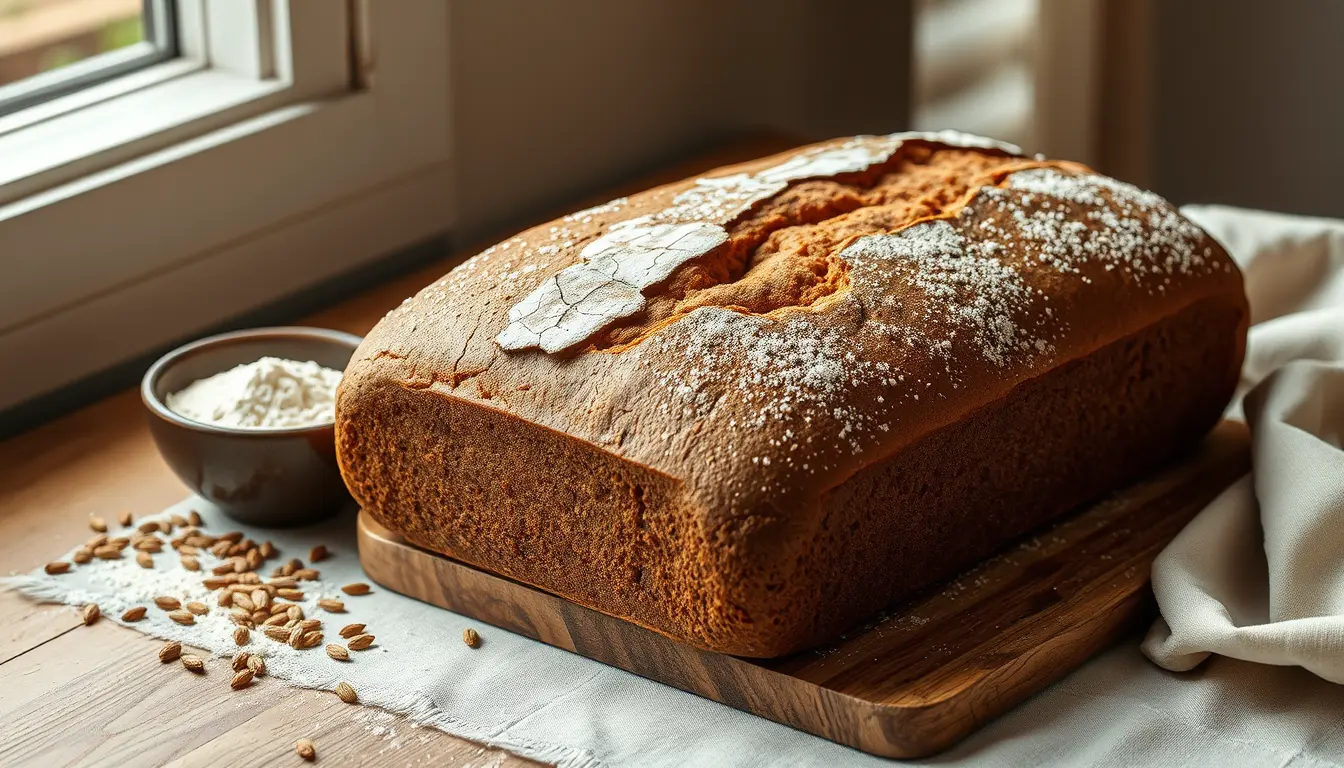
A 100% rye loaf behaves nothing like wheat dough because rye can’t build a gluten network. Its structure comes from starch and from gums called pentosans, which soak up a great deal of water and turn the dough into a heavy, sticky paste. Rye also carries active enzymes that can turn the crumb gummy unless the dough is acidic, which is why all-rye bread is almost always made with sourdough. So you stir it rather than knead it, bake it in a tin, and give it a long rest after baking before it can be sliced cleanly.
What’s missing: gluten
In wheat dough, two proteins link up into gluten when you mix them with water. Gluten is stretchy and elastic, and it traps gas like a balloon, which is what lets a wheat loaf rise high and hold an open crumb.
Rye contains proteins too, but they don’t form a useful network. Kneading does almost nothing except warm the dough. Whatever structure the loaf has comes from elsewhere.
So the protein figure printed on a bag of rye tells you little about its baking strength. Protein targets only make sense for mixed rye and wheat loaves, where the wheat still carries the structure. Ask the flour protein blend calculator for 500 g of flour at 11% protein, using rye at 9% and bread flour at 12.7%, and it suggests 230 g of rye with 270 g of bread flour. That kind of mixed loaf can still stand free. Push the rye share toward 100% and no protein number will help, because there is no wheat left to form gluten. Protein contents vary by mill, so treat these figures as an example only.
What takes its place: pentosans and starch
Rye is rich in pentosans, also called arabinoxylans. They absorb several times their weight in water and form a thick, viscous gel. That gel holds some of the gas from fermentation, not as well as gluten, but well enough to give a close, moist crumb.
Starch does the rest. As the loaf bakes, the starch swells and sets around the gas bubbles. In rye, this starch sets at a lower temperature than in wheat, and the timing matters a great deal, as the next section shows.
Why rye needs acid
Rye flour usually contains more active amylase than wheat flour. Amylase breaks starch down into sugars. In the oven, while the starch is softening and swelling but before the enzymes are destroyed by heat, there is a window when amylase can attack the starch. If it does too much damage, the crumb ends up wet, sticky and collapsed, sometimes with a gap under the top crust.
Acidity slows amylase down. A ripe rye sourdough brings that acidity, which is why traditional rye breads lean on a large, well-fermented starter rather than on commercial yeast. The sour flavour is a pleasant side effect of a structural need.
Working with a paste, not a dough
An all-rye dough looks wrong the first time you mix it. It is thick, clay-like and sticky, with no stretch at all. That’s normal. Here is a straightforward formula for one tin loaf:
- 400 g rye flour
- 300 g water
- 200 g ripe rye starter (100% hydration)
- 10 g salt
Entered into the sourdough hydration calculator, it reads 80% overall hydration, 500 g total flour, 400 g total water and 40% starter as a share of the total flour. The starter percentage is far higher than in a typical wheat loaf, and that is deliberate: it provides the acidity the rye needs.
Rye flours differ a lot. Light rye absorbs less water than whole or dark rye, and coarse meal absorbs it slowly. If your paste feels as stiff as modelling clay, add water a spoonful at a time. If you enter a target, the calculator shows exactly how much: for a variation with 450 g rye flour, 330 g water and 180 g starter, a target of 85% suggests 369 g of water, 39 g more.
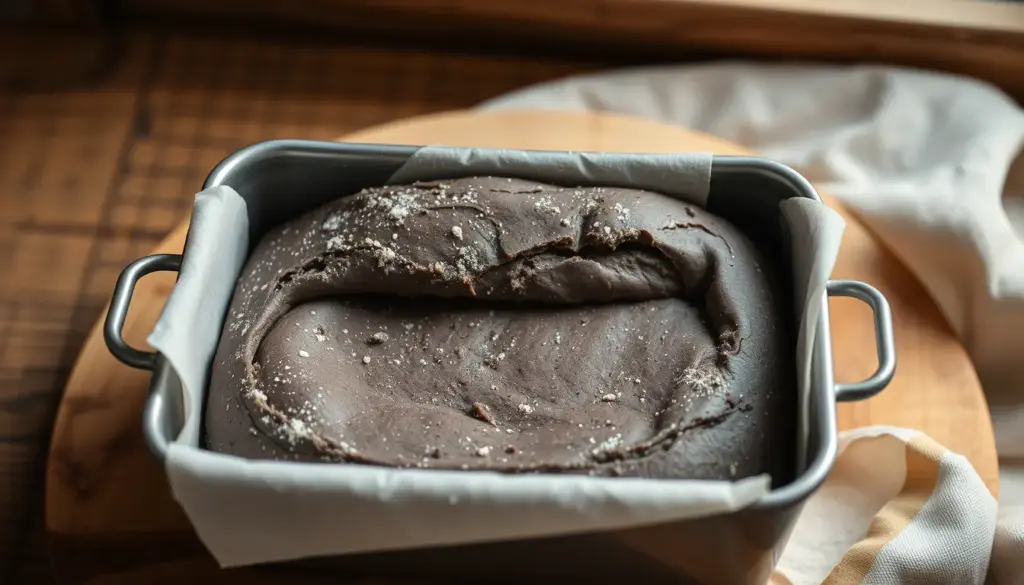
Mix with a sturdy spatula or a wet hand until everything is evenly combined, about 5 minutes. There is no point kneading longer. Scrape the paste into a greased loaf tin, smooth the top with a wet spatula, and dust it with rye flour if you like the cracked look.
Proofing: watch the surface
Rye doesn’t double. Instead, look for the dough to rise by roughly a quarter to a third and for small cracks or pinholes to appear in the floured surface. At around 25 °C (77 °F) this often takes 1 to 3 hours, depending on the starter. Underproofed rye bakes into a dense brick with a split crust; overproofed rye sinks in the middle.
Baking and the long rest
Start hot and finish more gently. A common pattern for a 900 g tin loaf is 10 to 15 minutes at 250 °C (480 °F), then 50 to 60 minutes at 200 °C (390 °F). The crust should be firm and dark, and many bakers look for an internal temperature of at least 96 to 98 °C (205 to 208 °F). These are approximate figures; deeper tins and wetter doughs need longer.
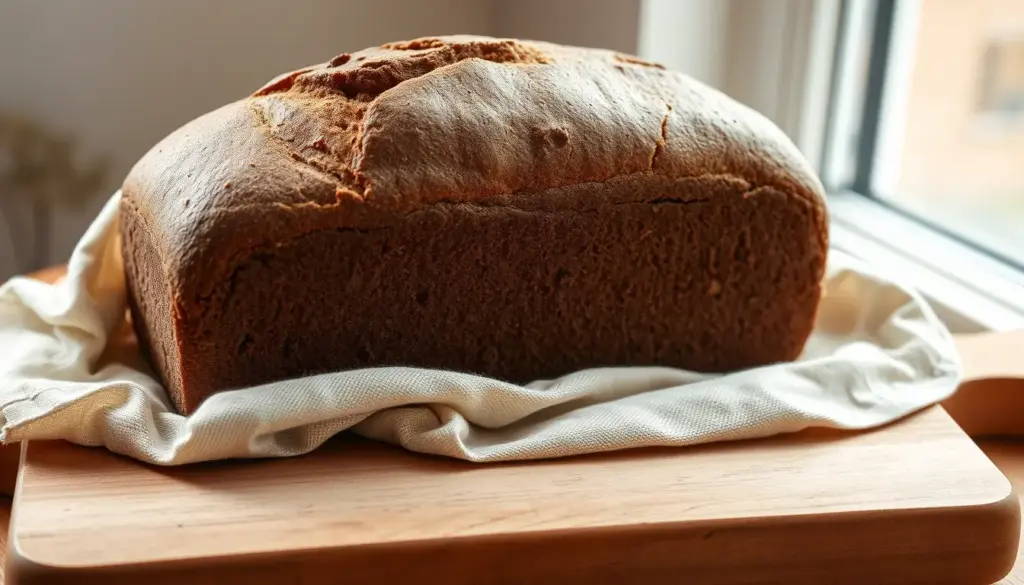
Turn the loaf out onto a rack. Then comes the hard part: leave it. The crumb of a fresh rye loaf is still setting, and the starch is still firming up as it cools. Cut it on the day and it is sticky and gummy even when perfectly baked. Wrap it in linen or a tea towel once it is cool and wait until the next day. Many bakers wait a full 24 hours for darker, heavier loaves.
Flavour and keeping
Patience pays off twice with rye. The flavour deepens over the first two or three days after baking, as the moisture spreads evenly through the crumb and the sour, malty notes settle. The same moisture keeps the loaf fresh for much longer than a wheat loaf; wrapped well, an all-rye bread is often still good to eat after a week. Slice it thinly, since the dense crumb is filling, and try it with butter, cheese, smoked fish or soup.
How it compares to adding rye to wheat
Adding rye to a wheat dough is a different project. A 10 or 20% rye share mostly changes the flavour and makes the dough a little stickier, while the gluten from the wheat still does the structural work. Adding whole wheat and rye to sourdough covers that range. Once rye makes up most of the flour, the rules on this page take over.
Rye bread mistakes
- Kneading for a long time. It achieves nothing and makes the paste warm and stickier.
- Using a weak or young starter. Too little acidity lets the enzymes win, and the crumb goes gummy.
- Waiting for it to double. Rye rarely does. Watch for cracks and a modest rise instead.
- Baking too briefly. A pale, short bake leaves a wet crumb that never sets properly.
- Cutting it warm. Even a well-baked loaf tears and smears if you slice it on the same day.
If you’re new to starters, how to make a sourdough starter from scratch is the place to begin. Feed it with rye for a few days before a rye bake.
Rye questions
Can I make 100% rye with commercial yeast?
You can, but you’ll need to add acid in another way, usually with a long soaker of the flour or an acidic ingredient. A rye sourdough is simpler and more reliable.
Why does the loaf have a big gap under the top crust?
That is usually starch attack or underproofing. Use a riper, more acidic starter, let the dough proof until the surface cracks, and bake for the full time.
Can I bake it free-form instead of in a tin?
Only with a stiffer rye dough and a lot of practice. A tin supports the paste while it sets, which is why most all-rye breads use one.
If rye can’t form gluten, is rye bread gluten-free?
No. Rye contains proteins that people with coeliac disease or a gluten intolerance must avoid, even though they don’t form a stretchy network the way wheat gluten does.